
 E-Paper



South Korea to inspect all Boeing 737-800 aircraft after fatal crash kills 179 people
Among other measures, officials are also looking at a possible communication disruption between air traffic controllers and the pilot before the fatal crash.

 Prefer HTon Google


South Korean officials said on Monday that they would conduct safety inspections of all Boeing 737-800 aircraft operated by the country's airlines.
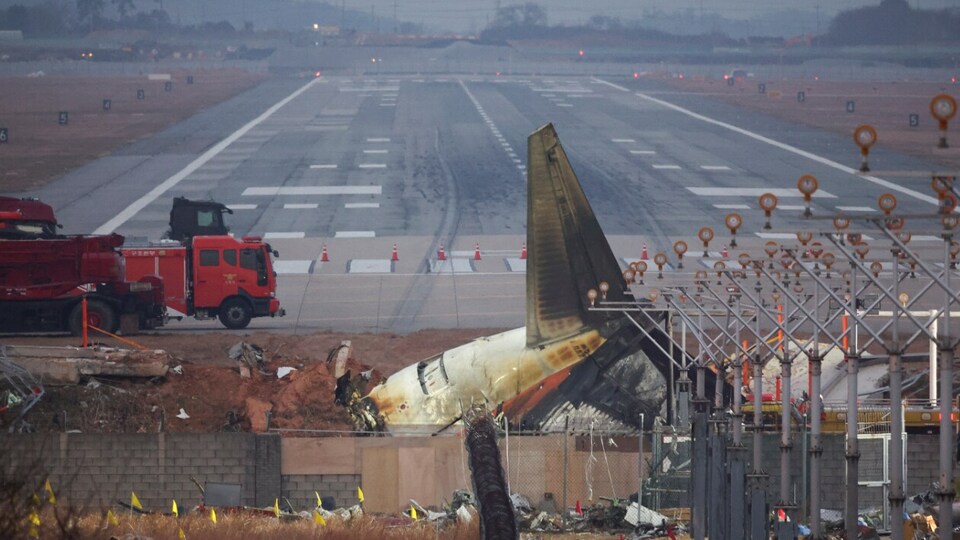
The probe is part of an attempt to find the exact cause of Sunday's tragic accident at Muan International Airport that killed 179 people, news agency AP reported.
South Korea's acting president Choi Sang-mok chaired a task force meeting on Monday to conduct an emergency review of the country’s aircraft operation systems. Choi is also the deputy prime minister and finance minister.
“The essence of a responsible response would be renovating the aviation safety systems on the whole to prevent recurrences of similar incidents and building a safer Republic of South Korea,” said Choi.
Also read | Travel anxiety spikes in South Korea, tourists cancel flights post Jeju Air crash
Alan Price, a former chief pilot at Delta Air Lines and now a consultant, told the news agency AP that the Boeing 737-800 series is a “proven airplane” that belongs to a different class than the controversial 737 Max series that was under the scanner between 2018 and 2019 due to a series of fatal crashes.
The transport ministry said it would conduct a safety audit of all 101 Boeing 737-800 jetliners operated by the country’s airlines and a broader review of safety standards at Jeju Air, the AP report added.
The company, whose aircraft crashed on Sunday, operates 39 Boeing 737-800 series planes.
A ministry official also said that representatives from the U.S. National Transportation Safety Board and Boeing will arrive on Monday to participate in the probe.
Other measures
The ministry will also examine whether the Muan airport’s localiser -a concrete fence housing a set of antennas designed to guide aircraft safely during landings -should be built with lighter materials that would break easily on impact. Such lighter structures are being used in other domestic airports, including in Jeju Island and the southern cities of Yeosu and Pohang.
Also read | ‘Pilot declared mayday’: What caused the Jeju Air plane crash in South Korea?
Officials are also looking at a possible communication disruption between air traffic controllers and the pilot before the fatal crash.
“Our current understanding is that, at some point during the go-around process, communication became somewhat ineffective or was interrupted ahead of the landing and impact,” said a ministry official.
Flight data and cockpit audio recorders from the crashed aircraft were taken to a research centre at Gimpo airport for analysis.
The political turmoil following now-impeached president Yoon's imposition of martial law has raised fears among the Korean people of the government's ability to handle the crisis.
The safety minister stepped down, and the police chief was arrested for their alleged role in the martial law saga. The absence of key officials responsible for managing disasters also increased concerns.


