As the world waits to see if President Trump can deliver abiding peace in Ukraine, a core lesson of that conflict is the importance of deterring another awful war a continent away. So note that Taiwan is now planning to spend more on its defense and reach 5% of GDP by 2030.
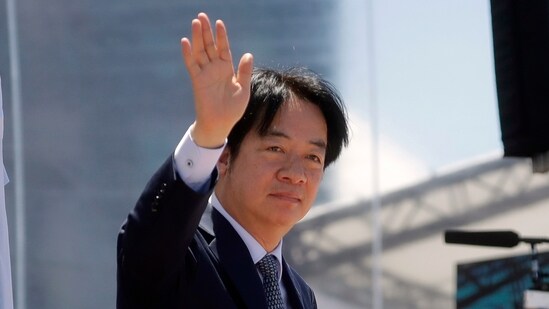
President Lai Ching-te has proposed a defense budget for next year that’s a little over 3.3% of the economy, up from roughly 2.5% in 2024. (AP)
President Lai Ching-te has proposed a defense budget for next year that’s a little over 3.3% of the economy, up from roughly 2.5% in 2024. That’s close to the North Atlantic Treaty Organization’s new target of 3.5%. Mr. Lai said on social media that Taiwan “is serious in its commitment to peace through strength.” He’s reading the tides, across the strait toward the predator and across the Pacific toward the U.S.
Xi Jinping might be thinking better of an amphibious assault on the island after watching the underperformance of Vladimir Putin’s military in Ukraine. But Mr. Xi hasn’t backed off his goal of incorporating Taiwan under his rule, and the West remains unprepared for a crisis on an outlying island or a blockade.
The Center for Strategic and International Studies this summer released a war game with 26 iterations of a Taiwan blockade. “Almost all scenarios entail casualties,” it said. Taiwan ran out of natural gas in about 10 days. Some scenarios resulted in a shooting war and “the United States lost hundreds of aircraft and dozens of warships.”
Taipei hopes to demonstrate to Washington that it’s a real security partner worthy of American support. The island has been too slow to add deterrence for an existential threat. And even Mr. Lai’s spending goal of 5% by 2030 might be insufficiently aggressive given Mr. Xi’s 2027 target for his forces to be ready.
Mr. Trump and some of his staff have tossed around that Taiwan should be spending 10% of GDP, whether or not that is realistic. But making loud, public demands feeds the Chinese Communist Party’s narrative that America is an unreliable ally and Taiwanese resistance is futile. A better approach for Mr. Trump would be to ensure the U.S. lives up to its potential as a strategic partner.
There’s room to improve. The backlog of U.S. weapons sold to Taiwan but not yet delivered is more than $20 billion, according to a summer tally by George Mason University. Retired U.S. Navy Rear Adm. Mark Montgomery estimates Taiwan might easily reach 4% of GDP on defense if the U.S. could fix its process for foreign military sales to deliver more weapons each year.
The Trump crowd campaigned on putting more attention on the Pacific. Will it make good? The White House isn’t yet proposing its own big boost in defense spending, even as America’s best allies are ramping up.
“Beijing’s aggressive maneuvers around Taiwan are not just exercises,” U.S. Indo-Pacific commander Adm. Samuel Paparo warned Congress this year. “They are dress rehearsals for forced unification.” One certainty is that the Trump Administration can forget about its other priorities or achievements if deterrence fails in the Taiwan Strait.
Get the latest headlines from US news and global updates from Pakistan, Nepal, UK, Bangladesh, Russia and US Iran war Live, get all the latest headlines in one place on Hindustan Times.

 E-Paper