
 E-Paper



Tensions with Saudi, Trump's praise, next move: Deep dive into UAE's decision to leave OPEC
The Organization of the Petroleum Exporting Countries is a global organization of oil-producing countries founded in 1960 in Iraq.

 Prefer HTon Google


Uncertainty has clouded the oil and gas trade that mainly flows through West Asia amid the war in Iran, which spilled over across the region. Adding to this, the United Arab Emirates decided to quit the Organisation of the Petroleum Exporting Countries (OPEC) and the larger OPEC group starting May 1.
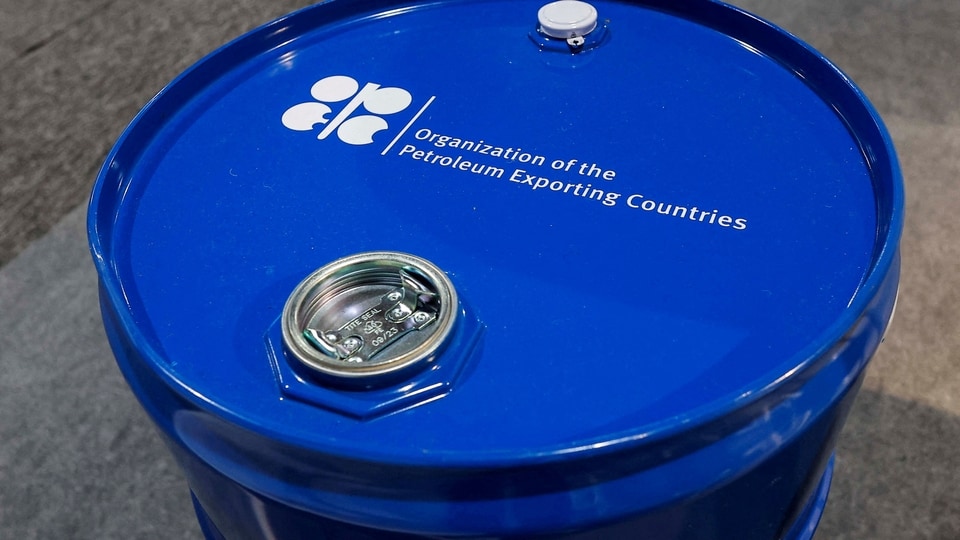
By going independent, UAE can now make its own decisions regarding its oil production and sales. UAE is currently one of the world’s top 10 producers of oil and has the capability to enhance its production significantly. With rising crude prices due to the Strait of Hormuz blockade, the move is being seen by many as a way to control the rising oil prices. However, the long and short impact of the move remains to be seen.
While several members of the group reaffirmed their commitment to the oil-producing bloc post UAE’s decision to leave, US President Donald Trump hailed the move, saying that “it’s great”.
Track live updates of US-Iran conflict here
Referring to UAE President Sheikh Mohamed bin Zayed Al Nahyan, Trump said, “he probably maybe wants to go his own way.”
“It’s a good thing for getting the price of gas down, getting oil down, getting everything down, " he added.
What is OPEC and OPEC+?
The Organization of the Petroleum Exporting Countries is a global organization of oil-producing countries founded in 1960 in Iraq. The founding countries included Iran, Iraq, Kuwait, Saudi Arabia and Venezuela. They were later joined by other oil-producing countries.
Also read: UAE's OPEC exit: Breaking ranks with the GCC, charting its own course
According to OPEC, its bloc’s objective is “to co-ordinate and unify petroleum policies among Member Countries, in order to secure fair and stable prices for petroleum producers; an efficient, economic and regular supply of petroleum to consuming nations; and a fair return on capital to those investing in the industry.”
The group has a major control on worldwide oil production and thus, can impact oil prices.
After UAE’s exit, the core group will be left with 11 members.
OPEC+ is a larger group of oil-producing countries that includes countries such as Russia, Kazakhstan, and Azerbaijan. This was formed in 2016 so that more countries could come together to settle on oil production and keep oil prices steady.
Rift with Saudi in play behind UAE’s exit?
Saudi Arabia is often seen as the de-facto leader of the bloc and according to analysts, UAE’s underlying tensions with Saudi may have played a part behind Abu Dhabi’s decision to step away from the group.

They said that the UAE’s move has much more behind it than just policy, particularly the relationship between UAE President Mohammed bin Zayed and Saudi Crown Prince Mohammed bin Salman.
"There is something seriously happening in the Saudi-UAE relationship...a much more serious rift than we think," news agency Reuters quoted Fawaz Gerges of the London School of Economics as saying.
"What we're seeing now is a kind of breakdown between the two most powerful leaders in the Gulf," he added.
According to UAE analyst Abdulkhaleq Abdulla, the bloc was mostly controlled by Saudi and Russia, with little space for other voices. “Saudi Arabia and Russia are dictating and manipulating (decisions)...they are doing everything to advance their own interests at the expense of others. They're not listening to anybody," he said.
However, it is key to note that amid reports of tensions between the Gulf neighbours, Saudi Arabia remains UAE’s largest trading partner in the West Asia region. Both the countries have their economic and trade ties so intertwined that a full-blown fallout remains a far possibility.
What would be OPEC’s next move after UAE exit?
Following UAE’s exit, the group is likely to approve a modest increase in oil output quotas on Sunday, Reuters reported citing three sources with knowledge of the matter. The increase would be around 188,000 barrels per day in oil output targets, they said. This would be broadly in line with last month’s increase of 206,000 bpd, adjusted for the UAE’s share as it leaves the group on May 1.
Ahead of the meeting scheduled for Sunday, the group of nations is yet to take a concrete decision, said one of the sources. The countries meeting are Saudi Arabia, Iraq, Kuwait, Algeria, Kazakhstan, Russia, and Oman.
(With inputs from Reuters)


