
 E-Paper



The Brains Who Powered China’s Surprising AI Leap
A university lab nurtured the computer scientists who are using ingenuity and imitation to chase down Anthropic and OpenAI.


 Prefer HTon Google


Computer geeks Tang Jie and Yang Zhilin were mere teacher and pupil more than a decade ago, with dreams of building a machine that could think like a human. Today, they are two of the Chinese artificial-intelligence tycoons who have U.S. AI pioneers looking over their shoulders with alarm.
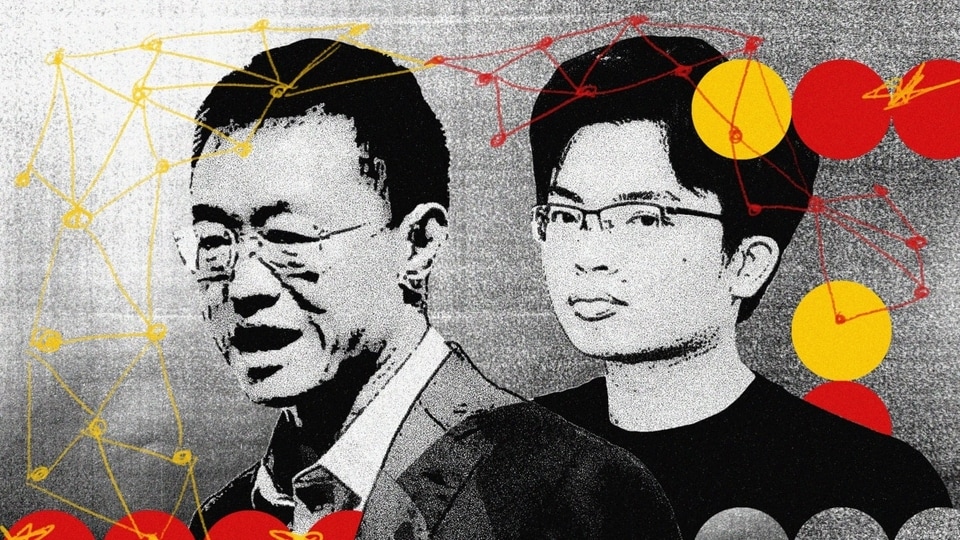
Tang, a professor at Tsinghua University, co-founded Z.AI, one of the companies hot on the heels of Anthropic and OpenAI in capability and global usage. Yang, whom Tang once nominated for his university’s top academic award, leads another, Moonshot AI. Each company is valued at tens of billions of dollars.
The rapid rise of Chinese AI models has sparked a host of questions in both Silicon Valley and Washington. How did Chinese AI labs get so far so fast? Where did their AI models come from? Are companies like Tang’s and Yang’s stealing from U.S. models, and should their products be banned to protect American national security?
The careers of Tang and Yang show that China’s AI push is nothing sudden. Tang, 49, has been working on machine learning for about a quarter-century. More than a decade ago, he was among the Chinese AI experts already at the forefront of using computers for humanlike tasks such as understanding language and recognizing faces.
Tang, Yang and their fellow researchers—many of whom got started at Tsinghua and a few other institutions—make up a virtual Silicon Valley in China’s tech centers. Knowledge flows easily between them thanks to a culture of publishing research and the Chinese developers’ preference for open-source technologies that are largely free for download and modification.
To catch up in the era of generative AI, Chinese companies have relied on the familiar mix of ingenuity and imitation that also lies behind the nation’s successes in electronics, cars and green energy. Chinese AI developers brought back home U.S.-trained computer scientists and closely followed advances in the U.S.
More controversially, some appear to have “distilled” U.S. models to help train their own faster, employing a process in which a new system learns from an existing one by asking it hundreds of thousands of questions and analyzing the answers.
Anthropic has accused Chinese companies, including both Z.AI and Moonshot, of violating its policies by engaging in large-scale distillation. Neither company has commented on the issue. People working at Chinese model developers acknowledge that distillation is widespread globally and that some Chinese companies might use it more aggressively than American counterparts.
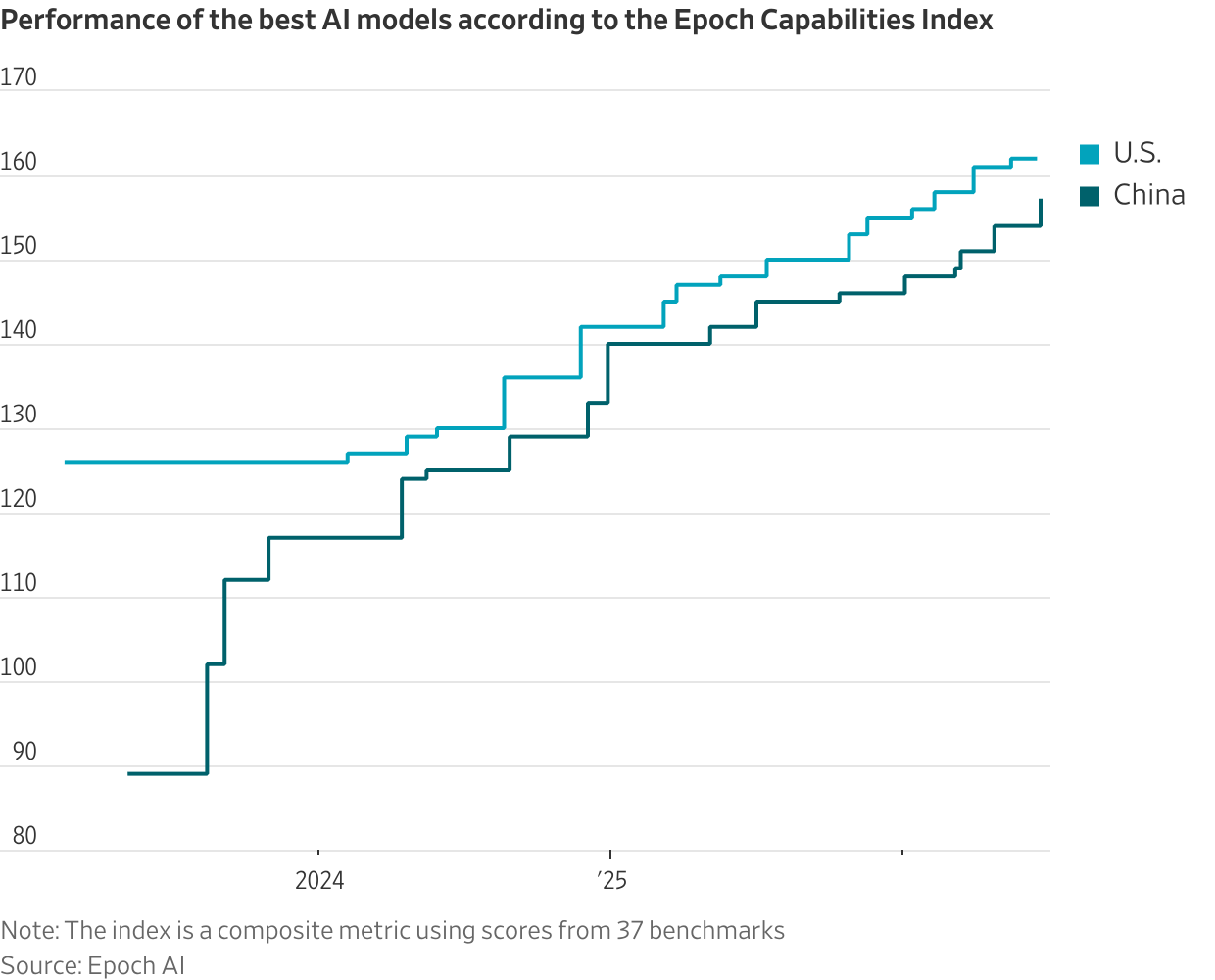
Elon Musk predicted in June that China wouldn’t match Anthropic’s top-of-the-line Fable model until the first quarter of 2027. Tang fired back on X: “Won’t take that long.”
Industry leaders in both countries said the capability of China’s best AI model is just months behind that of the best in the U.S.
This month, Z.AI released its latest GLM-5.3 model, saying it has matched Anthropic’s Mythos 5 in cybersecurity capabilities.
China’s government has long viewed AI and computer science as important drivers of economic growth and national security. Its catch-up formula involves both state support and private-sector competition. The state has poured money into research at universities such as Tsinghua and funded startups, and central and local governments have been early customers for the startups’ services.
After Anthropic introduced its Mythos model this spring, which can detect cybersecurity flaws, some Chinese officials likened it to a nuclear weapon of the AI era. Aware that Washington can block foreigners from getting the top U.S. models, Beijing is supporting domestic AI developers through a national fund and relaxing rules to help startups list shares in public markets.
Nearly half of total equity-capital investment in China flowed into AI in the first half of this year, most of it from government-backed funds, according to the Investment Association of Central State-Owned Enterprises.
Talent pool
In the early 2000s, China’s internet industry took off and began generating troves of data as millions of users started shopping, searching and communicating online. Companies began investing in machine learning to make e-commerce more efficient and analyze users’ online behavior.
The government, looking for ways to surveil the population and detect threats, sought computer programs that could identify faces and voices. China’s universities turned out students specializing in computer vision, a branch of computer science that tries to teach machines to see as humans do.
That era produced the “four little dragons of AI,” computer-vision startups including SenseTime that trained many of the engineers active in AI today.
Money and talent poured into Tsinghua, the country’s flagship university for science and technology. In 2005, Andrew Yao, a former Princeton professor and winner of the award named after computer-science pioneer Alan Turing, established an elite “Yao class” at Tsinghua to cultivate top-tier talent.
Tang, the Tsinghua professor and Z.AI co-founder, has been at the university since his Ph.D. years. He studied data mining, a discipline that seeks to extract hidden patterns from large data sets and later became foundational to AI.
Tang told technology writer Mehran Gul, according to his book “The New Geography of Innovation,” that after getting his Tsinghua doctorate, “I thought I could do something big in China and also in that way maybe I can help China better. So I decided to stay.”
Tang enjoyed testing his endurance by running marathons and participating in triathlons. He ran his lab the same way.
“Prof. Tang’s team is notoriously intense,” said Kevin Zhong, who briefly worked with Tang during his master’s studies at Tsinghua and now works in London. The professor always pushed his team to test potential machine-learning techniques with experiments, Zhong recalled, and researchers sometimes stayed in the lab until 3 a.m. to finish their tests.
“They have a real knack for consistently getting published in top-class journals, and they know perfectly how to monetize their work,” Zhong said.
By the 2010s, Tang’s lab had a national reputation among aspiring techies, and his former students began populating top companies in Silicon Valley. Yang, the future Moonshot founder, began intensive training in programming at age 17, competing in China’s National Olympiad in Informatics. At Tsinghua, he developed machine-learning algorithms with Tang.
In 2018, Beijing cleared the way for researchers at state institutes and universities to start companies and market their technology. The next year, Tang spun the company now called Z.AI out of his Tsinghua lab, funding it in part with a data-analytics platform he ran that had clients such as Google and IBM.
Long before the U.S.-China AI battle became headline news, Tang saw himself as competing with OpenAI’s Sam Altman. When OpenAI released its pioneering GPT-3 model in 2020, Z.AI aimed to produce something as good.
“I am putting all my effort into artificial general intelligence with the mission of teaching machines to think like humans,” Tang wrote on his personal website several years ago.
After studying with Tang, Yang earned a Ph.D. at Carnegie Mellon University in Pittsburgh. He returned to China to help with his former professor’s research while deciding to set up his own company.
An avid rock drummer, Yang called his startup “Dark Side of the Moon” in Chinese, riffing off the Pink Floyd album. For its English name, he chose Moonshot.
In Shanghai, two more former Tsinghua researchers, including one from the prestigious “Yao class,” also started their own companies to build AI models.
A final entrant was DeepSeek. Its founder, Liang Wenfeng, got his start in the computer-vision field two decades ago and went on to found a hedge fund built around using AI to analyze financial markets. In 2023, he spoke with Tang, who later told his staff he was impressed by Liang’s “different ways of thinking.” That year, Liang spun out DeepSeek from his hedge fund, declaring the same goal as Tang’s: humanlike intelligence.
The startup founders came from all corners of China—Tang was from a remote part of Sichuan in the west, while Yang and Liang hailed from the entrepreneurial south. They clustered in a few cities including Beijing and Hangzhou, where Liang went to school and started his business.
More with less
The startup founders knew China’s shortcomings compared with the U.S.: lack of funding and lack of access to the most advanced AI chips, owing to Washington’s export controls.
Tang raised around $1.25 billion by mid 2025 from investors including Chinese tech giants and Hong Kong-based venture capitalist Neil Shen. State-backed funds also wrote checks, heeding Beijing’s call to nurture homegrown AI companies. Yet such numbers paled in comparison to the billions of dollars that OpenAI’s Altman and Anthropic were bringing in.
Investment bank Jefferies would later calculate that Chinese tech companies during these years were investing less than one-fifth the amount of their U.S. counterparts. They had to do more with less.
Liang’s team at DeepSeek came up with some of the most important workarounds, including multihead latent attention, or MLA. That technique slashes an AI model’s memory usage—such as in a chatbot conversation—by creating a shorthand version of what has gone before. Using less memory saves computing power and money.
DeepSeek was among the earliest adopters in China of a model design called “mixture of experts,” or MoE, in which an initial routing mechanism directs the problem to a specialized expert model—akin to a head chef directing a spaghetti order to the kitchen’s Italian cook. DeepSeek showed the Chinese industry a viable path to boost model performance while easing the demands on chips.
Those techniques were behind the “DeepSeek shock” in January 2025, when Liang’s company released a powerful but inexpensive new open-source model and U.S. stocks briefly swooned at the unexpected rise of Chinese competition. In a posting on X, OpenAI’s Altman called the DeepSeek model impressive, saying “it’s legit invigorating to have a new competitor!”
Liang’s Chinese rivals were jolted, too. At Moonshot, Yang fielded calls from worried investors, including one who wanted to know why Yang had failed to foresee DeepSeek’s rise, people familiar with the matter said.
Yang incorporated techniques that were invented or proven by DeepSeek into Moonshot’s subsequent models. Its K2 and K3 models adopted the MoE design and variants of MLA. DeepSeek, in turn, used a technique optimized by Moonshot to boost training efficiency and stability.
At a DeepSeek meeting in May, some investors pressed founder Liang about whether he could make much money giving away secrets. His answer captured the ethos of China’s open-source movement. “I’m not worried about competition because the market is big enough,” he said.
In addition to distilling U.S. AI models, some Chinese companies tapped American expertise by hiring Chinese nationals who had worked for U.S. AI leaders. Chinese internet giant Tencent hired two Tsinghua graduates who had been at OpenAI. TikTok parent ByteDance brought back home a Google researcher, and within a year built a powerful video-generation tool that is now widely used by content creators and Hollywood studios.
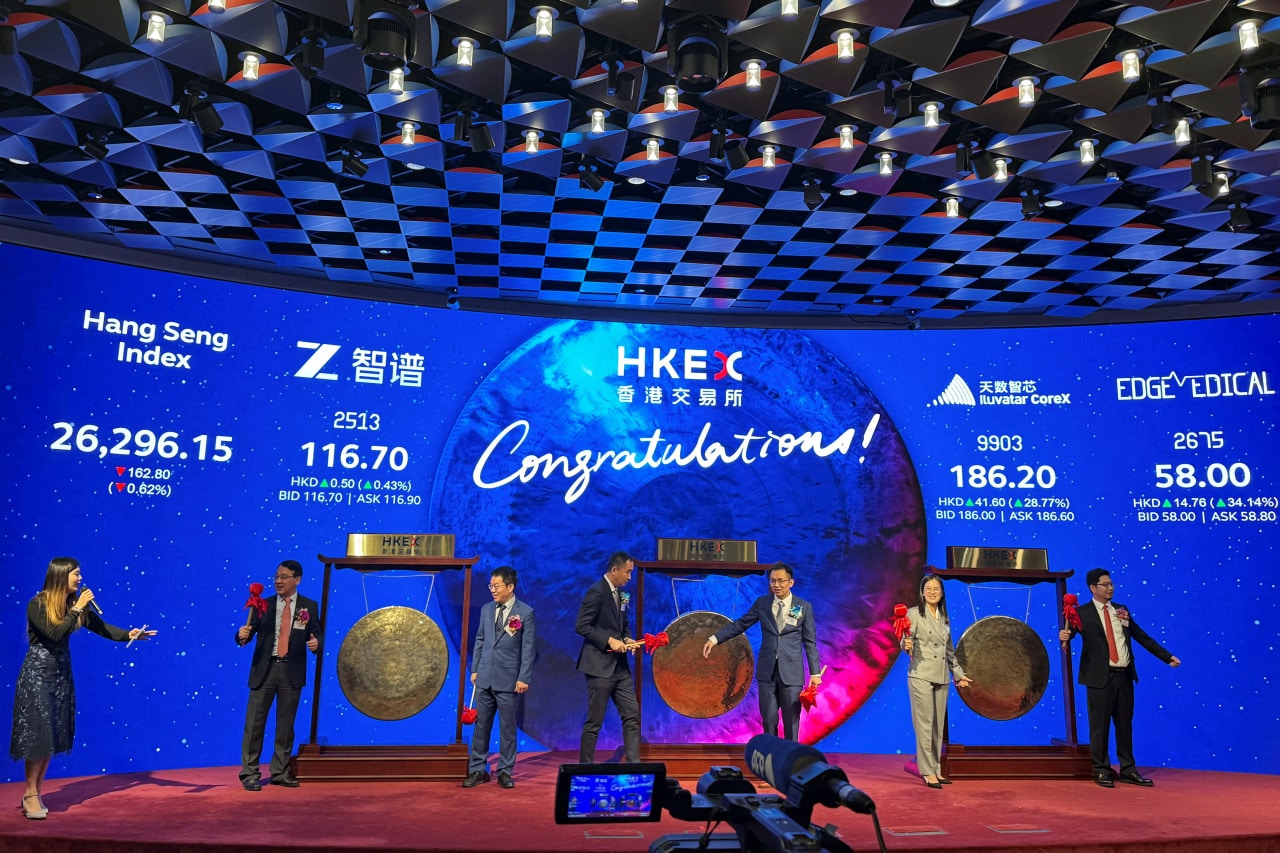
In January, executives at Tang’s Z.AI—then known as Knowledge Atlas Technology, or Zhipu—struck the gong at the Hong Kong stock exchange, making it the first Chinese AI model startup to go public. By July, Z.AI’s annual recurring revenue—a key metric for subscription-based services—had risen to $1 billion, people familiar with its operations said, about twice that of DeepSeek.
That still trails American titans by a wide margin. Anthropic’s annual revenue reached $65 billion in July, according to investors briefed by the company.
At the DeepSeek meeting in May, Liang said computer chips, not people, accounted for the most critical gap between Chinese and American companies. Researchers at top labs including Alibaba and Z.AI said they are often allotted one-fifth of the high-end chips available to peers at OpenAI and Google.
While Chinese companies pursue “cost-efficiency to the extreme,” said Laila Khawaja, Miami-based analyst at Gavekal Technologies, “U.S. firms with more advanced chips and willingness to burn capital spend a lot more on explorative research that could potentially lead to step-change innovations.”
Several Chinese AI developers are building models with five trillion to 10 trillion parameters, a shorthand figure for a model’s capabilities. People in the industry estimate Anthropic’s latest models have more than five trillion parameters.
Tang is training Z.AI’s next flagship model, which his team hopes will be capable of executing complex research tasks that stretch over weeks, said people familiar with the plans. “Whoever is first to push the technological limit even an inch higher will redefine what’s possible across every industry,” Tang wrote in a memo to employees in July.
Write to Raffaele Huang at raffaele.huang@wsj.com


