
 E-Paper



The Gulf states want Donald Trump to choose: them or Israel
Qatar itself cannot do much, at least acting alone. Start with the obvious: there will be no military response


 Prefer HTon Google


DIPLOMACY REQUIRES a selective memory. On September 15th leaders of Arab and Muslim countries gathered in Doha to condemn Israel’s recent attack on the Qatari capital. One of the attendees was Masoud Pezeshkian, the Iranian president. “Israel strikes wherever it wants and does whatever it wants,” he said. Never mind that, three months earlier, Iran launched its own barrage of ballistic missiles at Qatar: violations of sovereignty are only bad when someone else commits them.
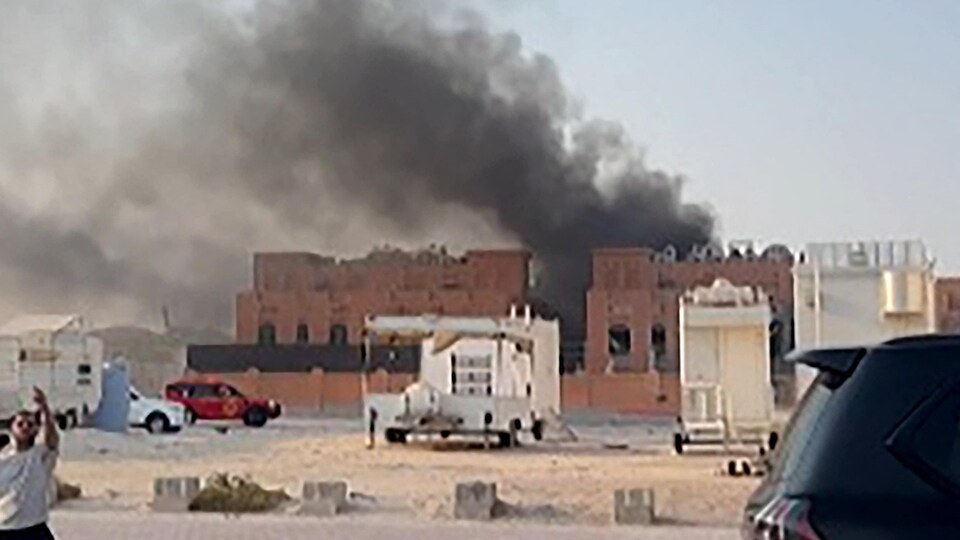
Moments of hypocrisy notwithstanding, the summit was an unequivocal show of support for Qatar. Everyone agreed that Israel was wrong to bomb the emirate in a failed attempt to assassinate leaders of Hamas, the Palestinian militant group. But there was rather less clarity on what to do about it. Iran, for example, urged an “Islamic NATO”, a stillborn idea given how many Arab regimes view Iran as a menace.
Qatar itself cannot do much, at least acting alone. Start with the obvious: there will be no military response. Qatar is too small to challenge Israel, and its goal is to avoid conflict, not escalate one. Nor can it threaten to cancel diplomatic or economic ties with Israel, since it has neither. It has already secured a unanimous UN Security Council resolution condemning the strike. It could also try to haul Israel before the International Court of Justice. But such steps are more symbolic than substantive.
Any serious response must be co-ordinated with other Gulf and Arab states, who often agree on little. To take one example: Qatari officials have urged the United Arab Emirates (UAE) to downgrade its relationship with Israel. The Emiratis have taken some modest steps, summoning Israel’s deputy ambassador for a démarche and barring Israeli firms from the Dubai air show in November. But they are hesitant to go much further (though that may change if Binyamin Netanyahu, the Israeli prime minister, moves ahead with his threat to annex parts of the occupied West Bank).
Diplomats in the Gulf speculated about other possible measures, such as states closing their airspace to Israeli planes. None made it into the final communique from the Doha summit, which was full of boilerplate. The disconnect has led some pro-Israeli analysts to argue that condemnations of the strike are largely for show. Other Arab countries might condemn Israel in public, the argument goes, but in private they resent Qatar’s support for Islamist groups and will not act on its behalf.
That is a misguided view. “It was a wake-up call for all of us,” says one Gulf diplomat who is often critical of Qatar. “We see our joint security as contiguous, and Israel harmed that,” says another. The muted response simply reflects reality: Gulf states do not have much influence over Mr Netanyahu’s government. If they cannot put pressure on Israel, however, they will look to put pressure on Israel’s closest ally instead.
For decades, the relationship between America and the six states of the Gulf Co-operation Council (GCC)—Bahrain, Kuwait, Oman, Qatar, Saudi Arabia and the UAE—was predicated on a bargain. America would protect Gulf states; in exchange, they would guarantee a reliable supply of oil and gas and use some of their hydrocarbon wealth for America’s benefit.
That bargain had already begun to fray after Iranian-sponsored attacks on Saudi Arabia in 2019 and the UAE in 2022, neither of which elicited a strong American response. Gulf states want a stronger one now: not only a firm commitment that Israel will not be allowed to strike again, but a more formal security guarantee.
If America balks, Gulf states are not without leverage over their protector—but they might struggle to use it. In 2020-24 Qatar was the world’s third-largest arms importer, behind only Ukraine (which is at war) and India (which has a population nearly 500 times larger). Saudi Arabia ranked fourth; Bahrain, Kuwait and the UAE all placed in the top 25. America is the largest supplier to each. Gulf states could look elsewhere, which would diminish America’s influence in the region and hurt its arms industry to boot.
That is easier said than done, though. Buying weapons from America’s rivals would trigger bipartisan fury in Washington. It would also present a practical problem: systems from Russia and China are not interoperable with kit made by NATO members. Gulf states could look to buy less from America and more from American allies; Turkish drones, for example, are already a hot item in the region. They could also invest more heavily in indigenous arms production, which was already a goal for the Saudis and Emiratis. But such steps need time to implement.
Another lever is economic. In May Mr Trump made a four-day swing through Saudi Arabia, Qatar and the UAE. He went home touting $2trn in trade and investment deals (a figure that was almost certainly exaggerated). The Gulf states could threaten to cancel some of its planned investments. Yet here too they run the risk of upsetting a mercurial president—and of jeopardising their own efforts to grow their non-oil economies. Saudi Arabia and the UAE are not making bets on American AI firms just to appease Mr Trump; they also want to boost their own tech sectors.
After two years of regional war, the Gulf states are furious about the carnage in Gaza, baffled by Israel’s unrelenting hostility towards the new Syrian government and nervous about another round of fighting with Iran. They want Mr Trump to make a choice. On one side is a long-standing alliance with a club of rich pro-American monarchies; on the other is his no-limits friendship with Mr Netanyahu, an unpopular prime minister who even many Israelis believe is leading their country to ruin.
Seen from Abu Dhabi, Doha or Riyadh, that is not much of a choice at all. Their problem is that, at least thus far, Mr Trump has acted as if it is.
Sign up to the Middle East Dispatch, a weekly newsletter that keeps you in the loop on a fascinating, complex and consequential part of the world.


