E-Paper



Trump heads to Situation Room, says ‘final call imminent’: What’s the status of Iran peace deal now?
Donald Trump said he was heading into a Situation Room meeting to make a “final determination” on Iran, while statements from Tehran raised fresh doubts.

 Prefer HTon Google


Listing his sweeping demands as part of a proposed peace deal, US President Donald Trump said he was heading into a Situation Room meeting to make a “final determination” on Iran, even as contradictory statements from Tehran raised fresh doubts over whether the two sides were actually nearing a breakthrough or headed toward yet another false alarm after months of stop-start negotiations.
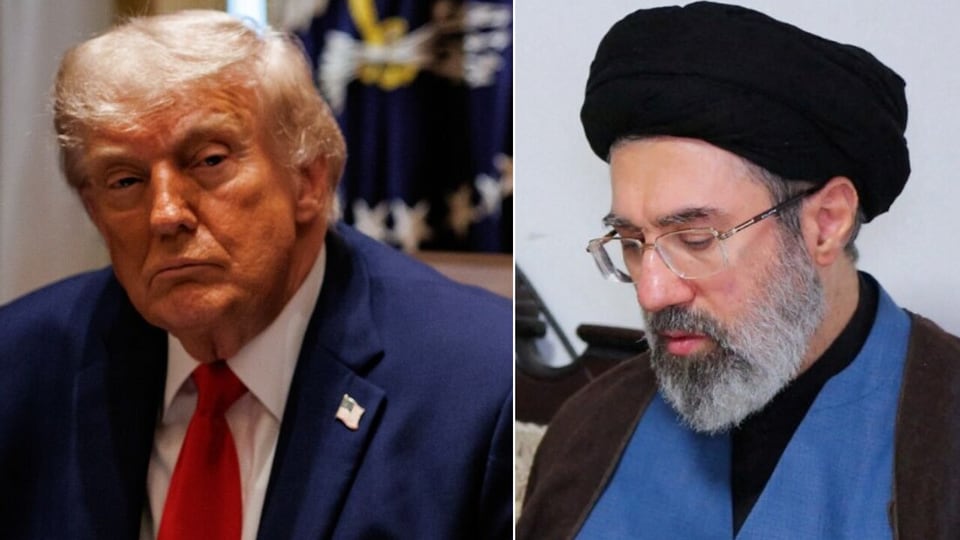
The war, which began on February 28 following joint US-Israeli strikes on Tehran, has now dragged on for nearly three months. While a temporary ceasefire agreed on April 8 remains in place, sporadic military action has continued. A report by US media outlet Axios said negotiators from both sides had reached a preliminary understanding on a deal, pending Trump’s final approval. Track US-Iran war live.
Trump says final call imminent
The US President announced on social media that he would be heading to the Situation Room to decide on the final steps regarding the proposed agreement.
“I will be meeting now, in the Situation Room, to make a final determination,” Trump wrote.
He repeated his longstanding position that Iran “will never have a Nuclear Weapon or Bomb” and insisted that the Strait of Hormuz must remain open, with all mines in the waterway removed or destroyed.
The White House did not clarify who Trump was meeting with or whether a final agreement was close.
The proposed arrangement, according to the Axios report, would extend the existing truce by another 60 days while the US and Iran continue discussions over Tehran’s nuclear programme.
Iran says no final agreement reached
Hours after Trump’s post, Iran’s semi-official Tasnim news agency pushed back against the US narrative, reiterating that no final understanding had been reached.
Iranian foreign ministry spokesman Esmaeil Baqaei also rejected suggestions that Tehran was negotiating under American pressure.
“The Islamic republic said goodbye to the language of ‘must’ 47 years ago,” Baqaei told state media.
“Regarding the understanding... exchanges of messages are continuing, but no final agreement has been reached yet,” he added.
Baqaei later went further, saying there were currently “no negotiations” taking place over Iran’s nuclear programme at all – directly contradicting the US position.
Dispute over Hormuz
According to Trump, Iran would remove mines from the Strait of Hormuz and end what he called its blockade of the strategic shipping route “with no tolls.” In return, the US would lift its own parallel blockade of Iranian ports.
Trump also claimed the two countries would work together, alongside the International Atomic Energy Agency, to remove and destroy Iran’s enriched uranium stockpile.
“No money will be exchanged, until further notice,” he added.
Meanwhile, Fars news agency, citing Iranian sources, reported that Tehran is demanding “the immediate release of $12 billion in frozen Iranian assets” before moving ahead.
“Until this payment is made, Iran will not move to the next phase of negotiations,” the report quoted sources as saying.
The same sources also rejected Trump’s claim regarding Hormuz, saying “no such clause appears in the text of the agreement.”
They further dismissed the idea of destroying Iran’s nuclear material, calling the assertion “fundamentally baseless.”
Iran accuses US of ‘excessive demands’
Iranian foreign minister Abbas Araghchi also signalled frustration with Washington’s negotiating position.
During a phone call with his Omani counterpart, Araghchi “indicated that arriving at a final agreement depended on ending the American party's attitude based on excessive demands and shifting and contradictory positions,” news agency AFP reported citing Iran’s foreign ministry.
Iran’s parliament speaker Mohammad Bagher Ghalibaf, who participated in peace talks with the US in Pakistan last month, also struck a sceptical tone.
“We place no trust in guarantees or words; only actions matter,” Ghalibaf wrote on X.
He added that Iran had gained leverage not “through talks, but through missiles,” underlining the deep mistrust that continues to shape negotiations between the two countries.
Demand to remove enriched uranium
Trump also returned to one of the most contentious issues in the negotiations, the fate of Iran’s highly enriched uranium buried beneath heavily damaged nuclear facilities struck during last year’s US bombing campaign.
In his post, Trump claimed only the United States and China had the technical capability to retrieve the material.
“The enriched material, sometimes referred to as ‘Nuclear Dust,’ which is buried deep underground with virtually collapsed mountains, caused by our powerful B2 Bomber attack 11 months ago, sitting on top of it, will be unearthed by the United States,” Trump wrote.
He added that the operation would happen “in close coordination and conjunction with the Islamic Republic of Iran, plus the International Atomic Energy Agency,” and that the material would then be “DESTROYED.”