
 E-Paper



From ‘ending’ many wars to needing many mediators for Iran, tracing Trump's figure of 8
Trump said his administration talking to Iran; Pakistan most likely venue for negotiations; US President also dialled PM Modi, who called for de-escalation

 Prefer HTon Google


After claiming to have ended at least eight wars since he returned as US President last year, Donald Trump is once again calling for peace, but in very different circumstances.
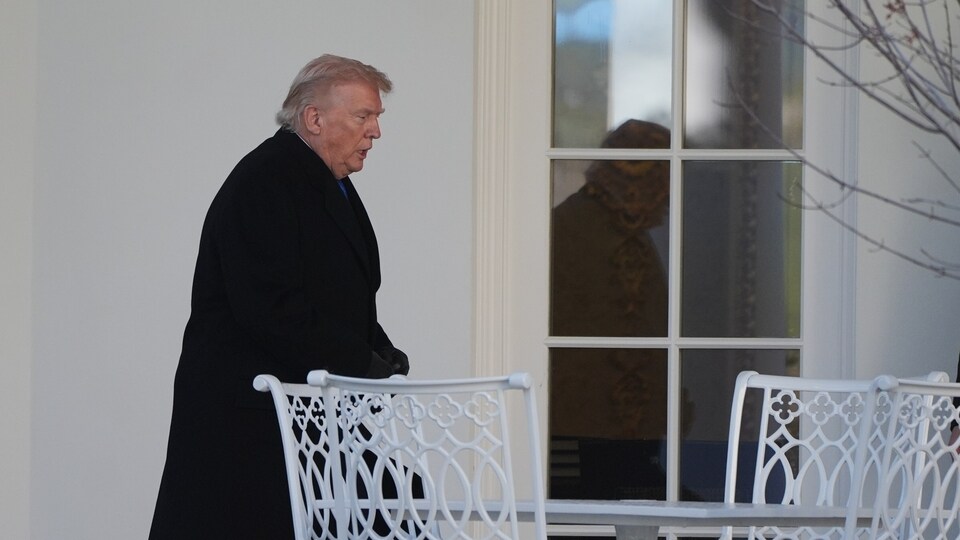
The stage now seems set for US-Iran talks in Pakistan, as Trump gave a clear sign on Tuesday night when he shared Pakistan PM Shehbaz Sharif's X post offering to play host.
The turnaround began after Trump said at the start of this week that his administration is “holding talks” with Iran, a country the US attacked in partnership with Israel four weeks ago. He even spoke of working with “the Ayatollah”, a reference to Iran's Supreme Leader Mojtaba Khamenei.
The number of countries playing mediator at different levels can now be estimated between four and eight, as of Tuesday evening.
Some of Trump's more aggressive Republican Party colleagues are already talking of a “sprint to peace”, though they continue to tout American military superiority.
Trump's changing stance
For Trump, discounting the June 2025 strikes on Iran led mainly by US ally Israel, this is the first war-scale conflict he has entered across his non-consecutive stints as the leader of America.
The businessman-politician was a votary of no-pointless-wars until Iran 2026 happened. That reflected in his “America First” policies on trade too.
After he struck Iran, his policy dichotomy was pointed out most prominently by decorated US military veteran Joe Kent, who resigned last week as his counter-terror adviser in disgust against the war.
Trump has made contradictory claims throughout the war, and now seems to want peace, after it ended up as anything but a “swift and decisive” operation. He had used those words at the start of the Operation Epic Fury on February 28. On Monday, March 23, Trump for the first time spoke of “talks to end the hostilities in the Middle East”.
Movement has been swift since.
Pakistan's Trump ties, role as mediator
By Tuesday morning, Pakistan clearly emerged as a potential host for such negotiations.
Iran's foreign ministry mocked Trump, but it acknowledged that it has received messages from "some friendly countries indicating a US request for negotiations at ending the war".
Pakistan PM Shehbaz Sharif posted an invitation on X by Tuesday evening: “Subject to concurrence by the US and Iran, Pakistan stands ready and honoured to be the host to facilitate meaningful and conclusive talks for a comprehensive settlement of the ongoing conflict.”
Trump posted its screenshot on his Truth Social within an hour.
American media outlet Axios, meanwhile, reported that US negotiators Steve Witkoff and Jared Kushner — Trump's friend and son-in-law, respectively — may meet an Iranian delegation for talks in Pakistan as soon as this week. US Vice President JD Vance might join them.
PM Sharif said he earlier spoke with Iran's President Masoud Pezeshkian. Pakistan's foreign minister Ishaq Dar said he's been in touch with his Iranian counterpart, Abbas Araghchi, as well.
Pakistan's former envoy to Oman, Imran Ali Chaudhry, told a TV channel that army chief Asim Munir held talks with Witkoff and Kushner “around two to two-and-a-half weeks ago” — which means during the war. That means the entire Pakistani system, with army at its top, is onboard and involved.
Pakistan has been a regular feature of Trump's foreign policy in his current term.
Of the eight wars he claims to have ended, Trump also counts the India-Pakistan military exchanges of May 2025. India has asserted that it agreed to a ceasefire only upon Pakistan's request. Pakistan, though, has been happy to let Trump take the credit, with its Munir and Sharif even seeking the Nobel for him.
India, Qatar also call for peace
Besides Pakistan, others reported to be mediating actively are Saudi Arabia, Egypt and Turkey, particularly because the war has hit global oil supplies since Iran has blocked the key waterway Strait of Hormuz.
Trump also rang up Indian PM Narendra Modi on Tuesday. “Received a call from President Trump and had a useful exchange of views on the situation in West Asia," PM Modi wrote on his social media handles. "India supports de-escalation and restoration of peace at the earliest. Ensuring that the Strait of Hormuz remains open, secure and accessible is essential for the whole world. We agreed to stay in touch regarding efforts towards peace and stability,” he added.
Qatar, which mediated before the war too, said on Tuesday that it "supports all diplomatic efforts" to end the war.
US secretary of state Marco Rubio is scheduled to meet his G7 counterparts in France on Friday to discuss Iran, his first foreign trip since the war began.
Although Iran's chokehold on the Strait of Hormuz gives it leverage in potential negotiations, analysts remained cautious.
"I'm very sceptical because trust has been completely destroyed and the positions of the warring parties are further apart than ever," David Khalfa, a Middle East specialist at the Jean-Jaures Foundation, a Paris-based think tank, told news agency AFP. “The margin for manoeuvre on both sides is very limited.”
For now, the number of mediators may cross eight — a number that holds much meaning in Trump's foreign policy. His claims about ending wars mostly stayed at this number, with the White House counting Israel-Hamas, Israel-Iran, Egypt-Ethiopia, India-Pakistan, Serbia-Kosovo, Rwanda-Congo, Armenia-Azerbaijan, and Cambodia-Thailand.
Many of these claims have been denied by the parties involved; or the situations remain unresolved, even flared up again, in some cases.
Israel continues strikes
Amid all the peace efforts, Iran and Israel traded strikes again on Tuesday.
Israel's army said it had conducted a "large wave" of airstrikes across several areas of Iran, which had earlier launched a "direct hit" on a building in an upscale area of Tel Aviv. Defence minister Israel Katz said the campaign would continue “at full intensity”, while another minister, Eli Cohen, said Trump’s comments should be taken “slowly”.
PM Benjamin Netanyahu has asked his close confidant Ron Dermer to monitor any US-Iranian negotiations to make sure the country’s interests are upheld, an Israeli official said.
Trump's ex-aide Joe Kent, in his reaction to reports of talks, had said Israel would have to be “restrained” if the war had to end.
The death toll in the war has gone beyond 1,500 in Iran; more than 1,000 in Lebanon; 15 in Israel, and 13 US military personnel, as well as a number of civilians on land and sea in the Gulf region. Millions of people have been displaced in Lebanon, as Israel has widened its military action to that country too, saying it is striking Iran-backed militia Hezbollah.


