E-Paper



UAE reopens airspace after closure amid Iran missile threats | What is happening?
The General Civil Aviation Authority said the decision to shut airspace followed a comprehensive assessment of operational and security conditions.

 Prefer HTon Google


The United Arab Emirates reopened its airspace shortly after a brief shutdown triggered by what the military described as “missile and drone threats from Iran" on Tuesday.
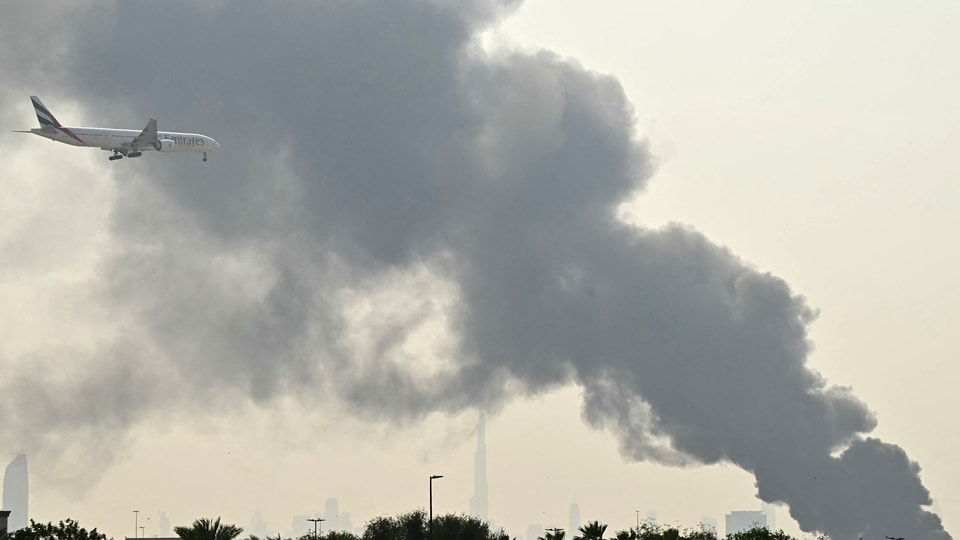
The closure had been imposed earlier as a precautionary measure.
This followed a brief shutdown of the United Arab Emirates airspace after the military said it was “responding to missile and drone threats from Iran.” The closure was lifted shortly afterwards, the state run WAM news agency reported, citing the United Arab Emirates General Civil Aviation Authority.
Authorities said “the situation stabilised,” allowing flights to resume.
UAE airspace closure, what is happening?
The General Civil Aviation Authority said the decision to shut airspace followed a comprehensive assessment of operational and security conditions and was taken in coordination with relevant authorities.
It added that the situation continues to be monitored in real time to ensure the highest levels of aviation safety.
The full but temporary closure, which lasted nearly two hours, was described by the regulator as an “exceptional precautionary measure aimed at ensuring the safety of flights and air crews, and safeguarding the UAE’s territory, amid rapidly evolving regional security developments.”
Soon after, people in Dubai received a missile warning alert. Explosions were heard in the city as the military worked to intercept the incoming threats.
The state run WAM news agency said another drone strike triggered a fire at an oil tank facility in Fujairah, an emirate on the country’s east coast along the Gulf of Oman that has been targeted multiple times. It said no injuries were reported in the blast.
What is happening in the US-Iran war?
The Israeli military said on Tuesday it had launched new attacks across Tehran and Beirut, with the strikes on the Lebanese capital targeting Hezbollah militants.
On Monday, US President Donald Trump said "numerous countries" have told him "they're on the way" to help police the Strait of Hormuz. But he also suggested some countries' reluctance showed a lack of reciprocity in defence agreements with the United States.
The war has killed at least 1,300 people in Iran, at least 850 in Lebanon and 12 in Israel, according to officials in those countries. The US military says 13 US service members have been killed and about 200 wounded.