E-Paper



US H-1B fee hike proposal threatens to shut out Indian students, workers
This follows a previous $100,000 fee halted by a court, with DHS claiming the fee will help cover administrative costs of the immigration system.

 Prefer HTon Google


In a move that could dent legal immigration prospects for thousands of Indian professionals, the US government has proposed a new $103,265 application fee on H-1B visas that could apply to international students and workers hired within the country.
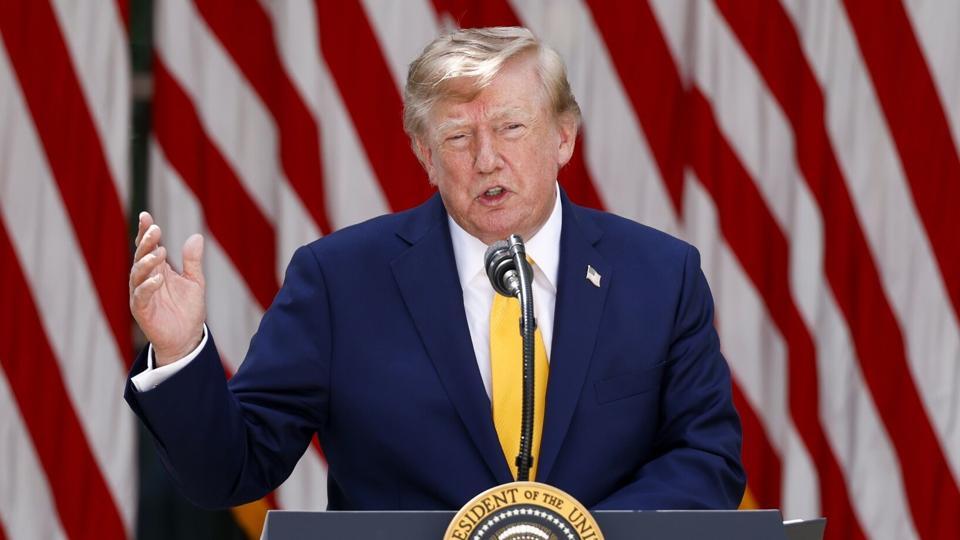
The proposal by the Department of Homeland Security (DHS) comes just an earlier $100,000 H-1B visa fee — which was announced by Donald Trump as a presidential proclamation in September 2025 and subsequently halted by a US court in June this year — is set to expire on September 21. The Trump administration has justified the new fee — which is expected to effectively replace the earlier $100,000 fee - as necessary to recover the administrative costs of managing America’s legal immigration system. DHS caveated in its 67-page draft notice issued on Monday that if the earlier fee survives the legal challenges and Trump’s proclamation is renewed or extended, both fees would be applicable concurrently.
DHS clarified that the new fee will apply only to cap-subject H-1B visa applications. At present, America caps the number of H-1B visas granted in a fiscal year at 65,000, with an additional 20,000 visas granted for holders of advanced degrees. Cap-exempt H-1B visa applications — which are generally used by non-profit organisations and universities — will not be required to pay this additional fee.
Deep Dive

Also Read | US plans to hike H-1B visa fee over $100,000, moves to make it permanent; Indians may face impact
“DHS believes that cap-subject H-1B petitioners are willing to pay and can afford an additional $103,265 fee. The addition of this proposed fee to H-1B cap-subject petitions is intended to provide a dedicated source of revenue to reimburse the federal government for some of the costs of administering the lawful immigration system, including certain costs incurred by other departments and agencies,” the draft notice reads. It adds that the Department of Labour, the State Department, the Department of Justice and DHS will receive substantial revenues from the new fee, which could bring in an estimated $8.8 billion in revenue from 85,000 visa petitions.
The proposed rule will be formally published on Tuesday and then opened for public comment for 30 days. Following this, the DHS may issue a final rule.
The legal basis of the new $103,265 fee is thought to be questionable by experts, although the DHS has claimed the necessary authority to levy the fee.
Also Read | Two layoffs in two years: Indian H-1B worker questions US stay, weighs India return amid visa anxiety
“This proposed rule is different from and in addition to the $100,000 proclamation fee winding its way to the Supreme Court. This rule does not take effect for at least 30 days and, even then, I expect this rule to draw challenges the moment it’s finalised, from similar coalitions of business groups and states that have been fighting the proclamation fee in court for the better part of a year. Courts will have to decide whether a proposed fee this size is arbitrary and capricious, disconnected from the actual cost of adjudicating a petition, and whether DHS even has the statutory authority to set an immigration fee at this scale,” said Jeff Joseph, president of immigration strategy at Manifest Law.
The scope of the new fee, too, raised concerns. The proposed $103,265 fee differs in scope from the $100,000 proclamation payment it is expected to replace. The earlier fee, framed as a restriction on entry, applied only to workers outside the United States or those requiring consular processing for a new H-1B after a change in status was denied. The US government clarified in October 2025 that foreign graduates changing status from student visas to H-1Bs within the country were exempt as long as the change of status was approved, which brought significant relief to the roughly 360,000 Indian students studying in America. The new fee, by contrast, is a filing charge attached to every cap-subject H-1B visa application at the time of submission, applying regardless of where the worker is located or whether they are switching status from within the US. That structure eliminates the exemption that shielded US-educated international students.
Also Read | US visa rules change from September 15: What H-1B holders, students need to know
The new fee is also expected to have a major impact on small and medium sized employers in the United States. “Likely litigation aside, though, the potential impact on small and mid-sized employers will be very real. For a 30-person engineering firm, a regional healthcare staffing agency, or a small manufacturer that sponsors one or two H-1B workers a year, it’s not a line-item, it’s a decision to stop sponsoring altogether. That’s the quiet effect of this rule: it doesn’t just raise costs, it prices small employers out of a talent pipeline,” said Joseph of Manifest Law.