
 E-Paper



For strong pharma supply chains, India, US have to work together: US health secy
India is a critical player in the supply chain...because India is a leader in production, research, innovation: Xavier Becerra

 Prefer HTon Google


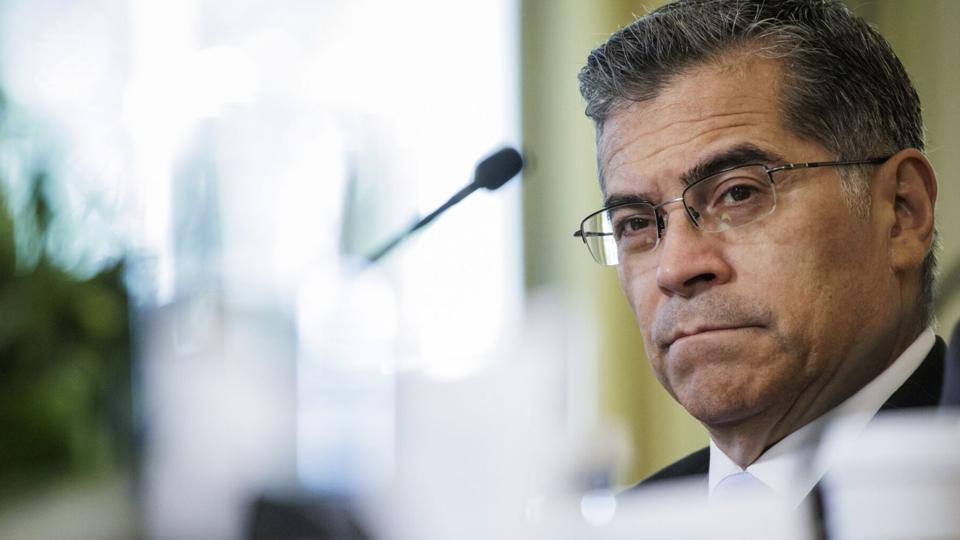
Washington: Xavier Becerra is the United States Secretary of Health and Human Services, making him the senior most cabinet-ranking executive official in charge of America’s vast and complex healthcare system. Before departing for India, where he is attending a G20 health ministerial and engaging in bilateral conversations with his Indian counterpart, health minister Mansukh Mandaviya, Becerra spoke to HT about the India-US health partnership, pharma supply chains, and the role of pharma companies.
Q: Since the pandemic, we have seen an increased focus on the health collaboration between India and the US? What’s the rationale and potential in this domain?
A: In order to make sure we are safe in the US and safe in India – as we have learnt that no one is safe till everyone is safe – we have to have those who are global leaders like India and the US to work in partnership to ensure that one of us will be safe so that all of us will be safe. The fact that India and the US and a few other global leaders have decided to step up to try to ensure a pandemic like Covid can never happen again and devastate so many communities around the world is indispensable, it is essential. The G20 session will give a chance to many of the leaders of the world will give a chance to affirm that we wish to work together in partnership to ensure that all of us are safe.
Q: Public memory is short. Do you see a diminished appetite in putting in resources to deal with pandemic preparedness, despite what happened during the Covid-19 pandemic?
A: There is always the need for more commitment to resources and action. We can’t let our guard down. One of the first things we have to do is prepare and prevent. For all of us, and it makes no difference where you are in the world, the most important thing is to do things that keep us safe, that are easy, accessible and straightforward. It doesn’t cost money to wear a mask in a public place where there are people who are coughing. It doesn’t, today, cost much to have a vaccine against Covid. It needs coordination. So centres of gravity, India, the US, and others, are working together so we can cover the gaps that we saw so prevalent during the pandemic.
Q: During PM Narendra Modi’s state visit to the US, he and President Joe Biden decided to step up cooperation on cancer treatment and research. This is an issue close to Biden’s heart. What’s driving it?
A: I think the President was enthusiastic to see PM’s interest and commitment to this issue. We know that with all these diseases, we cannot be safe if there continues to the scourge of cancer that’s spreading around the world. And so to have a country like India with its research capabilities and its known commitment to go beyond its borders to help other people, that will make sure this effort to battle cancer will be taken by the greatest leaders in the world.
Also Read: PM Modi meets US lawmakers, hails strong bipartisan support
Q: And what form will it take – joint investment in research on prevention and treatment?
A: All of the above, from research to treatment. One of the greatest weapons against cancer is screening, simple screening to detect cancer before it consumes your body. We want to make sure we are taking advantage of every opportunity to ensure that people get screened for cancer, not just in US and India but beyond. That’s where we can use the prowess of US and India in their scientific capabilities and application of therapies and medicines to help people not just live long lives but be cancer free.
Q: Given the focus of de-risking from China and concentration of APIs (active pharmaceutical ingredient) in China, what do you hope to do with India in terms of building more resilient supply chains?
A: If we want to have resilience throughout the world, and certainly here in the US, and want to provide discovered vaccines and therapies that work, we have to have resilience in supply chains. India is a critical player in the supply chain, not just because it has so much material and APIs but because India is a leader in production, in research, innovation, production of these treatments and therapies. If we want a resilient supply chain, India and the US will have to work together in partnership with other countries to make sure that’s the case.
Q: One of the factors that has inhibited the development of deeper health ties is what India considers Big Pharma lobby in the US, and US considers generic drugs production in India that your companies don’t think conform to IP obligations. How do you see the role of US big pharma in inhibiting this partnership and how do you reconcile this tension?
A: That’s a great question. We are making progress in how we ensure that the innovation and the life-saving capabilities of our new technologies and medicines reach all people. I think you are going to find we have a good dancing partner in India. In so many ways, we can complement each other in our capabilities. The question will be will all stakeholders wish to dance with us and so our job is to make sure that we marry all the great capabilities into a fruitful initiative that lets not just American and Indians benefits from these life-saving medicines but we can get them to other parts of the world quicker and cheaper.
Q: Do you think there is greater political will to address this tension today?
A: Yes, I do. You are familiar with the debate we are having here in the US on pharmaceuticals. We have always known that we need to have incentives for research and innovation. We need to make sure that there is someone out there thinking about what will be the cure for cancer, what would be the way to address Alzheimer’s, how do we end hunger. We want those innovative minds to be incentivised. At the same time, we want to make sure that once there is a discovery, it reaches all corners of the globe as quickly as possible. That is to our benefit, as to India’s. I believe we are going to see a growing dynamic that favours more innovation but quicker application of those innovations around the world. At the end of the day, pharma companies will benefit generously in their profits from their innovative work but we will also be able make sure more people have access to those innovative medicines.


