
 E-Paper


Donald Trump's reciprocal tariffs from April 2. What's in store for India, other countries?
Ever since he returned to office for a second term in January this year, Donald Trump has constantly proved to be aggressive with tariff threats.

 Prefer HTon Google


Having repeatedly described April 2 as 'Liberation Day', US President Donald Trump has promised to roll out from Wednesday reciprocal tariffs or taxes on imports from other countries, saying that it would free America from depending foreign goods.
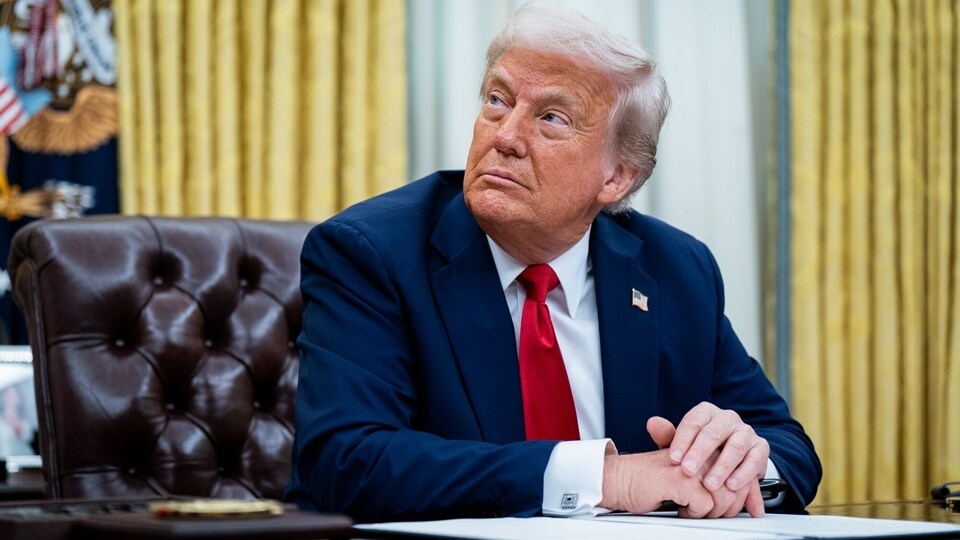
Donald Trump said that he will impose "reciprocal" tariffs to match the duty rates other countries have imposed on US products, a report from The Associated Press said.
White House press secretary Karoline Leavitt, however, on Monday said that the president will reveal his plans to impose reciprocal tariffs on all of US' trading partners will elapse on Wednesday. She added that whether details of the tariffs be revealed, that depends on Trump himself.
Ever since he returned to office for a second term in January this year, Trump has constantly proved to be aggressive with tariff threats.
Why reciprocal tariffs?
The Republic leader has argued that tariffs will protect American industries from any unfair competition, raise money for the federal government and extend an anchor for demanding concessions from other nations. However, economists have reportedly suggested that broad tariffs at these rates might just backfire.
ALSO READ | Trump promises 'Liberation Day' on April 2 with tariffs on trade partners: What we know
Tariffs tend to trickle down to the consumer through higher prices and at the same time, businesses across the globe will stand to lose a lot if their costs go up and sales go down.
Import taxes, along with uncertainty around future trade, have already enraged the financial markets and reduced consumer confidence.
What will happen on April 2?
While details of Donald Trump's plan are unknown, reciprocal tariffs or 'by-product duties' or "averages" imposed on all goods from each country, or it could be something entirely difficult.
These tariffs might also possibly reflect the tariffs other countries charge as well as their value added taxes and subsidies to domestic companies.
Peter Navarro, senior counselor for trade and manufacturing to Trump, told 'Fox News Sunday' that overall the tariffs could raise $600 billion, meaning an average rate of 20 per cent.
ALSO READ | Asian markets fluctuate as traders prepare for 'Liberation Day'
Previously, the US president has mentioned his thoughts about taxing the European Union, India, South Korea, Brazil and other countries, through these reciprocal tariffs.
India and the US are learnt to have agreed to finalise part of a bilateral trade deal by this year but neither side have given indications of any tariff exemptions, a news agency AFP report earlier this week said.
Both countries held trade talks in New Delhi this week days out from rollout of of US President Donald Trump's reciprocal trade tariff plan.
In addition, the delayed import taxes on Canada and Mexico could also take effect very soon. The month-long delay that Trump approved for several of these goods is set to elapse in early April.
As per Trump's Truth Social network, the extension he granted for Mexican imports covered by the US-Mexico-Canada agreement runs through April 2.
Other Trump tariffs about to take effect
US president Donald Trump has said that a 25 per cent tariff on all imports from any country that buys oil or gas from Venezuela, including himself, will begin on Wednesday.
Trump's 25 per cent on auto imports will also be collected from Thursday, with taxes on fully-imported cars set to kick off at midnight. These tariffs are also going to expand to applicable auto parts in the coming weeks, through May 3.
The White House is expecting to raise $100 billion in revenue from these new duties.
Tariffs already in effect
Trump's 10 per cent tariff on all Chinese imports began from March 4, a move that has been met with retaliatory tariffs from Beijing, which also includes placed on 15 per cent tariff on coal and liquified natural gas products and 10 per cent duty on crude oil from America.
The US president's expanded 25 per cent tariff on steel and aluminium products also took effect in March, with Trump seeking to remove steel exemptions and raise aluminium's levy from his previous 2019 import taxes plan.
Earlier this month, Trump also imposed a partial, month-long delay of his 25 per cent tariffs on both Canada and Mexico, postponing the taxes for auto-related imports.
Other imports, as well as a lower 10 per cent on potassium and Canadian energy products, are still be imposed.
While Canada has rolled out counter measures to deal with the US president's constant moves, Mexico has yet to impose new levies formally. Mexico is seemingly hoping to de-escalate the trade war.
More Trump tariffs in store?
With Trump being the US president, more tariffs are not an impossibility. He has already threatened imposing import taxes on copper, lumbar, pharmaceutical drugs and computer chips.
Donald Trump has said that he will not negotiate with other countries on Wednesday's tariffs until after they take effect. Even though he said that 25 per cent taxes on auto imports should permanent.
The European Union has also announced measures on US products with some 26 billion euros ($28 billion) in response to Trump's tariff on schools and boy. These rates will also target American beef, poultry, bourbon, motorcycles, peanut butter and jeans.
The EU had said that the retaliatory trade action will occur in two phases, on Tuesday (some other) and April 13. However, EU said that it will delay these until mid-April, without any specific date.


