
 E-Paper


How legal is Donald Trump's move to deploy California's National Guard in Los Angeles? Explained
According to the Posse Comitatus Act of 1878, the US military, including the National Guard, is forbidden from participating in regular civil law enforcement.

 Prefer HTon Google


To quell the ongoing protests in California’s Los Angeles, the United States’ second biggest city, President Donald Trump deployed National Guard troops in the state over the weekend. Following this, the protests only intensified as demonstrators put cars on fire and even scuffled with security forces in Los Angeles.
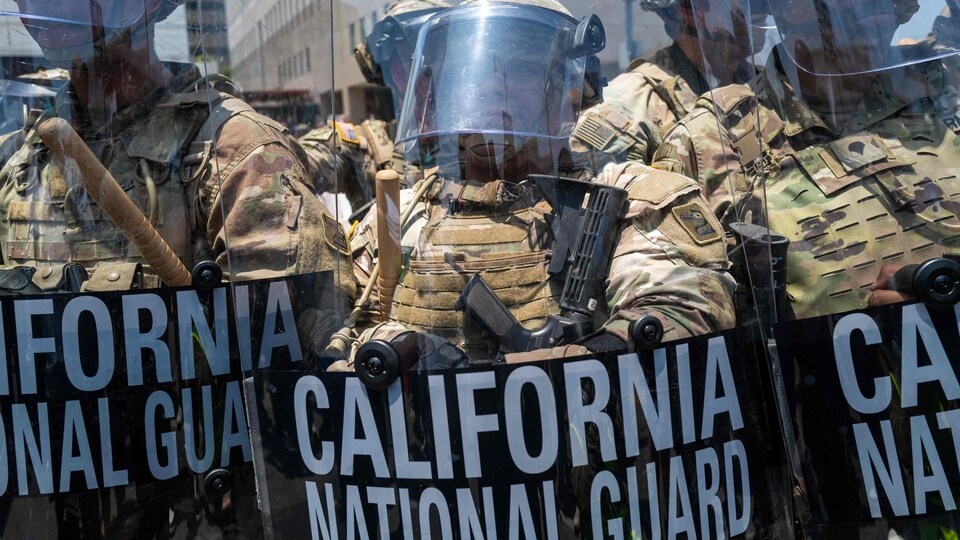
The governor of California, Gavin Newsom, has opposed the deployment of the National Guard troops and has asked Trump to take it back.
California’s National Guard is a standby military usually controlled by the state's governor, reported AFP.
“I have formally requested the Trump Administration rescind their unlawful deployment of troops in Los Angeles County and return them to my command,” Newsom said in a post on X.
Track live updates of LA protests here.
“We didn’t have a problem until Trump got involved. This is a serious breach of state sovereignty — inflaming tensions while pulling resources from where they’re actually needed. Rescind the order. Return control to California,” he added.
People in LA are protesting against the raids by immigration officials that have led to the arrests of dozens of people. These people, according to the authorities, are illegal migrants and gang members, reported AFP.
However, the question that looms large is whether Trump’s move to deploy National Guard troops is legal or not.
What law did Trump use to ‘protect’ ICE officials?
To deploy at least 2,000 National Guards troops in California under federal service, Trump used the Title 10 of the U.S. Code.
Terming the protests in LA as a possible “form of rebellion”, Trump used the provision of Title 10 - Section 12406 which allows any state’s National Guard in federal service whenever-
(1) the United States, or any of the Commonwealths or possessions, is invaded or is in danger of invasion by a foreign nation;
(2) there is a rebellion or danger of a rebellion against the authority of the Government of the United States; or
(3) the President is unable with the regular forces to execute the laws of the United States;
“the President may call into Federal service members and units of the National Guard of any State in such numbers as he considers necessary to repel the invasion, suppress the rebellion, or execute those laws,” says the provision.
Can National Guard troops arrest protestors?
According to the Posse Comitatus Act of 1878, which is at the center of the ongoing dispute over the deployment, the US military, including the National Guard, is forbidden from participating in regular civil law enforcement.
It was enacted in response to the abuses resulting from the extensive use of the army in civil law enforcement during the Civil War and the Reconstruction, according to the US Department of Justice. However, the Act allows legislated exceptions.
While Section 12406 used by Trump does not override this prohibition, it allows the troops to “protect” ICE and other United States Government personnel.
This means that the National Guard troops cannot arrest protesters in LA, according to a Reuters report.
Can Trump’s move be legally challenged?
While the state of California could sue Trump over the deployment, citing that the protests did not rise to the level of a “rebellion”. However, that would be a lengthy process and the protests might be over before the lawsuit’s conclusion, Reuters reported citing experts.
Also, according to 10 U.S.C. 12406, orders for the deployment of National Guard under the said three circumstances “shall be issued through the governors of the States”, which is yet another point that could be challenged. However, according to legal experts, this argument might not hold much value. That is because the language likely reflects the way the troops are generally deployed but doesn’t really provide the state governor an option to not comply with the President’s order, the Reuters report added.
With inputs from AFP, Reuters.


