
 E-Paper


Kamala Harris more popular than Donald Trump among AAPI voters, new poll reveals
Kamala Harris is viewed more favorably by Asian American, Native Hawaiian and Pacific Islander registered voters than Donald Trump, as per new poll.

 Prefer HTon Google


Vice President Kamala Harris is viewed more favorably by Asian American, Native Hawaiian and Pacific Islander registered voters than former President Donald Trump, according to a new poll. AAPI voters are also more likely to believe that she is the candidate who better represents their background and policy views.
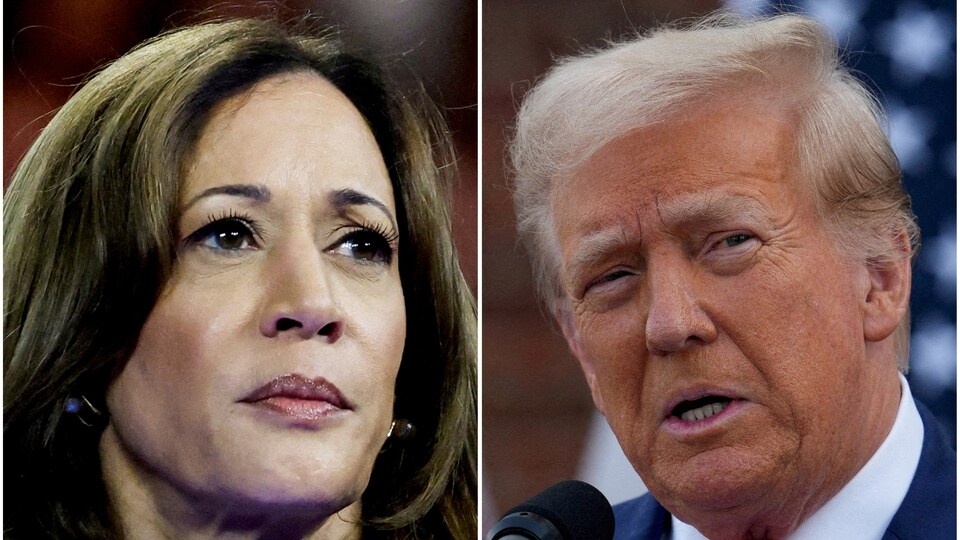
The new survey from AAPI Data and APIAVote finds that around 6 in 10 AAPI voters have a very or somewhat favorable opinion of Harris, while about one-third have a somewhat or very unfavorable view. In comparison, 3 in 10 AAPI voters have a positive view of Trump and around two-thirds view him negatively.
That's an increase in favorability for Harris since October 2023, when an AP-NORC/AAPI Data poll found that about half of AAPI adults had a somewhat or very favorable view of her. Opinions of Trump among this group have remained stable.
Harris is both Black and South Asian American, and has worked to rally AAPI voters in swing states like Georgia where their numbers are growing. But while the poll indicates that AAPI voters are much more likely to see their own cultural identity reflected in her than in Trump — about half of AAPI voters say Harris better represents their background and culture, while only about 1 in 10 say this about Trump — it's not clear how much this is influencing their perspectives on the candidates.
Only about 3 in 10 AAPI voters say that Harris' Asian Indian identity is extremely or very important to them, although some AAPI Americans may be more connected to her background than others. About 7 in 10 Asian Indian adults see Harris as the candidate who better represents their background and culture, which is higher than AAPI adults overall.
Ping Hackl, a 27-year-old Chinese American independent in Tulsa, Oklahoma, is planning to vote for Harris, but not because of the Democratic candidate's race or gender.
“I don’t really care. She can be anybody,” said Hackl.
Hackl says she worries about the preservation of democracy and divisiveness that could lead to political violence. Thus, she feels Trump “is very dangerous to the country.”
In fact, the poll indicates that Harris' gender may be more salient to AAPI voters than her racial background. While the Harris campaign has avoided emphasizing that she could be the first female president, about half of AAPI women voters say her identity as a woman is extremely or very important to them.
AAPI women are also more likely than AAPI men to say their own background as Asian or Asian American is at least “very” important to how they think of themselves, and they're also more likely to say this about their identity as a person of color. And younger AAPI voters, between the ages of 18 and 34, are especially likely to care about Harris' identity as a woman.
“We’ve seen so much organizing from young people as well as AAPI women who are really leading the different ethnic specific affinity groups like the South Asians for women, South Asians for Harris, Korean Americans for Harris, Chinese Americans for Harris,” said Christine Chen, executive director of APIAVote.
And the survey suggests that AAPI voters may be hearing more from Democratic organizers. About 4 in 10 AAPI voters said they have been contacted by the Democratic Party “a great deal” or “some” in the last year, while about 3 in 10 said the same about the Republican Party.
Trump and Republican vice presidential nominee JD Vance have also recently echoed old stereotypes about Asian Americans and food by amplifying false rumors that Haitian migrants in Springfield, Ohio, are eating pets, and the poll found that the issue of racism is broadly important for this group. About 7 in 10 AAPI voters say they “could not ever” vote for a candidate who does not share their view on racism or discrimination, making it a bigger “dealbreaker” issue than the economy.
Not all AAPI voters have a negative view of Trump, though. Jihua Ma, a 45-year-old naturalized citizen from China who lives in Boston, leans Republican and voted for Trump in 2020. Ma feels Trump is still the most effective leader.
“I recognize that he’s mean, and he sometimes posts mean pictures,” Ma said. “I’m electing someone to really run this country, not someone to be a friend, a nice person.”
Ma wants someone who will get inflation and the border under control, and he's unsatisfied with Harris' proposals on those issues. “I don’t see her policy has a solid platform,” Ma said, adding that he couldn't think of any accomplishments Harris has made as vice president or as a senator from California.
And it's still possible that Trump could make inroads with AAPI voters, although the gap in popularity between the candidates leaves a lot of ground to make up. “An issue where the Republican Party could chip away AAPI support is on the economy and on crime,” said Karthick Ramakrishnan, founder and executive director of AAPI Data. “And I think this is where, you know, Harris has tried to blunt some of those critiques by offering some proposals.”


