
 E-Paper


Solar Eclipse 2023: Where to see the ‘Ring of Fire’ in US
A rare solar eclipse will occur on Saturday, October 14, with visibility in most of the US states

 Prefer HTon Google


An annular solar eclipse or the “Ring of Fire” will be visible in most of North and South America for the first time since 2012 on Saturday, October 14. The celestial event will begin in Oregon at 9:13 a.m. PDT and end in Texas at 12:03 p.m. CDT. The solar eclipse can only be witnessed by those living in the western hemisphere. Countries falling along the narrow path that crosses from Oregon to Texas will get full visibility.
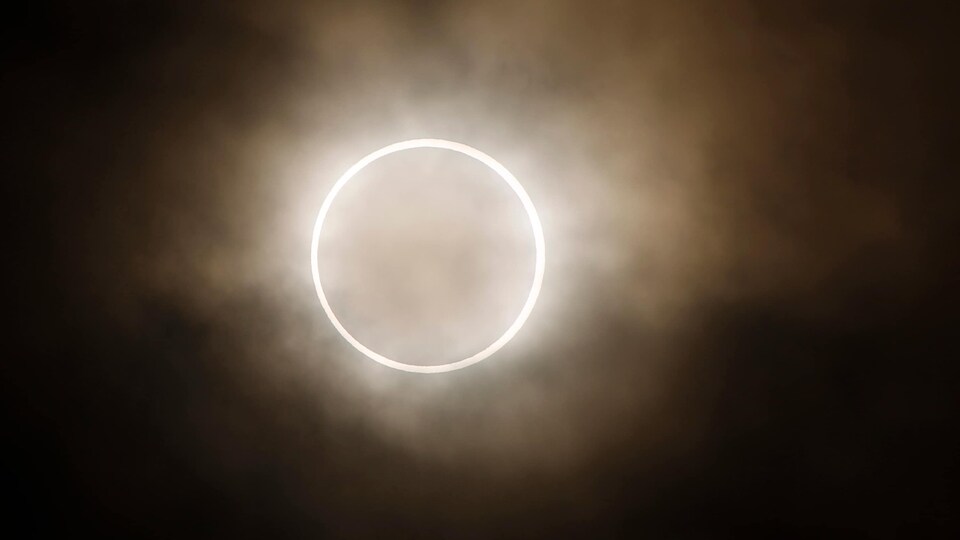
ALSO READ: Solar Eclipse 2023: Safe ways to watch solar eclipse
Where to see the ‘Ring of Fire’ in the United States?
Sky watchers in Oregon, Nevada, Utah, New Mexico and Texas, as well as, parts of California, Idaho, Colorado and Arizona will get the opportunity to witness the rare eclipse. Meanwhile, in all other states including Alaska, a partial eclipse will be visible.
Moreover, the rare solar eclipse will also pass over the Yucatán Peninsula in Mexico and parts of Belize, along with Guatemala, Honduras, and Nicaragua. Other countries in South America where the eclipse will be visible are - Costa Rica, Panama, Colombia, and Brazil. However, a partial solar eclipse will also be visible in Argentina.
The period of annularity, when the “ring of fire” effect is visible, will last around 5 minutes and at that time, the point of maximum coverage for people in Eugene, Oregon, will occur at 9:18 a.m. PDT, while in Alturas, California, it will be at 9:20 a.m. PDT. Subsequently, the “ring of fire” will be visible at 9:23 a.m. PDT in Battle Mountain, Nevada; at 10:28 a.m. MST in Richfield, Utah; and at 10:35 a.m. MST in Albuquerque, New Mexico; and 11:54 a.m. CDT in San Antonio.
The eclipse will be livestreamed on NASA's official channels, including YouTube. Those watching the eclipse in person, are strictly advised to use glasses that adhere to the ISO 12312-2 international standard. As per NASA, viewing the solar eclipse with any object that does not have a "special-purpose solar filter secured over the front of the optics will instantly cause severe eye injury."


