E-Paper


What happens after Artemis II splashdown? NASA’s post-mission process explained
NASA's Artemis II mission successfully concluded with the Orion capsule's splashdown in the Pacific. Recovery operations began immediately.

 Prefer HTon Google


The successful splashdown of NASA’s Artemis II mission marked the end of a historic journey around the Moon. But for space agencies and astronauts, it also triggered a crucial series of post-mission steps.
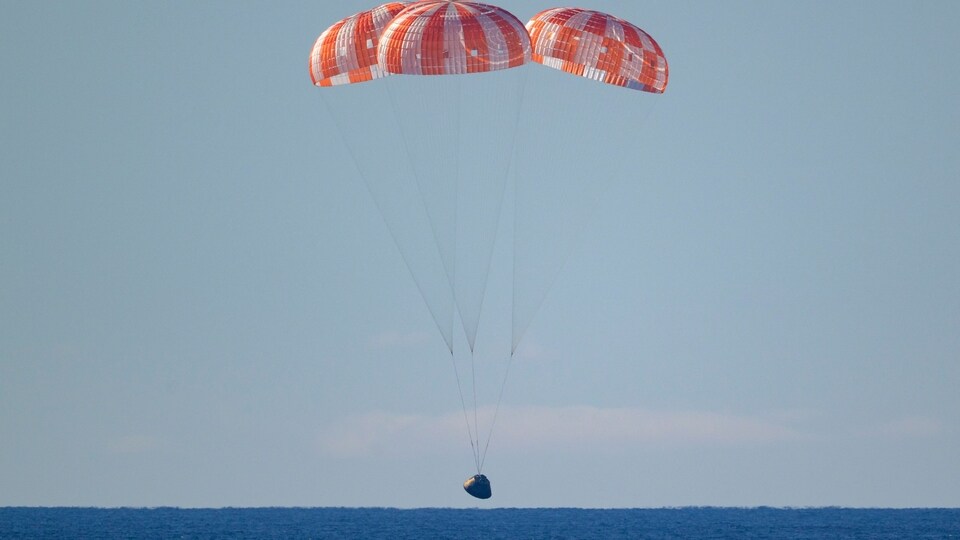
After nearly 10 days in space, the Orion capsule carrying four astronauts returned safely to the Pacific Ocean, concluding the first human lunar voyage in over 50 years.
What follows now is a carefully planned process involving recovery and medical checks.
1. Immediate recovery at sea
Within minutes of splashdown, recovery operations swing into action. According to Reuters, US Navy teams were positioned in advance to secure the capsule and assist the astronauts out.
The process is methodical and can take close to an hour. Crews approach the capsule using boats and attach an inflatable platform to its hatch. As reported by The Guardian, astronauts are then carefully extracted, assessed, and airlifted by helicopter to a nearby naval ship: the USS John P. Murtha.
2. Health checks and return to Earth
Once aboard the recovery vessel, astronauts undergo initial medical evaluations. Even after a smooth mission, NASA closely monitors the physical effects of deep-space travel and re-entry.
The crew is expected to remain under observation before being flown to Houston’s Johnson Space Center, where they reunite with their families and continue recovery, Reuters reported.
Also Read: Tim Cook celebrates Artemis II return: ‘Taking iPhone photography to new heights’
3. Spacecraft inspection and data review
While the astronauts recover, engineers focus on the Orion spacecraft. The capsule endured a high-speed re-entry, with temperatures reaching around 5,000°F (2,760°C), making this phase a critical test.
Reuters described the descent as a “white-knuckle” plunge, while NASA commentators called the landing a “perfect bull’s-eye splashdown.” Data collected during the mission, especially on the heat shield and onboard systems, will now be analyzed to refine future flights.
4. Preparing for future Moon missions
Beyond recovery and analysis, Artemis II plays a role in NASA’s long-term goals. As The Guardian noted, the mission demonstrated that humans can once again travel safely through cislunar space: the region between Earth and the Moon.
Also Read: NASA Artemis II update: Why the journey home is the riskiest part of the entire mission
Astronauts also tested critical systems, including life support, radiation detection, and operational procedures essential for deep-space missions.
These insights will feed directly into planning for Artemis III, which aims to return humans to the lunar surface later this decade.
While splashdown marks the conclusion of Artemis II, it is ultimately a transition point. From astronaut recovery to spacecraft analysis and mission planning, each step is designed to build a sustained human exploration beyond Earth.