
 E-Paper


Who is Joseph Henry Suina? Native American Marine veteran, 81, finally healing from war trauma six decades later
Joseph Henry Suina, 81, is finally showing signs of healing, six decades after serving two tours in the Vietnam War.

 Prefer HTon Google


Joseph Henry Suina, an 81-year-old Native American Marine Corps veteran of the Vietnam War, is finally showing signs of healing, six decades after serving two tours in the Vietnam War.
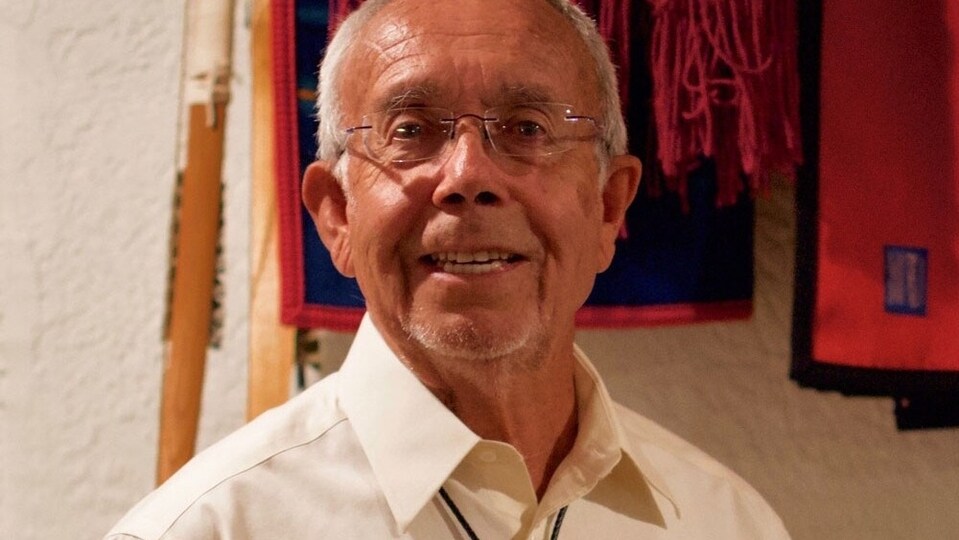
Suina'a father was a World War II veteran, and he was raised in the federally recognized pueblo of Cochiti, New Mexico. His entire existence was and continues to be shaped by the "simple" way of life ingrained in the neighborhood nestled between Santa Fe and Albuquerque.
Read More: WWII Navy veteran Ira 'Ike' Schab, one of last remaining Pearl Harbor survivors, dies at 105
Who is Joseph Henry Suina?
Joseph Henry Suina grew up in the Cochiti Pueblo, where many families historically contributed disproportionately high numbers of service members relative to their population.
As the eldest kid in the family, Suina was forced to take on the role of protector and caregiver due to his alcoholic father, who frequently got into combative situations with his mother.
Suina told Military.com, “Growing up here on the reservation back in the ‘50s, things were very different.”
He added, “We were still a very remote community. There were disparities between societies at that point in time, including racism still being pretty heavy."
Suina joined the U.S. Marine in 1962 after finishing his highschool. He was inspired to draft in the Marine Corps partly by a desire to see the world and serve his country.
Suina served two tours in Vietnam, beginning in 1964 and again in 1966, participating in search-and-destroy missions and experiencing the brutal realities of combat. During his second tour, he was wounded by enemy fire and shrapnel in his chest and neck area.
Suina said, “Like it or not, we had to go back. It wasn't voluntary for me, but when you're in the service—especially in the Marine Corps—you have no choice. They sent you wherever they need.”
The wounds were emotionally scarring for him. He said, “Vietnam veterans suffered yet another layer, and that had to do with guilt…we were baby killers, you name it, any number of things during the ‘60s—the hippies and all sorts of other folks were demonstrating against the war.”
Suina also suffered from survivor's guilt. He frequently wonders, even among his living peers, “why he isn’t living daily in a wheelchair or why he has his eyesight.”
After his discharge, Suina pursued higher education, earning degrees that led him first to work with the Bureau of Indian Affairs and eventually into elementary and university-level teaching.
He earned a doctorate and taught at the University of New Mexico for nearly three decades, helping shape education in Native communities.
Beyond academia, Suina has also served as a leader in his tribal community, including roles such as Cochiti Pueblo governor and work in language revitalisation and community development.
Read More: US Department of Veterans Affairs to cut 80,000 jobs
Healing from PTSD and mental health care for the first time
Suina battled post-traumatic stress disorder (PTSD) and the psychological effects of war in private for decades, despite his professional achievements and esteem from the community.
He faced societal shame and a lack of support that left many veterans feeling alone when he returned to the United States, which was sharply divided over the war.
He participated in the Home Base Native American Intensive Clinical Program (ICP) in Boston in 2023, which combines clinical therapy with cultural support for Native American veterans.
Suina was able to start dealing with decades of repressed pain, shame, and hopelessness that had plagued his life since the war because of the program, which was supported by the Bob Woodruff Foundation.
However, he said, “ Home Base doesn't make a distinction; PTSD is PTSD, whether you're carrying your history or if it happened to you in the military. As long as you're a veteran, they'll attend to you.”
Coming to grips with not only his own past but also that of his family and people was one of the traumas he examined with the 22-person Boston cohort. “For the first time in my life, after all these years of being out of the service, I really got serious attention to my problem of PTSD,” Suina said.
He mentioned the program helped him know more about himself and his history.
He added, “I value life a whole lot more."


