
 E-Paper



Was Imran Niazi hit by shrapnel of a ricocheting 9mm bullet?
While anything is possible in cynical Pakistani politics and its brutal deep state, the attack appears to be a warning shot to Niazi to stay away from his brand of power politics and his repeated run-ins with powerful Pakistani ISI and the Rawalpindi GHQ under General Qamar Jawed Bajwa.

 Prefer HTon Google


Pakistan media reports quotes a former special assistant of health to former prime minister and PTI chief saying that fragments of bullets have been found in the leg of Imran Khan Niazi, who survived an attack at Wazirabad in Punjab by apparently a lone gunman during his march to Islamabad on Thursday evening.

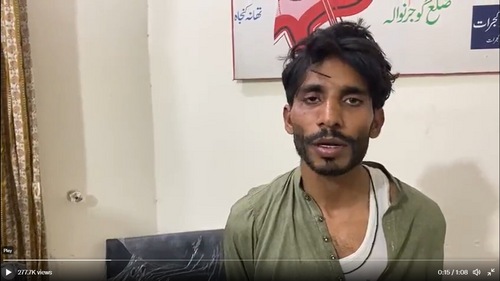
The attacker was arrested immediately, his name, caste and confession leaked, and there were protests for the first time outside the house of Peshawar XI Corps Commander of Pakistan Army.
If the statement of Faisal Sultan, the former assistant to the prime minister on health, is correct then it is obvious that Imran Niazi was hit by splinters of a ricocheting 9mm bullet fired by the attacker. According to ballistics experts, 9 mm bullets splinter into shrapnel after hitting a hard surface, perhaps the truck carrying Niazi, and then hit the PTI chief.
Analysis of Pak media reports on his health condition indicate that Niazi did not take a direct hit from a 9mm slug and to that extent he avoided any serious injury to his leg. The only other plausible explanation of shell splinters is that the attacker used explosive bullets that fragment on impact. The normal 9 mm metal slug penetrates directly into target. The visuals of the Wazirabad shooting also do not show any overt bleeding from the former PM’s bandaged injured leg or any apparent visible deterioration of his health condition.

While anything is possible in Pakistani politics and its deep state, the attack appears to be a warning shot to Niazi to stay away from his brand of power politics and his repeated run-ins with powerful Pakistani ISI and the Rawalpindi GHQ under General Qamar Jawed Bajwa. It was a rare day on October 27 when Pakistan ISI Chief Lt Gen Nadeem Anjum came out to spill the beans on Niazi’s double-speak and his unscrupulousness to hold on to political power by any means.
ALSO READ: ‘Violence has no place in politics’: US after Imran Khan assassination attempt
Exactly a week later, the attack happens, preceded by an alert of Lahore Police Counter-Terrorist-Department, and for the first time in the history of Pakistan a huge protest takes place outside the house of XI Corps commander and at other places in Punjab and Sindh. Imran Niazi used the attack to his advantage and named Prime Minister Shehbaz Sharif, Interior Minister Rana Sanaullah and a senior military officer for trying to kill him.
Although Pakistan PM Shehbaz Sharif, who had gone to pay tribute to Chinese leader Xi Jinping in Beijing this week, and other senior political leaders condemned the attack on Niazi, the incident will further destabilize the polity in the Islamic Republic with nuclear weapons. It will also raise questions whether Pakistan Army Chief Gen Qamar Jawed Bajwa should be allowed to demit office on November 29 when the country is going through a political turmoil with the former PM inciting his supporters to take on the Pakistan Army.
It is quite evident that political and economic turmoil in Pakistan will worsen further before it gets any better as today the credibility of not only the Pakistani politician but also the Army has hit an all time low. It is quite ironical that the same Niazi that Pakistan Army had pushed into political power against Nawaz Sharif has now come back to bite them.
As is reads now, the attack will not pre-pone Pakistan general elections except that there will be more political violence around the country, the Pakistan Army will fight back to regain its credibility under Gen Bajwa or his chosen successor and the public will economically suffer due to high inflation and repayment of IMF loans.


