
 E-Paper





Government statistician Graciela Bevacqua arrived at the office on a Monday to bad news from her boss: There was no easy way to say this, but the president wanted her head.
What Happens When Politicians Meddle With Economic Data: Argentina’s Example
Echoes of the Argentine experience have reverberated in the U.S. since Trump fired the BLS commissioner, accusing the agency of rigging jobs figures.
Published on: Aug 11, 2025, 16:07:29 IST

WSJ

Share via
Copy link

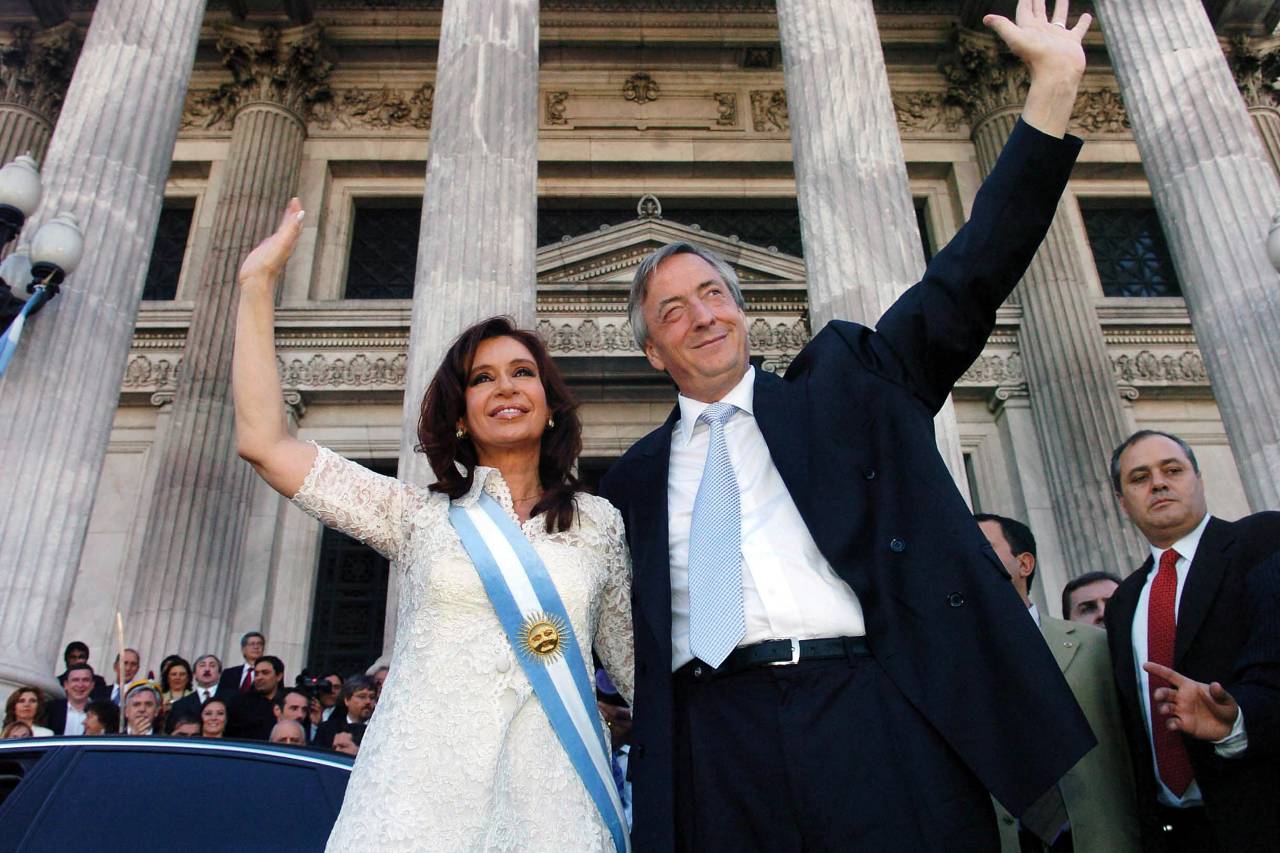
It was January 2007, and Bevacqua oversaw the consumer-price index at Argentina’s national statistics agency, Indec. Rising inflation threatened the electoral hopes of leftist President Néstor Kirchner’s wife, Cristina Fernández de Kirchner, who was running to succeed him. Bevacqua was unwilling to fudge the numbers, so Kirchner replaced her with a loyalist who did it.
Echoes of the Argentine saga have reverberated in the U.S. since President Trump fired Erika McEntarfer, commissioner of the Bureau of Labor Statistics, on Aug. 1 after big downward revisions to jobs data. He accused the bureau of rigging the data to make Republicans look bad but provided no evidence, and independent economists dismissed the allegation.
“This is the sort of thing only the worst populists do in the worst emerging economies,” economist Phil Suttle said of McEntarfer’s dismissal in a note to clients.
Although Argentina is an emerging economy, its statistics agency was regarded as professional and independent, and governed by a solid legal framework. That makes its experience a useful lesson in what awaits the U.S. if new leadership politicizes economic data.
Following Bevacqua’s removal, Argentina’s officially reported inflation rate fell to 8.5% in 2007 from 9.8% in 2006. Fernández de Kirchner easily won the election, and the government initially saved billions of dollars in interest on inflation-linked bonds which could be spent on social programs and subsidies.
In reality, inflation had accelerated to around 25%, private economists estimated. The government faced lawsuits from unions and pensioners whose social-security checks were indexed to inflation. Some of the government’s savings on inflation-linked bonds were offset by higher payments on debt tied to gross domestic product, which came in artificially high.
“It started to become a huge mess,” said Alberto Cavallo, an Argentine economist teaching at Harvard University who created a website that tracked inflation based on publicly available prices to fill the void left by Indec. Users bombarded him with all sorts of questions over email, like how much to adjust settlement payments to an ex after a divorce. “The examples add up, and you end up realizing how important some of these statistics are,” he said.
In the U.S., trustworthy economic data are central to determining how much people pay in taxes, receive in retirement benefits and earn on some investments. Along with an independent Federal Reserve, they also underpin the dollar’s reserve-currency status, as well as roughly $120 trillion in stocks and bonds.
It is unclear how far Trump intends to go in overhauling the BLS or its sister agencies. Kevin Hassett, Trump’s National Economic Council director, has said that the president “wants his own people there, so that when we see the jobs numbers, they are more transparent and reliable.”
On Tuesday, the BLS will report the CPI for July, its first major release since McEntarfer was fired. Trump had told reporters last Sunday that he planned to announce a new BLS commissioner “sometime over the next three or four days” but hasn’t yet done so.
“This is the most important selection in the history of the BLS,” said William Beach, McEntarfer’s Trump-appointed predecessor. Beach, who has called her firing “totally groundless” and a “dangerous precedent,” said that to “heal this, you would have to have an appointment of a person whose reputation for honesty and integrity is beyond question. You would have to have a unanimous vote in the Senate for that confirmation.”
If new appointees are perceived as partisan, that would likely erode the agencies’ credibility. Market participants would take positive economic data with a grain of salt and presume negative data masked an even worse reality. The ability of the Fed and other policymakers to respond to changes in the economy would be compromised.
“You can’t hide the fact that people are out of work and prices are changing, but without direct measurement of those things that are officially collected and that everyone has equal access to, it really would be sort of a Dark Ages situation,” said Brent Moulton, a former associate director of the Commerce Department’s Bureau of Economic Analysis, which calculates GDP, personal income and several other data series.
Institutional checks exist to guard against outright manipulation. Mishandling economic statistics or improperly accessing the confidential information used to compile them is a felony. In addition, dozens of career staff work on major releases like the monthly jobs report, inflation data and GDP who would likely blow the whistle if data were mishandled, former officials said.
But Argentina had similar legal protections around Indec, which survived a military dictatorship, hyperinflation and economic meltdowns and was considered a model statistics agency in Latin America. More than 100 staffers worked on the inflation index, Bevacqua said.
“The index had so many safeguards, it seemed impossible to me that someone could manage to change the numbers,” Bevacqua said. “Not only did that happen, but they stayed for many years, and part of the institution is still recovering.”
After Bevacqua was removed, political appointees changed the methodology for items that had jumped in price from December 2006 to January 2007. These included lettuce, health insurance and hotels, Argentine prosecutors said in an investigation report.
Argentina’s economic woes were the result of more than data manipulation. Price controls, capital controls and exchange-rate controls distorted economic incentives and led to even more interventions. The central bank lacked de facto independence and kept interest rates too low to bring inflation under control.
Argentina stopped manipulating the data in 2015 after Fernández de Kirchner left office, and started a new inflation series that began in June 2016. It is now regarded as credible.
The minister who spearheaded the politicization of Indec in 2007, Guillermo Moreno, was recently sentenced for manipulating the inflation data to three years of “conditional” prison—akin to probation—and banned from public office for six years.
Inflation continued to climb, dooming the Kirchners’ political movement. Argentines elected libertarian Javier Milei president in 2023 on a platform of radical economic liberalization. Inflation, which peaked at 289% last year, was down to 39% as of June.
Bevacqua said it is too soon to compare the situation at BLS to Indec. A key difference: Political appointees in the Kirchner administration had been making unusually detailed information requests about the inflation data for at least a year before they fired her, she said.
“I think the U.S. has strong institutions,” she said. “But it could be a sign. You never know.”
Write to Paul Kiernan at paul.kiernan@wsj.com
Get the latest headlines from US news and global updates from Pakistan, Nepal, UK, Bangladesh, Russia and US Iran war Live, get all the latest headlines in one place on Hindustan Times.


