
 E-Paper



Why did Russia President Putin apologise without taking blame for Azerbaijan Airline crash?
The apology was framed within the context of a "tragic incident" that occurred over Russian airspace during a period of tensions with Ukrainian drones.

 Prefer HTon Google


(Russian President Vladimir Putin extended a rare public “apology” following the tragic crash of an Azerbaijan Airlines plane earlier this week, but fell short of acknowledging that Russia's air defences were directly responsible for downing the aircraft, despite credible sources in multiple reports claiming so.
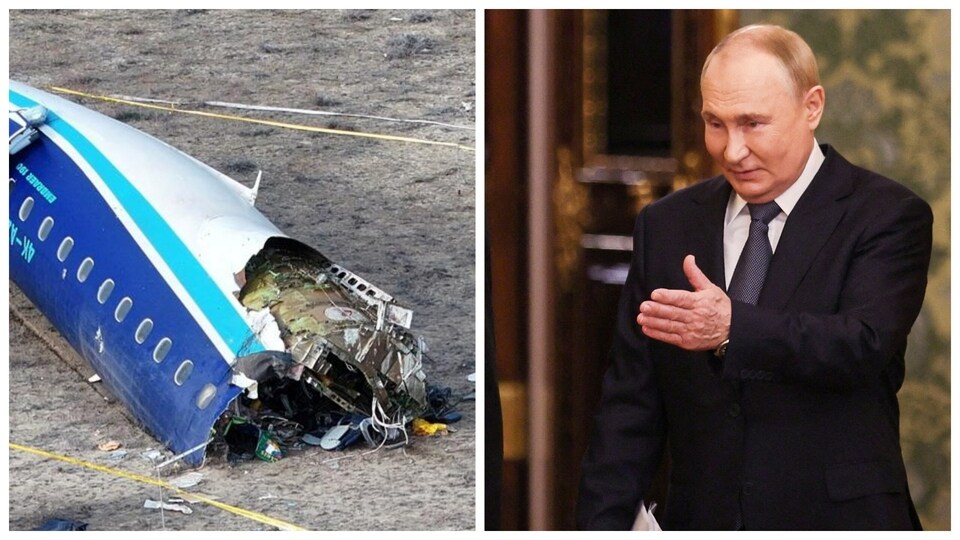
The apology was framed within the context of a "tragic incident" that occurred over Russian airspace during a period of heightened tensions with Ukrainian drones.
Also Read: Azerbaijan Airlines plane crash | Passenger captures moments of horror before and after mishap in Kazakhstan
The incident involved Azerbaijan Airlines flight J2-8243, which was en route from Baku to Grozny in Russia's Chechnya and was forced to make an emergency landing in Kazakhstan after veering off course in southern Russia.
The mishap was initially attributed to the rerouting of the aircraft due to fog, however, preliminary findings from the investigation, supported by witness accounts cited in news agency Reuters and other reports, later pointed to Russian air defence systems mistakenly targeting the commercial flight, possibly confusing it with a hostile drone.
The above is consistent with reports from US officials who have indicated that Russian systems may have misidentified the plane amid heightened air defence activity triggered by ongoing Ukrainian drone attacks.
What did Putin say?
Despite the mounting evidence and growing international calls for accountability, the Kremlin has stopped short of explicitly accepting responsibility.
Rather, it highlighted that the downing occurred while Russian air defences were responding to drone assaults on multiple cities, including Grozny. Putin’s direct apology to Azerbaijan President Ilham Aliyev was framed as a gesture of condolence rather than an admission of fault. The Kremlin stressed that a criminal case was being pursued, and civilian and military specialists were being questioned.
Until Saturday, Russia's last working day before a long New Year holiday, the Kremlin had said it was improper to comment on the incident before official investigations were concluded.
The Embraer jet had flown from Azerbaijan's capital, Baku, to Grozny, in Russia's southern Chechnya region, where the incident occurred, and then travelled, badly damaged, another 280 miles (450 km) across the Caspian Sea.
Why did Putin apologise but not take blame?
By avoiding a direct acknowledgment of Russia's role in the crash, Putin’s apology appears to reflect the complex geopolitical sensitivities involved. Acknowledging the misfire would have been politically charged, especially considering the ongoing conflict with Ukraine and the potential implications for Russian military operations. Instead, the Kremlin maintained a careful position, offering an apology for the "tragic incident" while emphasising the broader context of Ukraine’s drone strikes.
Putin's apology, without taking the blame for the downing of the Azerbaijan Airlines plane, could also be an attempt to align with Moscow’s ongoing strategy of managing international perception, particularly with Western powers.
Also Read: Bodycam footage shows distressing aftermath of Azerbaijan Airlines plane crash in Kazakhstan
The US was quick to offer its assistance in investigating the incident and has indicated that early intelligence suggests Russian air defences may have been at fault. However, Moscow's reluctance to publicly accept blame likely stems from concerns over the political fallout and the broader implications for Russia’s military reputation.
The vast majority of Western airlines have stopped flights to Russia since Moscow launched its Ukraine offensive in 2022.
Meanwhile, Kazakhstan – a key Russian ally – has had a muted reaction to the crash and has not blamed Moscow.
Azerbaijan, for its part, said President Ilham Aliyev had noted to Putin that the plane had been "subjected to external physical and technical interference in Russian airspace, resulting in a complete loss of control and redirection to the Kazakh city of Aktau".
Footage shot by passengers before the plane crashed showed oxygen masks deployed and people wearing life jackets. Later videos showed bloodied and bruised passengers climbing out of the wreckage. There were 29 survivors.
Baku cited injuries from objects that had penetrated the aircraft’s fuselage from outside and testimonies from survivors as evidence of "external physical and technical interference".


