E-Paper



Major parties sign breakthrough deal for Nepal's new constitution
The eight-year-old process to draft Nepal's constitution entered the final phase late on Saturday night with four major parties signing a deal to divide the country into six federal states.


The eight-year-old process to draft Nepal's constitution entered the final phase late on Saturday night with four major parties signing a deal to divide the country into six federal states.
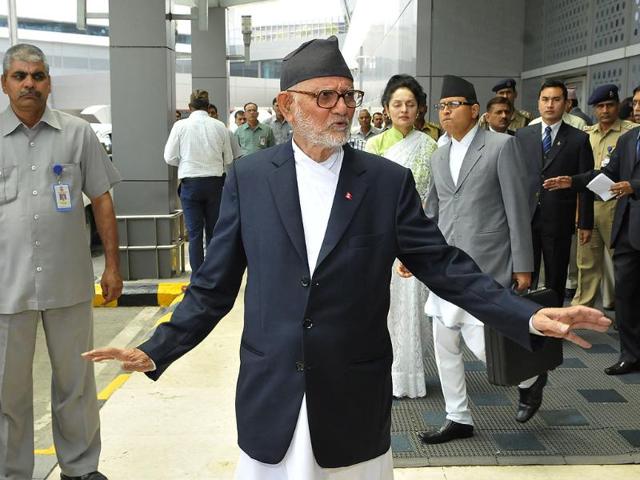
The agreement also demarcated boundaries of the states, a contentious issue missing from the first draft of the constitution. Several other amendments have also been included in the new deal.
The names of the states, all of which will touch India in the south (four also share borders with China in the north) will be decided by the elected assemblies of the new states.
An earlier agreement had stipulated eight states and creation of a commission to demarcate boundaries of the states. With the new deal, Nepal is expected to get its new constitution towards the end of this month.
Ruling Nepali Congress and Communist Party of Nepal (Unified Marxist Leninist) signed the deal without reservations while Maoists and Madhesis raised objetions to some clauses.
"Despite some reservations, I signed the deal to allow the constitution-drafting process to move ahead," Madhesi Janadhikar Forum (Democratic) chief Bijay Kumar Gachchadar told media.
Both Maoists and Madhesis have reservations against non-inclusion of three districts in east and two in west in the proposed new state in Terai, which will have dominance of Madhesi and Tharu communities.
While most of the existing 75 districts remain intact after delineation of boundaries of new states, three of them -- Baglung, Rukum and Nawalparasi -- have been split as per the new deal.
In another significant development, the parties agreed to amend the first draft to allow children to get citizenship certificates either through their father or mother.
The first draft had stipulated that both father and mother have to be Nepali citizens for their children to get citizenship. The parties agreed to replace the word 'and' with 'or' after widespread protests.