
 E-Paper



Nepal begins process to form new government
Amid a crisis due to protests in border areas affecting supply of goods from India, Nepal on Friday started the process to form a new government — 12 days after promulgation of a new constitution.


Amid a crisis due to protests in border areas affecting supply of goods from India, Nepal on Friday started the process to form a new government — 12 days after promulgation of a new constitution.
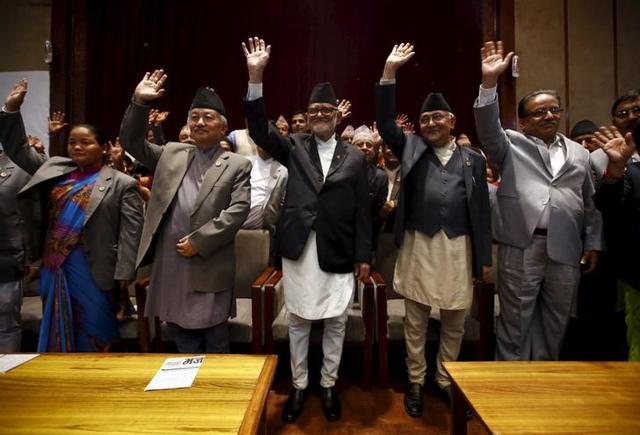
“I had made a public commitment to resign from my post once the constitution comes into force. I will request the president to start the process for election of a new prime minister,” Prime Minister Sushil Koirala told Parliament. Later in the evening, President Ram Baran Yadav’s office released a statement directing parties represented in Parliament to elect a new PM through consensus within the next seven days.
As per the new statute, a new prime minister should be elected within one week of the beginning of the Parliament’s session — the first since promulgation of the new statute last month.
If the parties represented in Parliament fail to elect a new PM through consensus, voting would take place to select Koirala’s successor.
Chairman of the ruling Communist Party of Nepal (Unified Marxist Leninist) KP Sharma Oli is the front-runner for the post as per an agreement between the three major parties.
Koirala hasn’t announced his resignation yet and is likely to remain in office till the next PM gets elected. In his address Koirala also appealed to India to ensure supply of goods into Nepal is not affected. “I request the Indian government to ensure that Nepal’s transit rights are not affected by delays at the border,” he told Parliament.
Nepal is reeling under severe crisis especially of petroleum products due to blockade of border points and highways by Madhesis and Tharus protesting against the new constitution.
India has denied any blockade and blamed the ongoing protests in the border areas as reason for the supply crisis. Nepal, on the other hand, says India has imposed ‘undeclared embargo’ as it is unhappy with the new statute.



