
 E-Paper



Petrol crisis forces Nepal to resort to odd-even system for autos
Disruption in supply of petrol products from India due to protests in southern plains has forced Nepal to start an odd-even system for vehicles.


Disruption in supply of petrol products from India due to protests in southern plains has forced Nepal to start an odd-even system for vehicles beginning on Sunday.
Nepal’s home ministry issued a release on Saturday informing that the system, in which vehicles bearing license plates with odd numbers will be allowed to ply on roads on dates ending in odd number and vice versa.
Vehicles carrying essential supplies and those belonging to security forces have been exempted from this system.
“The government is trying to resolve the issue but till that happens we request consumers to use petrol products conservatively and not resort to hoarding,” the release stated.
The release also warned of action against those involved in black marketeering and creating artificial shortage.
Landlocked Nepal relies exclusively on India for supply of petroleum products, but intensified protests in border areas by Madhesis and Tharus against the new statute have affected supply.
India has maintained that there is no embargo on movement of vehicles and that protests on the Nepali side are responsible for the present state of affairs.
Security on the Indian side along border points has been increased in view of the protests and also the forthcoming Bihar elections. India says many Indian transporters have expressed unwillingness to enter in view of the present circumstances.
But there is feeling in Nepal that New Delhi has deliberately imposed an ‘undeclared embargo’ on goods. On Friday, Indian ambassador to Nepal Ranjit Rae was summoned to the foreign ministry to explain the situation.
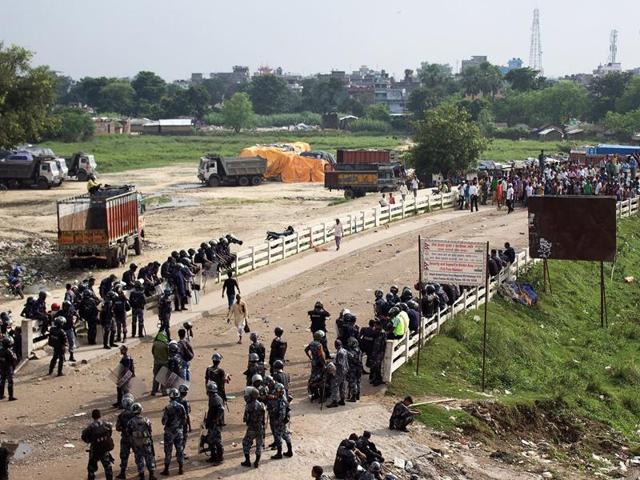
Over two thousand trucks and petrol tankers are stranded at border points between the two nations since the past four days.
More than 40 people have been killed in protests across Terai since last month by Madhesi and Tharu parties who are against the provision demarcating federal states in the new constitution.
On Saturday, nine people including 5 protesters and 4 security personnel were injured in clashes at Nepalgunj. Protests and obstructions at border points by Madhesi outfits in other areas continued on Saturday.



