E-Paper



Unity eludes Maoist parties in Nepal
Efforts at unifying various Maoist groups in Nepal, in a bid to stay politically relevant, have hit roadblocks over differences in ideologies and ambitions of leaders.


Efforts at unifying various Maoist groups in Nepal, in a bid to stay politically relevant, have hit roadblocks over differences in ideologies and ambitions of leaders.
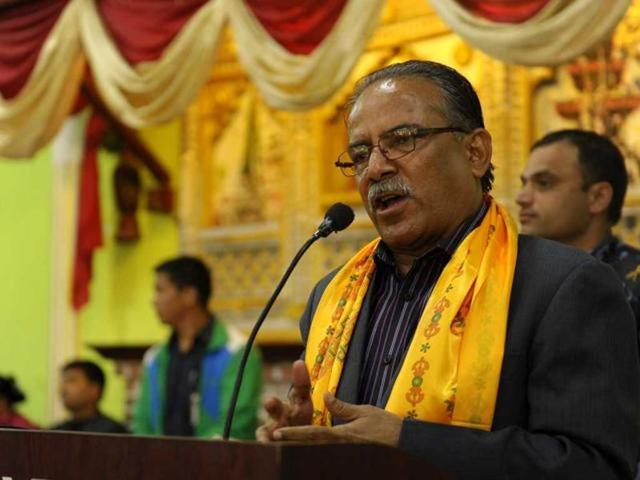
The biggest political party in parliament in 2008, two years after they gave up arms to end the civil war and join the political mainstream, Maoists were relegated to the third spot five years later.
Several splits along the way due to personality clashes of senior leaders have also weakened Maoists, enabling Nepali Congress and Communist Party of Nepal (Unified Marxist Leninist) to overshadow the former rebels.
Nepal’s tallest Maoist leader Pushpa Kamal Dahal ‘Prachanda’, who heads Unified Communist Party of Nepal (Maoist), has been maintaining for several months now that Maoist factions will unite soon. But nothing concrete has happened on the ground yet.
Differences on the unification move surfaced in this week’s central committee meeting of Communist Party of Nepal (Revolutionary Maoists), which split from UCPN (M) in 2012.
Party chairman Mohan Baidya wants a new ‘democratic revolution’ to complete the ‘unfinished tasks’ of the civil war and insists unification with the UCPN (M) is possible only if there is agreement on ideologies.
On the other hand, general secretary Ram Bahadur Thapa wants the party to give up revolution as its plan of action and instead focus on unification with other Maoist parties. Leaders from both parties say unity isn’t likely to happen soon as Prachanda won’t agree to start another ‘revolution’ and Baidya is reluctant to give up on his ideological stance.
Baidya’s party did not take part in the 2013 polls to elect Nepal’s second constituent assembly and is unrepresented in parliament.
CPM (RM) itself had split in 2014 when Netra Bikram Chand created the Communist Party of Nepal-Maoist. The outfit keeps itself relevant by targeting Indian establishments in Nepal.
Prachanda’s UCPN (M) suffered another setback in September last year when former prime minister Baburam Bhattarai quit over differences with the former’s handling of the party.
The 61-year-old has since formed a new outfit called the Naya Shakti (New Power), which got registered as a political party with the election commission just this month. Both Prachanda and Bhattarai had headed governments after the 2008 poll outcome. Although UCPN (M) is a coalition partner in the present government headed by CPN (UML), Maoists hold few important portfolios.
Bhattarai is unlikely to return to his old party but smaller outfits like Revolutionary Communist Party and CPM (Maoist) have expressed desire to join Prachanda’s party in coming months.