
 E-Paper



India allows Uyghur, 8 Chinese dissidents to attend Dharamsala meeting
Contrary to the perception that the Narendra Modi-led government denied visas to Chinese dissidents, eight Chinese activists and a prominent Uighur leader are participating in the Dharamsala conference.

 Prefer HTon Google


Contrary to the perception that the Narendra Modi-led government denied visas to Chinese dissidents under pressure from Beijing, no less than eight Chinese activists and a prominent Uyghur leader are participating in the Dharamsala conference.
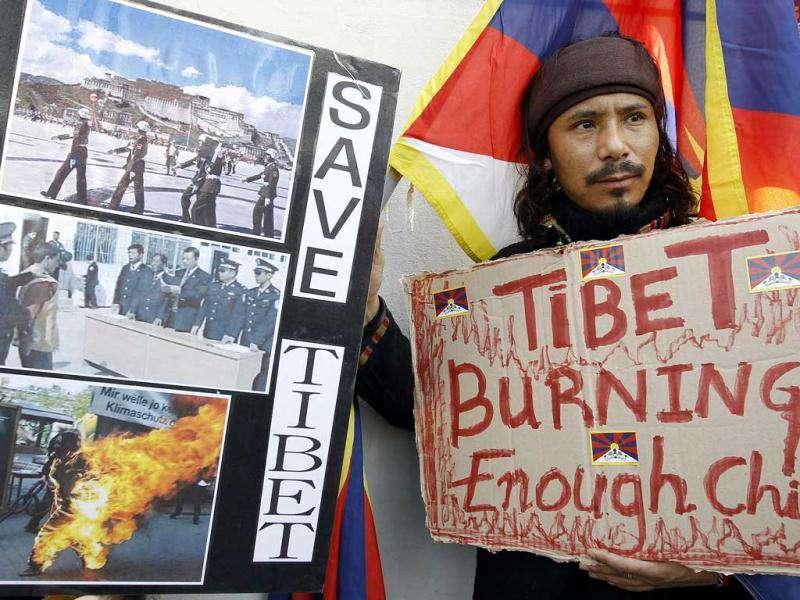
The three-day conference on ‘Strengthening Our Alliance to Advance the People’s Dream: Freedom, Justice, Equality and Peace’ has been organised by US-based Chinese dissident Yang Jiamil without formal sanction either being sought or given by the Indian government.
Almost all the 69 foreign delegates, including president of the Uyghur American Association Ilshat Hasan, have travelled on tourist visas.
The conference has been organised at Norbu House in McLeodganj, which is owned by Wangdu Tsewang, an Indian national of Tibetan origin and is part of the Dalai Lama’s set-up.
Top government sources confirmed to Hindustan Times that delegates met the Dalai Lama on April 28.
While the Dalai Lama spoke about secularism, ethics, compassion and harmony, Yang, head of the NGO Initiatives of China, talked about freedom from “Chinese tyranny and oppression”.
While the Indian government has been accused of bending before Beijing by cancelling the e-visa granted to Dolkun Isa, the Germany-based head of World Uyghur Congress, has documentary proof which reveals the action had nothing to do with India’s China policy.
Read | All diplomatic: India’s message to China in Uyghur activist row
The e-visa was erroneously issued to Isa on April 6 by the department of immigration as an Interpol red corner notice issued against him in 1998 did not show up in official records.
Intelligence Bureau director Dineshwar Sharma severely upbraided the immigration department for its mistake and directed that all records be reconciled with those of agencies such as the CBI and Enforcement Directorate, sources said. The facts of the case were shared with the Prime Minister’s Office.
The denial of tourist visas to two other Chinese dissidents, Lu Jinghua and Wong Toi Yeung, was on procedurals grounds.
Lu’s application for an e-tourist visa was processed and rejected as the copy of the uploaded passport was not legible.
In case of 22-year-old Wong, a Hong Kong resident who had applied for an e-tourist visa on April 21, discrepancies related to the uploaded passport were noticed in the application.
“When the visa applications were processed, the immigration department did not even know they were dissident Chinese activists. These applications were processed and rejected as any other,” said a senior North Block official.
Read | Uyghur leader Isa ‘disappointed’ with India’s decision to cancel visa


