
 E-Paper



Photos: Kashmir’s prized walnut and rice crops enter harvest
Fields across Jammu and Kashmir are abuzz with activity with the state’s prized walnut and rice crops being prepared for the markets, as the Kharif harvest period approaches its end.
Updated on: Sept 27, 2017 1:39 PM IST


Share via


Copy link

1/8
 View Photos in a new improved layout
Updated on Sept 27, 2017 1:39 PM
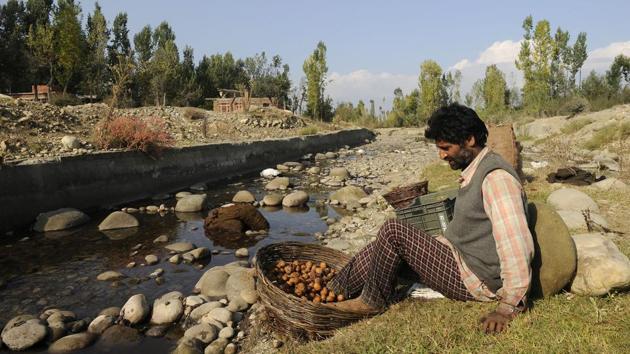
As the period of Kharif harvest sets in, Kashmir’s walnut and rice produce is prepared for the markets. The Persian walnut, the most temperate nut grown in India is abundant in Jammu and Kashmir. Meanwhile, the Kashmiris’ love for rice is only matched by their affinity for bread. The ripe paddy harvest, in full swing during the months of September and October, presents the sight of men and women winnowing and thrashing away in the fields. (Waseem Andrabi / HT Photo)
2/8
 View Photos in a new improved layout
Updated on Sept 27, 2017 1:39 PM
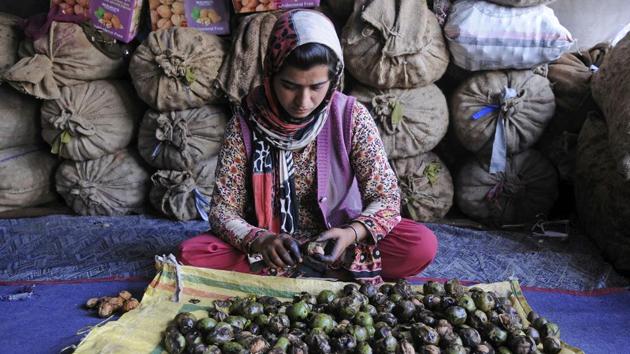
A woman removes the green outer husk from fresh walnuts. These begin making their way to the markets September onwards and the dehusked kernels follow two to three weeks later; the peak arrival season spanning November to January. Kashmir’s walnuts are widely known for their superior quality and taste and find great demand in markets locally and abroad. (Waseem Andrabi / HT Photo)
3/8
 View Photos in a new improved layout
Updated on Sept 27, 2017 1:39 PM
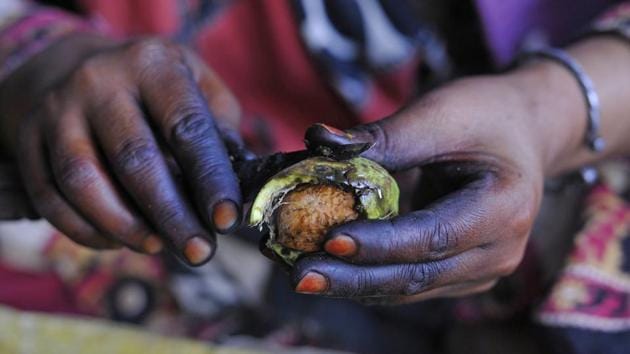
The walnut, known also as ‘akhrot’ or by its Kashmiri name doon/dun has been indigenous to Kashmir. Pandit Kalhan mentions in the Rajtarangni that fruit culture in Kashmir valley dates back to the time of king Nara (1000 BC) including the walnut. Walter R. Lawrence, the Settlement Commissioner of Kashmir and Jammu State (1887-94) in ‘The Valley of Kashmir’ has documented evidence to justify a heritage status to walnut in the state and has now emerged as a dollar earner for the country. (Waseem Andrabi / HT Photo)
4/8
 View Photos in a new improved layout
Updated on Sept 27, 2017 1:39 PM
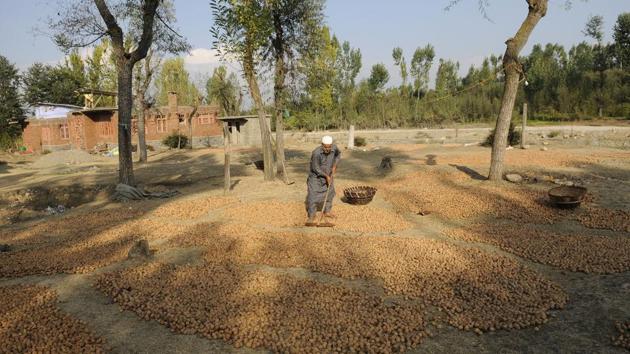
The walnuts are sun-dried once the cleaning is done. Kashmiri walnuts exported to different regions such as the Middle East, Eastern and Western Europe and in Asian countries. Walnuts contain healthy Omega 3 fats, known to improve artery function. The Omega 3 fat in walnuts also helps keep bones healthy against decreasing strength due to advancements in age. (Waseem Andrabi / HT Photo)
5/8
 View Photos in a new improved layout
Updated on Sept 27, 2017 1:39 PM
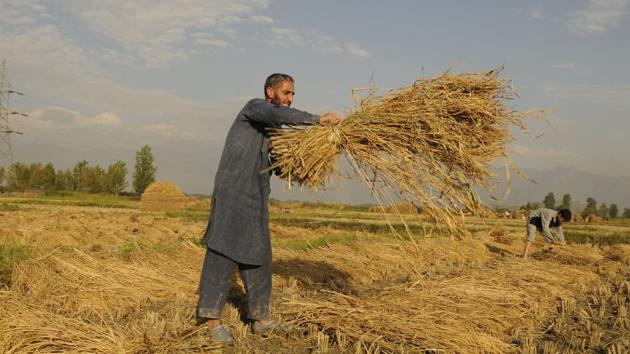
Kashmiri farmers tie lumps of paddy to make bales as part of the harvesting process in Pulwama. Paddy production has gone down in Kashmir during recent years largely due to unplanned and rapid urbanization, with the area under rice crop cultivation coming down from 122 hectares in 2010-11 to 112 hectares in 2013, according to an economic survey by the state government. (Waseem Andrabi / HT Photo)
6/8
 View Photos in a new improved layout
Updated on Sept 27, 2017 1:39 PM
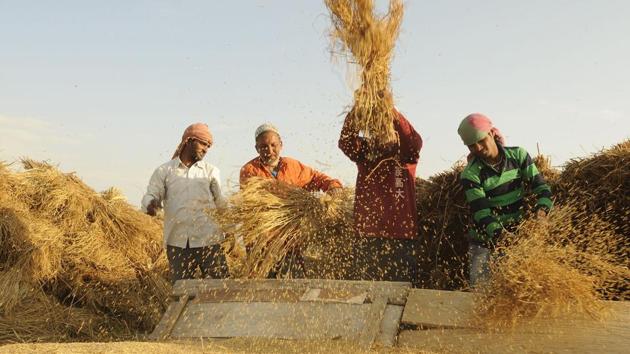
Farmers thrash rice from harvested paddy. Rice is the staple food in Kashmir, with its cultivation widely carried out in the Jammu plain, in isolated tracts in the hilly areas and the side-valleys. This crop has the distinction of being the most extensively cultivated in Jammu and Kashmir. (Waseem Andrabi / HT Photo)
7/8
 View Photos in a new improved layout
Updated on Sept 27, 2017 1:39 PM
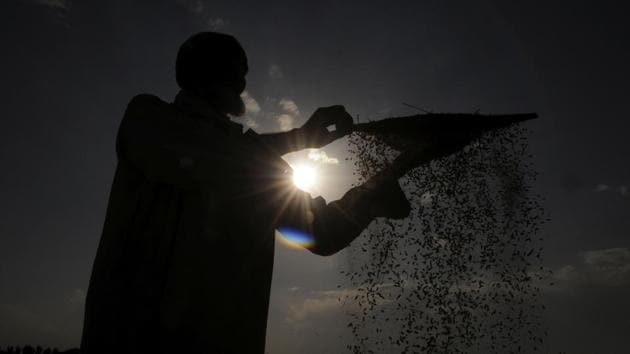
A Kashmiri farmer winnows while harvesting rice from a field on the outskirts of Srinagar. India is one of the world’s largest producers of white rice and brown rice, accounting for 25% of the global production. It is India’s pre-eminent crop and is the staple food of the people of the eastern and southern parts of the country. (Waseem Andrabi / HT Photo)
8/8
 View Photos in a new improved layout
Updated on Sept 27, 2017 1:39 PM


