
 E-Paper



Pomp and pageantry: Benin Empire gets its new king
Newly crowned Oba of Benin Kingdom Eheneden Erediauwa is guided through a symbolic bridge by the palace chiefs during his coronation in Benin City, Nigeria October 20, 2016. Not to be confused with the modern country of Benin, this empire was a pre colonial one located in southern Nigeria. (REUTERS)
Updated on: Oct 21, 2016 6:52 PM IST


Share via


Copy link

1/10

 View Photos in a new improved layout
Updated on Oct 21, 2016 6:52 PM
Newly crowned Oba of Benin Kingdom Eheneden Erediauwa is guided through a symbolic bridge by the palace chiefs during his coronation in Benin City, Nigeria October 20, 2016. Not to be confused with the modern country of Benin, this empire was a pre colonial one located in southern Nigeria. (REUTERS)
2/10
 View Photos in a new improved layout
Updated on Oct 21, 2016 6:52 PM
The empire is one of the oldest and most developed states in West Africa dating perhaps to the 11th century CE before the British came in 1897.
3/10
 View Photos in a new improved layout
Updated on Oct 21, 2016 6:52 PM
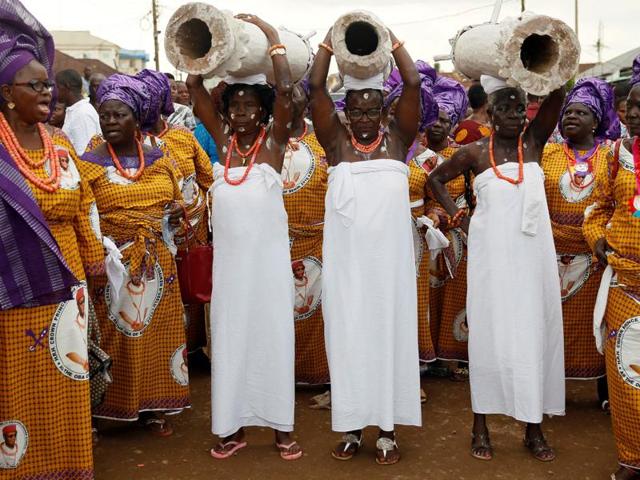
Women carry traditional drums during coronation of Oba of Benin. The founders of the empire were the Edo people. Oba of Benin is the traditional ruler of the Edo people. (REUTERS)
4/10
 View Photos in a new improved layout
Updated on Oct 21, 2016 6:52 PM
The title of Oba was created by Oba Eweka I, Benin Empire’s first Oba (approx. between 1180 and 1300). (REUTERS)
5/10
 View Photos in a new improved layout
Updated on Oct 21, 2016 6:52 PM
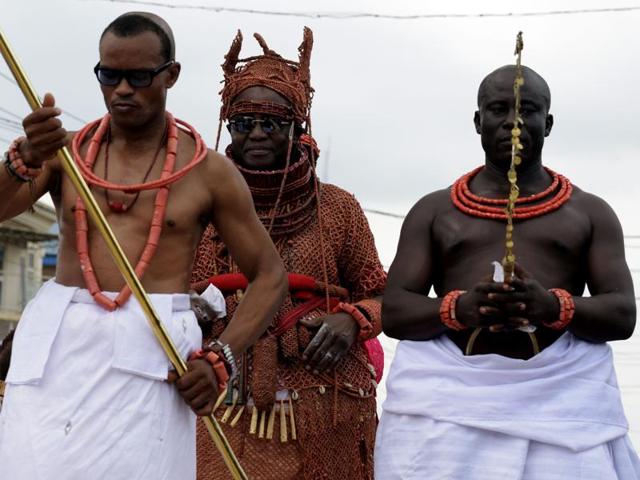
By the 15th century, the Edo people had moved from protected settlements to living in a city-state. Later, the twelfth Oba, Oba Ewuare the Great (1440-1473), would expand the city-state to an empire. (AFP)
6/10
 View Photos in a new improved layout
Updated on Oct 21, 2016 6:52 PM
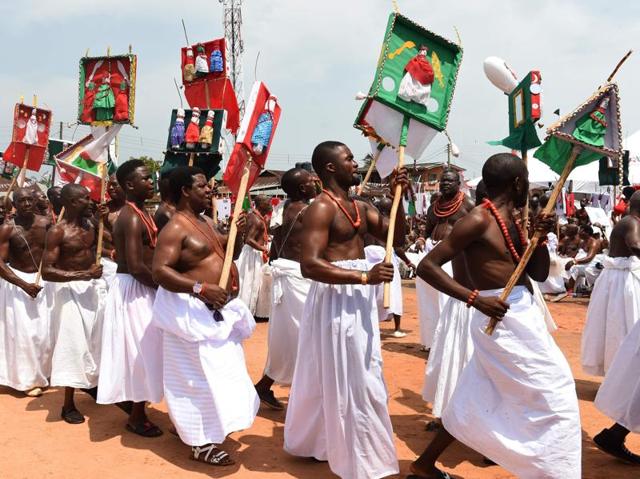
Okaiben family performs Ekassa dance during the coronation ceremony. It was the Portuguese who first coined the phrase Benin City for the kingdom’s administrative centre, the city of Ubinu, which would later be adopted by the Edo people as well. (AFP)
7/10
 View Photos in a new improved layout
Updated on Oct 21, 2016 6:52 PM
Women sing during the coronation ceremony. The first Europeans to reach Benin Empire were the Portuguese explorers in about 1485. (REUTERS)
8/10
 View Photos in a new improved layout
Updated on Oct 21, 2016 6:52 PM
Traditional cult members carry sacrifices at a procession during the coronation ceremony. Trade was established between the two nations with the Edo trading tropical products such as ivory, pepper and palm oil in exchange for European goods such as manila (buff-coloured fibre of the banana family used to make paper and rope) and guns. (REUTERS)
9/10
 View Photos in a new improved layout
Updated on Oct 21, 2016 6:52 PM
A traditional chief arrives for the coronation. The British first came in 1553 and with them too trade was established. While everything was fine in the beginning of this relationship, the Oba soon sensed the expansionist designs of the British and stopped all communication. (REUTERS)
10/10
 View Photos in a new improved layout
Updated on Oct 21, 2016 6:52 PM


