
 E-Paper



Distantly Close | The frustration and importance of being Nitish Kumar
The Bihar scorecard is tempting enough to see the debate over Kumar’s curriculum vitae for the PM’s office as the JD-U’s assertion for parity in an unequal arrangement

 Prefer HTon Google


New Delhi: In the manner of a nuclear-capable State that can make a bomb but hasn’t, the Janata Dal (United) or JD(U) tends to showcase its leader and Bihar chief minister (CM) Nitish Kumar as prime minister (PM)-material who wasn’t aiming for the post. Or not yet.
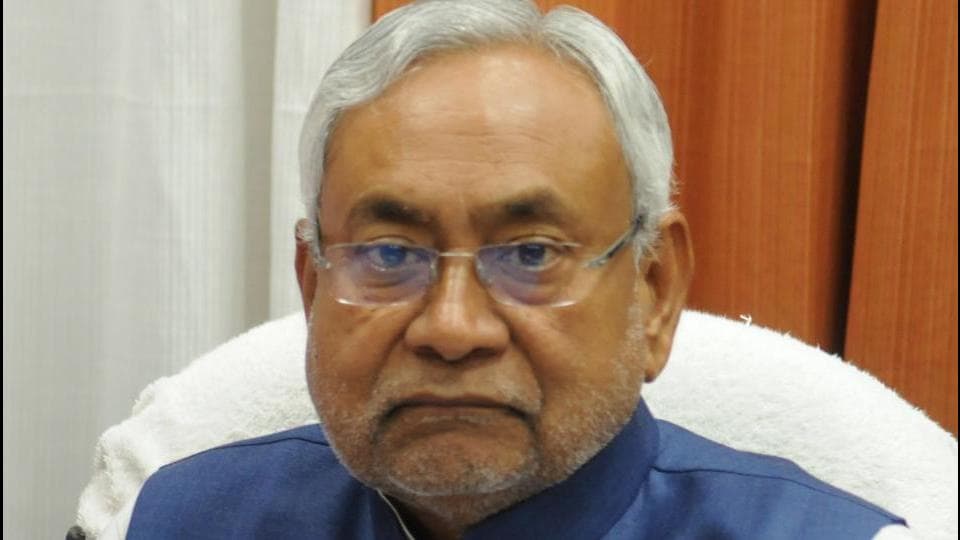
Kumar, for his part, attributed it all to workers’ chatter at the party’s August 29 national council meet. But could he have been unaware of the resolution the meeting passed, underscoring his prime ministerial attributes? Certainly not.
For that’s how signalling is done or a discourse moulded in politics. Till he junked his alliance with the Rashtriya Janata Dal (RJD) to set up a government with the Bharatiya Janata Party (BJP) in Bihar, Kumar was widely seen as the Opposition’s answer to Narendra Modi. The effort apparently is to revive the promise which vanished with his 2017 embrace of the BJP.
Even the most ardent among his admirers at the time had called it a bad bargain. They felt he went for an opportunist U-turn at the cost of a larger national profile for which he was ably suited, both ideologically and on the yardstick of experience.
The fourth stint Nitish Kumar is serving as the CM is the BJP’s largess. The latter was always the coalition’s junior partner starting 2005 when Kumar had his first full term. He won the 2015 election with a different partner— the RJD of Lalu Yadav.
The BJP’s was a Machiavellian strategy to gain an upper hand in the October-November 2020 polls. As all’s fair in love and politics, it played unfair through Chirag Paswan who brazenly undermined the incumbent CM while professing love for the incumbent PM.
The Lok Janshakti Party (LJP) was part of the National Democratic Alliance in Delhi but in Bihar, Paswan selectively put up candidates against the JD-U. Barring pro forma distancing from the LJP move, the BJP looked the other way. The result: RJD (75), BJP (74) and the JD-U (43).
Seeking parity in an unequal equation
The Bihar scorecard is tempting enough to see the debate over Kumar’s curriculum vitae for the PM’s office as the JD-U’s assertion for parity in an unequal arrangement. More so because the party’s newly elected president, Lalan Singh promised peaceful capability without abandoning the option, so to speak, of placing the bomb on the table: “Our leader has all qualities for becoming PM. (But) there’s a difference between having qualities and being a candidate. Right now, our CM is not a candidate.”
The operative word here is “right now”. The impulse for it is the absence in the non-BJP spectrum of any weighty figure to match Modi in North India.
The Trinamool Congress’s third time CM in West Bengal, Mamata Banerjee, has lately emerged as a candidate in the envisioned pan-Indian role. Her past too isn’t free of flirtatious ties with the BJP, maybe the Atal Bihari Vajpayee era BJP about which the Bihar CM often reminisces during his moments of disappointment with the Modi dispensation at the Centre. The other thing common between these aspirants to the highest elected position is Amit Shah’s ire at them; Shah’s impatience with Kumar is well registered in the JD-U’s inner core.
Never since the 2000 polls, when he quit as CM in seven days without taking a confidence vote, has the self-respecting Kumar been so aggrieved. At that time, the government that the RJD eventually formed with the Congress support was attributed to Lalu Yadav’s nimble moves and the BJP’s lethargic efforts which failed to keep Kumar afloat in the vertically split House. Those were the days of the Samata Party which morphed into JD-U in later years. Nitish Kumar then had 34 legislators compared to the BJP’s 67.
At 43:74 now, the obtaining landscape is even more uneven. That explains his party’s politics of deterrence, which his nascent packaging as the prospective PM quite clearly is.
RCP Singh seen as JD-U’s Suresh Prabhu
The JD-U’s yearning for more isn’t without reason. The Bihar coalition is inherently uneasy, the strains showing up often — be it the caste census on which Nitish Kumar has sought to secure leadership with a persistent line; his distaste of the saffron party’s communal binaries (the latest being Yogi Adityanath’s Abba Jaan jibe on his UP rivals); or the Pegasus controversy the JD-U wants probed.
The gaps are hard to miss and are accentuated often by the public spats of coalition partners. Leave aside Nitish Kumar’s standard demand for a special status for Bihar, even the coordination committee that the regional partner demanded in the National Democratic Alliance (NDA) at the Centre and in the state, remains unavailable.
The partnership is a compromise with diminishing returns. A proof, if needed, of Kumar’s loss of clout with the BJP was the swearing-in of RCP Singh as a union minister in the recent reshuffle in which the LJP’s breakaway leader, Pashupati Paras, also got a cabinet berth in the Modi regime.
The induction of RCP was a climb down for Kumar. That’s so because after the 2019 Lok Sabha polls, he had refused to join the Modi regime on grounds of proportional representation when parity was sought to be drawn by the BJP between his 16 MPs and the LJP’s six by offering one cabinet slot each to both. The hyphenation now with the LJP is a bigger put down, the splinter group of Paras having five MPs minus his nephew Chirag Paswan.
RCP was the JD-U president when he became a minister. He has since been replaced by Kumar’s other Man Friday, Lalan Singh. In certain JD-U circles, the former IAS officer, who comes from the CM’s Kurmi clan, is compared with Suresh Prabhu, the Shiv Sena leader who got subsumed in the BJP on becoming a minister under Modi in 2014.
A JD-U insider who knows Kumar’s mind cut the long story short with a pithy one-liner: “Tanaav bahut hai par mukti nahi hai abhi, there is a lot of stress but no freedom/liberation at the moment.” An easily drawn inference from it is — the coalition continues amid palpable tension for want of a pragmatic political slipway for the JD-U.
Kumar’s generational disconnect
What then is the barricade in Kumar’s path? Each time issue-oriented differences in the coalition spill into the open, the RJD makes it a point to rule out rapprochement with the JD-U. Astute observers of the Bihar scenario have come to see a BJP hand in RJD-mascot Tejashwi Yadav’s auto-reactive mode.
Be it as it may, the CM apparently has a line open with “old friend” Lalu Prasad. The main stumbling block is Kumar’s lack of chemistry with Tejashwi, who is his own man after having steered his party close to winning the 2020 poll battle.
The generational gap (widened by the LJP’s dubious role in the assembly polls) explains as much Kumar’s tense relations with Chirag. The latter invited Lalu Yadav and Rahul Gandhi at a function on October 9 to mark his father, Ram Vilas Paswan’s death anniversary; Nitish Kumar attended a commemorative do organized by the Paras-led LJP faction the late Dalit leader’s only son is fighting.
The BJP’s conundrum is no different from that of the JD-U in the state where it hasn’t ever won a majority of its own. The fault lines in the purely expedient relationship have much to do with the aftereffects of Nitish’s ugly breakup with the BJP over Modi’s projection as PM in 2014 and the vituperative exchanges that preceded the 2015 assembly polls he contested in the RJD’s company.
The gulf could grow if the JD-U’s seat-sharing proposals for the upcoming polls in Uttar Pradesh and Manipur do not translate on the ground. For starters, however, the top BJP leadership — including Amit Shah, Rajnath Singh and JP Nadda — hasn’t rejected out of hand its overtures to extend the alliance beyond Bihar.
“The response can be termed positive because they haven’t said no,” said a JD-U leader. But Shah’s edgy appraisal of Kumar could be a spanner in the works. They could, for the lack of a deal, set up rival trenches in the upcoming polls.
In order not to disturb the applecart in the short run, Kumar is treading cautiously. That explains his decision to give a miss to a function organised by the Indian National Lok Dal’s OP Chautala to commemorate the late Devi Lal, where he would have had to share the stage with trenchant BJP detractors. He sent instead his senior colleague, KC Tyagi, to represent the party.
Can the caste census demand unite Janata Dal factions?
The rising chorus for a caste census has the potential to bring together various factions of the amoebic Janata Dal which, under VP Singh, had implemented the Mandal Commission report in 1989-90.
The undisputed drawing power of the issue, coupled with the BJP’s exponential growth that the Mandalites need to stymie for political survival, could be a binding factor akin to Mandal, which was lacking during earlier bids at unity. A trailer of it was Tejashwi Yadav’s presence in the delegation Kumar led from Bihar to press the matter with Modi.
The attempts in the past to bring together the breakaway JD groups came unstuck for want of a plank as potent as the caste census, on which the BJP is reluctant to play ball for fear of losing its committed forward caste base. It believes the ministerial sops it doled out in the recent expansion of ministries in Delhi and Lucknow could help it muster support from non-dominant other backward classes (OBCs) such as Kumar’s Kurmi clan.
In the run-up to the 2015 Bihar polls, a serious effort was made to conjoin the Dal’s offshoots: Mulayam Singh’s Samajwadi Party, Lalu’s RJD, Nitish’s JD-U, Deve Gowda’s JD (Secular) and Chautala’s INLD. “The deal was sealed and the merger terms settled with agreement on a common name and adoption of the SP’s election symbol of cycle,” recalled a senior SP leader. His version was confirmed by an RJD functionary who said the pact got scuttled when an influential member of Mulayam’s extended family opposed what he termed the consequential “extinction” of the party’s identity.
This happened even when the SP headman was the consensus choice to lead the omnibus political outfit. “They leveraged the marginal ticket share offered to the SP in Bihar, to bring the edifice down,” recalled Sharad Yadav, then JD-U chief who had announced the merger that couldn’t reach fruition.
So flustered was Nitish Kumar by the SP’s approach and the price the RJD put up in Bihar that he contemplated merger with the Congress. In the second instance too, he was kept waiting for a word which never came from Rahul Gandhi.
That the JD-U and RJD eventually came together in Bihar to defeat the BJP and form a government before parting ways is history now. The question today is whether there can be status quo ante and on what terms?
The back-stories explain the JD-U’s lack of options other than continuing for now with the BJP. The road ahead is bumpier for Kumar who wears no longer the sheen or commands the creditworthiness that he acquired in the anti-BJP space by taking on Modi in the 2013-2017 phase?
As there are no constants in politics, the caste census affords an opening for a fresh start. The dramatis personae, notably Kumar, will need to reinvent themselves to grab, if at all, the opportunity to regroup the Janata Dal. If that happens, the impact of it won’t be any less than the aftereffect of Mandal on India’s polity.
vinodsharma@hindustantimes.com


