
 E-Paper



Ecostani | Notification of CAA rules just days before announcement of national elections is a political signal
Most people who entered India legally before December 31, 2014, would get citizenship in pre-CAA rules. Only those who came illegally gain from the new law

 Prefer HTon Google


On March 14, Assam chief minister and Bharatiya Janata Party (BJP) leader, Himanta Biswa Sarma, told reporters in Guwahati that in four days since the Citizenship Amendment Act (CAA) rules providing automatic citizenship to non-Muslims from Pakistan, Bangladesh and Afghanistan, who entered India before December 31, 2014, were notified, not even a single person had applied for citizenship under the rules in Assam. In West Bengal, where a large number of Hindu migrants from Bangladesh reside, the response to the notification has been tepid, even though, notionally, the rules would have benefitted a large number of non-Muslims.
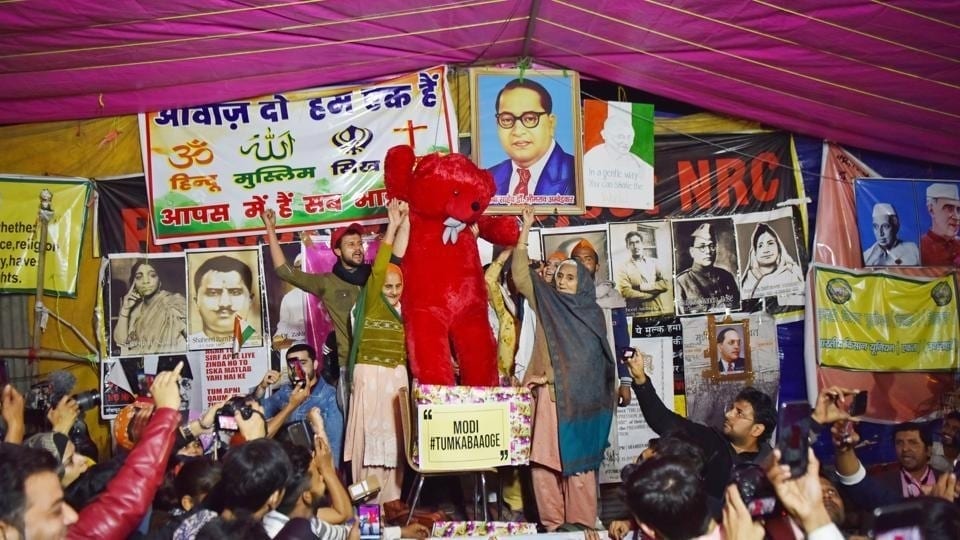
The CAA rules have a limited benefit even in the long run. As per the home ministry’s estimate in 2019, when the Citizenship Amendment Bill (CAB) was being discussed by the Parliamentary standing committee, around 32,000 persons in the country of 1.4 billion had alleged religious persecution in Pakistan, Afghanistan and Bangladesh when they entered India. The CAA says that only those who alleged religious persecution in Muslim dominated neighbouring countries can seek citizenship through the 2019 amendment.
Although it may appear that a large number of non-Muslims migrants have come to India before December 31, 2014 and had not got citizenship, in actuality, the beneficiaries could be negligible. The reason is that most of them would have got citizenship under the Citizenship Act, 1955 even before amendment to the law by BJP in 2019. Section 5 (1) (a) of the Act provides for citizenship to people of Indian origin, who are not illegal immigrants, and are staying in India for at least seven years. The explanation of the sub-section defined a person of Indian origin as one, who or whose either parents were born in undivided India. The amended Citizenship Act allows even grandchildren or great grandchildren of such persons born in undivided India to seek citizenship.
So, this means that most of the people, who would have come into India legally before December 31, 2014, could have got citizenship in the pre-CAA rules. Only those, who came illegally or those who failed to register themselves, under the earlier mechanism, would benefit from new rules. As per government and intelligence estimates, the number of such people would not be very high or else the registration under the new CAA rules would have been very high. The Home Ministry which is monitoring the registration portal has not released any figures of persons who have applied under the new rules.
The new rule takes away the role of state governments in granting citizenship to people coming from these countries. The home ministry has done so by nominating its nominees to a committee entrusted with the job to scrutinise the applications. Verification of the applicants would be done by security agencies to be decided by the Central government, the CAA rule says, taking away the verification process from the local police.
The state-level empowered committee, which was earlier headed by state home secretary, would be chaired by Director (Census Operations), having an officer of Intelligence Bureau, jurisdictional foreign regional registration officer (FRRO), state information officer of National Informatics Centre and Post Master General of the state as other members. All these officers report directly to the Central government.
The state home secretary will be an invitee, having no power to decide on the citizenship applications.
The district level committee, whose primary job is verification of applications, will be headed by Senior Superintendent (Police not mentioned) or Superintendent of Post having district information officer and nominee of the Central government as other members. The special invitees would be a revenue official (Naib Tehsildar) and Station Master of Railways. The rules allow the Central government to decide whether it would nominate Senior Superintendent of Police or Superintendent of Post to head the committee. In opposition ruled states, the government may nominate the Superintendent of Post, whose work is in no way related to verification.
While the above-mentioned mechanism would be there for non-Muslims from the three neighbouring countries, the Muslims from these countries and people from remaining countries would have to apply before a district magistrate for citizenship. With the new rules, the Central government has introduced two systems for seeking citizenship in the country. In one, the state government will have a role to play and in other, it would be a mute spectator. The Kerala government has, however, challenged the new rules in the Supreme Court claiming it is biased and against equality before law. The petition is likely to be heard next week.
At last, the question arises, why were the rules notified just 10 days before the national election announcement? More so, more than four years after the act was notified and the government repeatedly took extension from Parliament saying it was working on the rules, which is just a two-page document. The obvious answer is that the ruling Bharatiya Janata Party (BJP) wanted to tell its core voters that it has fulfilled its 2019 Lok Sabha election manifesto promise even though its implementation will be patchy as the model code has come into force with the election announcement. Sarma’s statement is testimony to the same. Another substantial reason is the aim of the BJP to push its narrative that all Hindus are welcome to India, especially those persecuted in Muslim countries, in a bid to polarise the electorate.
Chetan Chauhan, national affairs editor, analyses the most important environment and political story in the country this week.


