E-Paper



Given existing constraints, the FM did her best. Now, continue to push reforms over the year
The FM has been transparent about the fiscal deficit. The effort to improve the credibility of numbers is welcome

 Prefer HTon Google


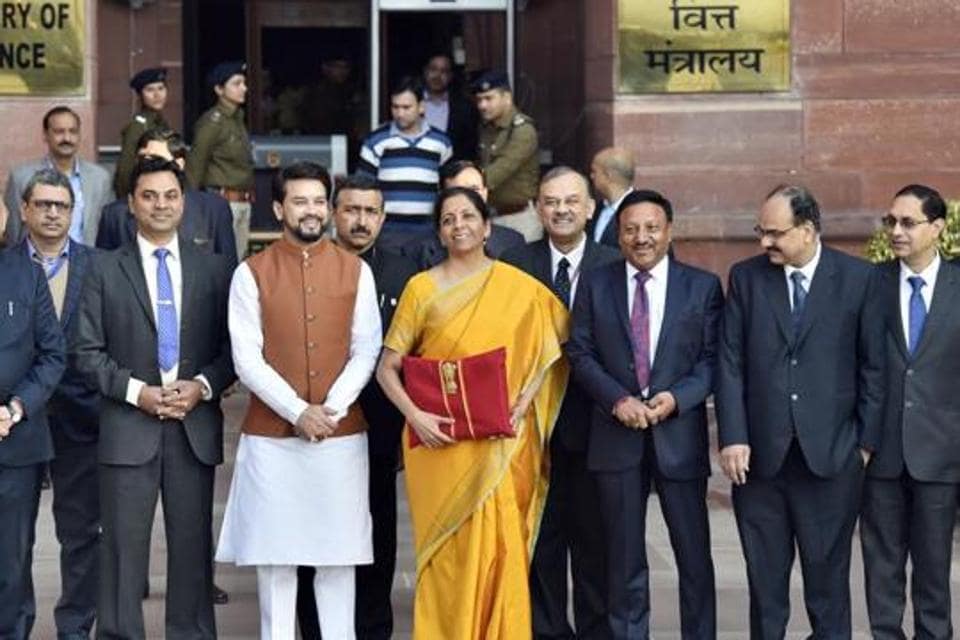
Finance minister Nirmala Sitharaman presented the Union Budget amid high expectations of a demand stimulus for the economy. The slowdown in the economy, combined with the existing fiscal stress, made this a challenging task. While the budget had a number of steps that may help in improving demand, it fell short of the expectations of a big fiscal stimulus.
To be realistic, there was little scope for a big fiscal stimulus. The FM seemed to have tried to do the best under the given circumstances. She could perhaps have tried to do more on policy and legislative changes that are not necessarily tax, revenue, and expenditure-related. However, those can be done later as they are not part of the money bill. Financial legislative reform such as setting up of a public debt management agency, or setting up of a financial resolution authority can be done in the coming months. The direction in which the economy goes will depend on the reforms that follow this budget.
The budget took a fiscal expansionary stance. To her credit, the FM appears to have been more transparent about the fiscal deficit than the previous years. First, she announced a deviation from the Fiscal Responsibility and Budget Management Act, (FRBM), 2003 target. Fiscal deficits of 3.8% in RE 2019-20 and 3.5% for BE 2020-21 were estimated. While the FRBM targets were 3.3% for year 2019-20, and 3% for the 2020-21, the FRBM Act provides for a trigger mechanism for a deviation from the estimated fiscal deficit. She took a deviation of 0.5% for both years. Second, along with this deviation, she said she would provide a list of government borrowings that did not appear in the government borrowing numbers. This is a welcome step towards improving the credibility of budget numbers.
In a boost to the economy, the FM gave some tax breaks to households earning less than Rs 15 lakh per annum. The new tax slabs are a parallel system of income tax slabs that can be chosen if the taxpayer does not wish to avail of exemptions. Details about the exemptions that have to be given up will determine the outcome of this proposal. One of the most utilised exemptions under Section 80 C of the Income Tax Act is taken up by most salaried people as they save for pension, provident fund or buy insurance. If this is one of the exemptions that people give up to opt for the lower tax rate, its effect may be uncertain. People are not likely to save in these instruments if there are no tax exemptions.
On the one hand, people may spend more as they do not save, and this may give a boost to demand. On the other hand, this may have the effect of reducing long-term savings for investments that are already inadequate in the economy.
The overall effect of the income tax measures in the budget on overall demand may be limited. The much-expected fiscal boost to the economy, which was perhaps too unrealistic, did not materialise and many people seem to be disappointed with the Budget.
However, this does not mean that the government cannot give the economy a boost. One of the reasons for the present crisis is the health of the financial sector. Part of the solution also lies in steps that can be taken to improve the health of the financial system. For many of these steps, it is not fiscal resources that are required.
For example, micro, small and medium enterprises (MSMEs) don’t need an interest subvention as much as they need sources of credit. The banking sector barely takes care of about 5% of the credit needs of MSMEs. The banking system lends mainly to large companies who are willing to borrow from banks because that is the most convenient source of credit. If the government works to develop a deep and liquid bond market, banks may then turn to the less creditworthy MSMEs, who are being shunned today due to the presence of highly-rated large corporations.
Last year, in her speech for budget 2019-20, Sitharaman had narrated a story. She cited a Tamil verse that was sung as advice to a king. It said: “A few mounds of rice from paddy that is harvested from a small piece of land would suffice for an elephant. But what if the elephant itself enters the field and starts eating? What it eats would be far lesser than what it would trample over !” The tax department needs to heed the advice of the FM. Perhaps that is why the FM announced that she will introduce a taxpayers charter to prevent harassment of taxpayers. This is something that may go some way in improving investor confidence and preventing a contraction of the economy.