
 E-Paper



NCB: The narcotics agency and where it goes wrong
Narcotics Control Bureau, the federal agency which was at the centre of a storm over the arrest of actor Shah Rukh Khan’s son Aryan Khan (he is now out on bail), came into existence on March 17, 1986

 Prefer HTon Google


What is NCB?
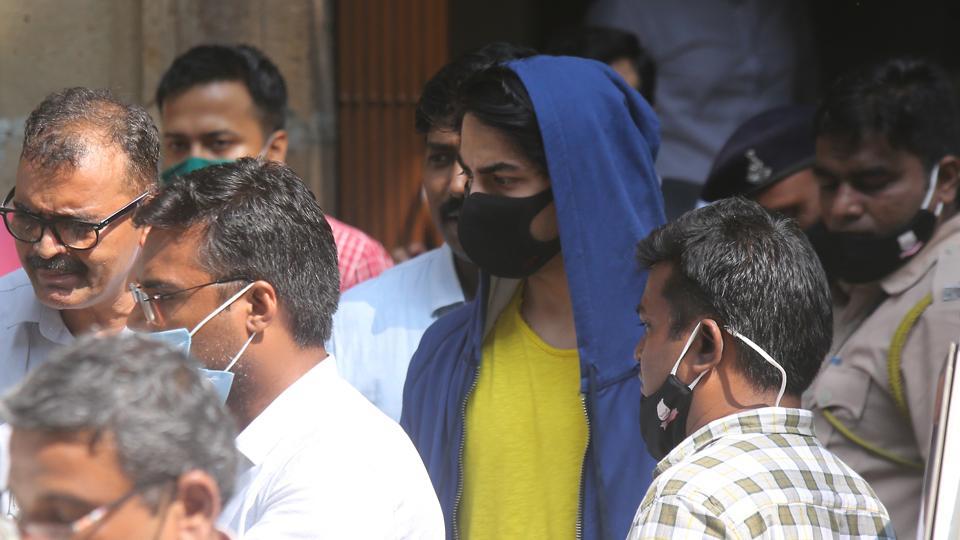
Narcotics Control Bureau (NCB), the federal agency which was at the centre of a storm over the arrest of actor Shah Rukh Khan’s son Aryan Khan (he is now out on bail), came into existence on March 17, 1986 as per a provision in the Narcotic Drugs and Psychotropic Substances (NDPS) Act, 1985.
It is the apex coordinating agency on drugs related matters across the country, but also functions as the enforcement agency through its 28 zones and sub-zones in Delhi, Mumbai, Chennai, Ahmedabad, Bengaluru, Guwahati, Kolkata, Jammu, Patna, Ajmer, Amritsar, Bhubaneswar, Dehradun, Goa, Hyderabad, Imphal, Madurai, Raipur, Kochi, among other sites.
What is NCB’s organisational structure?
Till 2007, NCB had only 421 staffers all over India, mostly drawn on deputation from paramilitary forces and police departments and it didn’t have its own cadre. The expansion of organisation took place between 2007 and 2010, according to its former director general OPS Malik. The department began its own cadre sometime in 2009 in which Intelligence Officers (IOs), equivalent to Inspector rank in state police, were hired. IOs are considered the backbone of NCB as they carry out most drugs related intelligence, investigation and analysis work.
By 2010, NCB had 900 staff. Today, it operates with the strength of 1,107 personnel all over India. There is a proposal pending to recruit 3,600 more personnel for a long time so that its capacity in investigation and intelligence is enhanced, making it more professional and effective. However, this proposal hasn’t moved much.
The agency rarely gets a full-time Director General (DG). Its current chief, S N Pradhan’s main charge is that of National Disaster Response Force (NDRF) while its previous boss, Rakesh Asthana, was also the full-time DG of Border Security Force (BSF). With a part-time DG, the NCB doesn’t get much attention, affecting the drugs coordination work. Malik said, “There is a need to reform the structure (of NCB) so that it is able to cope with the (drug) problem”.
NCB officers are supervised by zonal directors and above them deputy director generals (DDGs), under the overall command of the DG.
What are NCB’s powers?
NCB’s offices collect and analyse data related to seizure of narcotics drugs and psychotropic substance, study trends and modus operandi, collect and disseminate intelligence, work in close cooperation with other institutions such as customs, state police and other law enforcement agencies, empowered under the NDPS Act, the Customs Act, 1962, the Drugs and Cosmetics Act, 1940 for enforcement of the narcotics substances.
The agency also implements obligations pertaining to counter-measures against illicit traffic under various international conventions. It assists agencies and concerned international organisations to prevent drugs smuggling anr coordinates with union health ministry and other departments/organisations in the matter of drug abuse. It takes part in real time information sharing with various Drug Liaison Officers of other countries such as Drug Enforcement Agency (DEA) of the United States and National Crime Agency of United Kingdom, among others, for operational and intelligence information.
According to OPS Malik, “NCB is primarily an intelligence-based organisation, which was formed as the central authority of government of India to prevent and combat the drug abuse and illicit trafficking. It is not meant for street-level enforcement. That is for state agencies – including the police, excise, revenue and in some cases forest officials to handle. As the central agency, it must focus on bigger, organised drug peddling networks”.
Malik, however, added there is no bar on NCB to intervene in smaller or street-level operations, but “there should be involvement of some network, syndicate or possible international link”.
Why NDPS is a controversial law?
NDPS Act places the burden of proof on the defendant, rather than the investigation agency. Section 54 of the Act says that “in trials under this Act, it may be presumed, unless and until the contrary is proved, that the accused has committed an offence under this Act.”
Section 27 of the act, under which Aryan Khan has also been booked, deals with arrest and punishment of up to one year for consumption of any narcotic drug or psychotropic substance. It doesn’t make a distinction between addicts, first-time users and recreational users. Hence, it is difficult to get bail in NDPS Act.
Experts point out it is the only section in the law which deals with consumption but agencies such as NCB and police end up focusing mainly on this, rather than looking at other aspects like international networks and the supply side of the illegal trade.
This is despite the fact that the ministry of social justice and empowerment has recommended decriminalising possession of small quantities of drugs for personal consumption by amending the NDPS act. A 2019 study by the ministry, Magnitude of Substance Use in India, says “This criminalisation of people using substances further enhances the stigma, isolation and hinders access to treatment.”
A very harsh provision in the law is death penalty under section 31A for subsequent conviction. The provision was added in the 1985 law in 2001 but later, in 2014, it was further amended making it optional for the judge to award the death sentence.
Is NCB misusing the law by targeting consumers?
NCB’s internal field officers’ handbook says even though drug law enforcement officers enjoy certain powers under the NDPS Act, “this power has to be exercised judiciously while upholding the rule of law”. “Ethics and integrity is not only a moral requirement but also a legal necessity.”
Section 27 is a miniscule aspect of NDPS Act. However, rather than focusing on their statutory duty of looking at larger picture, agencies such as NCB target recreational drug users while larger players remain elusive. The biggest example of NCB’s faulty functioning is that the agency was not even aware of 3,000 kg Afghan drug haul worth ₹21,000 crore last month, which was eventually busted by the Directorate of Revenue of Intelligence (DRI).
Senior Advocate Vikas Pahwa says, “NCB today has become more of a populist organisation. Officers enjoy seeing their names, photographs in media and targeting high-profile people with smaller quantities has become a publicity stunt for them.”
He added that the problem also lies with the lower courts, with judges not following Supreme Court directions and giving remand at the drop of a hat. “The magistrates in subordinate courts don’t even check the case diaries (of agencies) or look at SC judgements regarding bail/custody. Then, while seeking somebody’s remand, the agencies make these false, tall claims in courts but when the charge sheet is filed, none of those allegations are included. For example, in Aryan Khan case itself, the NCB first claimed there was recovery of drugs, but later it said the recovery happened from another person in the same case”.
Pahwa said the time has come that investigation agencies like NCB, Central Bureau of Investigation (CBI), Enforcement Directorate (ED) and National Investigation Agency (NIA) should be asked to file affidavits from day one when they are making any serious allegations, so that they can be held accountable when they lie”.
Malik agreed that the NDPS is “definitely a stringent law”. “It isn’t like Indian Penal Code (IPC) Even preparation (of crime) is punishable, the intent is punishable, the knowledge is punishable.. If users are part of the network, then action can be taken against them. But the law was amended in 2001 to say that a lenient view should be taken towards consumers”.
What is the way ahead?
NCB should focus on its charter – coordinate with national and international agencies for combating drug trafficking and abuse with larger players in mind and study/analyse trends in a way that the government can makes changes in the law, rather than arresting consumers.
Indian courts have pointed out on multiple occasions that NCB’s witnesses are usually the same in multiple cases. The agency should check its officers’ informer network and work on verified leads in coordination with its own internal units and other agencies.
The federal agency recently prepared a list of 142 organised drug syndicates in the country and shared it with concerned states. Experts say the NCB should focus on routes, money trail of these syndicates and their handlers.
Moreover, as pointed out by multiple parliamentary standing committees over a period of time, with the increasing popularity of crypto-currencies, there is a need to track darknet markets where drug traffickers are using encryption software to protect their communications, data and money.
Malik says “People will tell you that India is a transit country (for drugs trade), but we are both - user and transit country. The problem is that India recognises the problem but we don’t have seriousness in tackling it. We need to strengthen organisation like NCB by filling its vacancies, provide proper training to the personnel and have continuity by having cadre officers and full-time DGs. While NCB is the federal agency to coordinate all drug related operations, no other agency or police is accountable (to it). With 1,100 staff, you cannot be present everywhere when the problem is so big.”


