
 E-Paper



Number Theory: What November's headline inflation figures don't show
WPI inflation, which measures changes in producer prices, was 0.26% in November compared to a deflation of 0.52% in October
Updated on: Dec 15, 2023, 11:26:40 IST

 Prefer HTon Google
Share via


Copy link

Inflation numbers for November released this week show Wholesale Price Index (WPI) and Consumer Price Index (CPI) inflation rates at 0.26% and 5.55% respectively. While neither is very high, a closer look suggests that there is more to these numbers. Here are four charts on what the numbers mean.
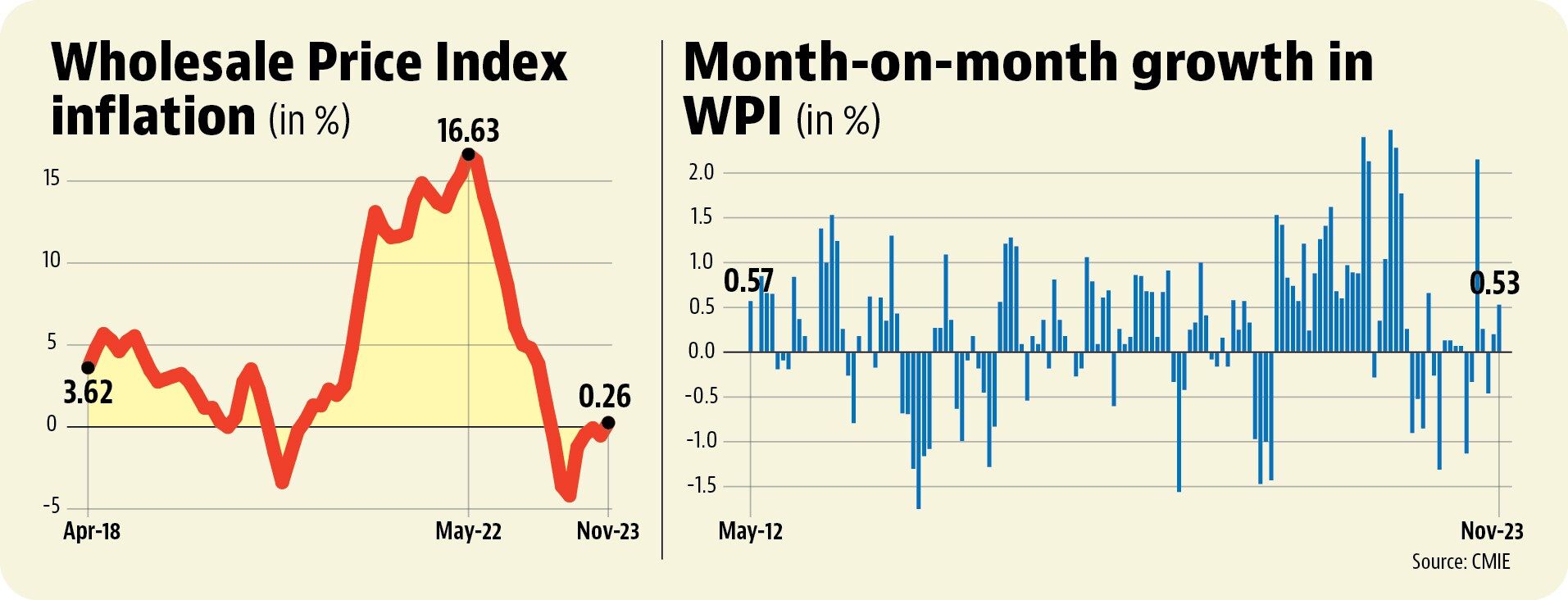
WPI inflation increased for the first time in eight months
 WPI inflation increased for the first time in eight monthsWPI inflation, which measures changes in producer prices, was 0.26% in November compared to a deflation of 0.52% in October. This is the first time WPI inflation has been positive since April. One reason for low WPI inflation is the base effect. WPI inflation was in double digits for 18 months from April 2021 to September 2022; and was 8.7% and 6.1% in October and November last year. Sequentially, WPI increased 0.53% in November this year, compared to 0.2% in October and the long-term (April 2012 to October) average monthly growth rate of 0.30%. Except May, June, and September, when the month-on-month readings were -1.13%, -0.33%, and -0.46%, sequential WPI growth has been positive since January.
Vegetable prices the reason for volatility in CPI inflation
- Vegetable prices the reason for volatility in CPI inflationCPI inflation of 5.6% in November was also higher compared to October, when it was 4.9%. This was largely because of a sharp rise in vegetable inflation, from 2.8% in October to 17.7% in November. Vegetable prices, which have a 6% weight in CPI basket, are also a big reason for volatility in headline inflation since April. If vegetables were excluded, CPI inflation would range between 4.7% and 5.4% from April to November, and also show a declining trend from August. On the other hand, headline inflation has varied in a bigger band in this period: between 4.3% and 7.4%.

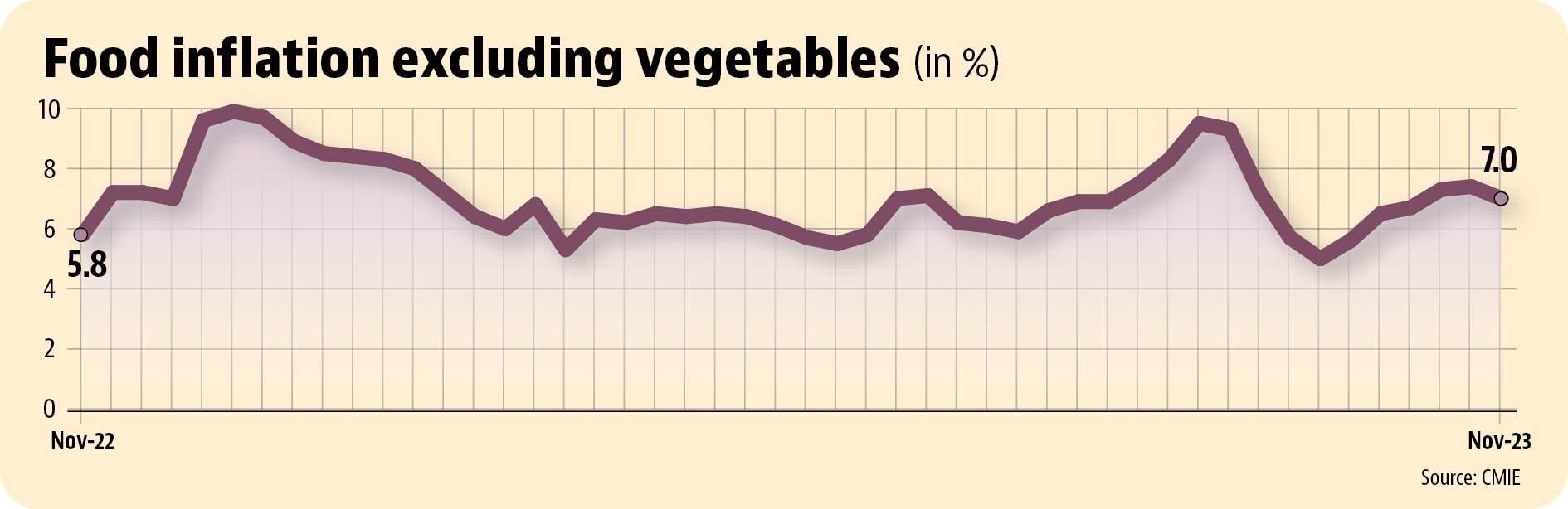
Inflation in other food items has been consistently high
- Inflation in other food items has been consistently highTo be sure, food prices are high even after excluding vegetables. It is just that inflation in these other food items has been consistently high and did not change much in November compared to October. Food inflation was 7% in November even after excluding vegetables. This number, which accounts for around 33% of the CPI basket, had increased consistently from 6.5% in July to 7.4% in October. This is largely on account of cereal and pulse inflation. Inflation in both these items has been in double digits since July.
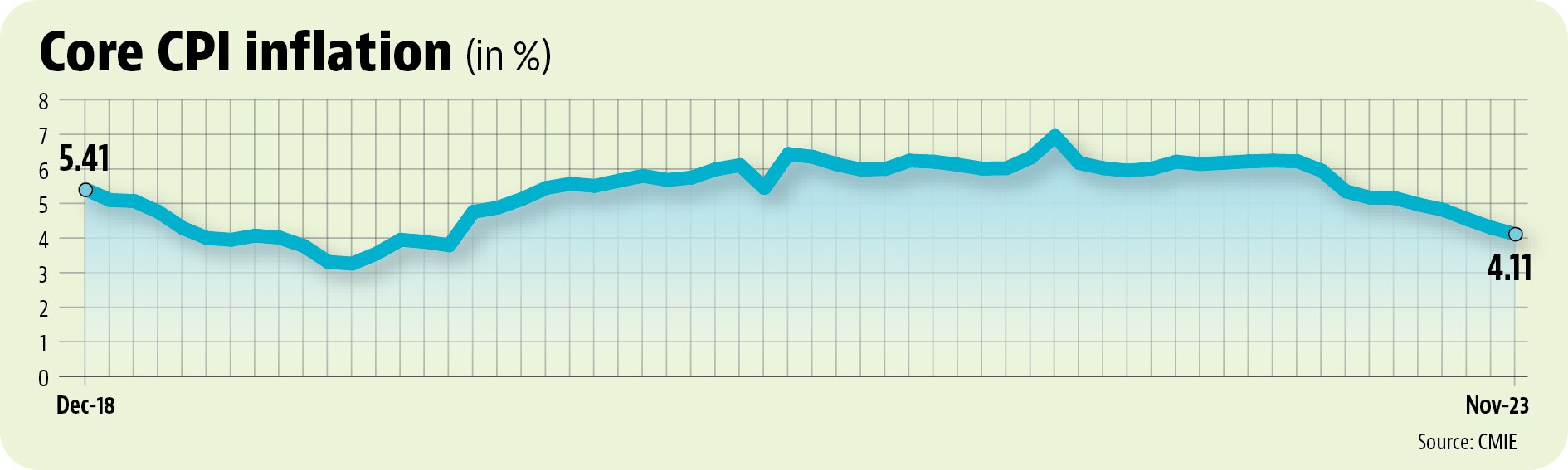
However, core inflation continues to slow
- However, core inflation continues to slowOne relatively good news in retail inflation is that core inflation (the non-food and non-fuel component) has been decreasing continuously since February after staying in the 6-7% range through most of 2021 and 2022. Core inflation excludes both food and fuel prices and is relatively immune to seasonal fluctuations. It was 4.1% in November compared to 4.3% in October.
Will the RBI forecast for December quarter materialise?
- Will the RBI forecast for December quarter materialise?The Monetary Policy Committee of the Reserve Bank of India (RBI) kept is retail inflation forecast unchanged in its meeting on December 8. According to this forecast, the retail inflation print in the December quarter is likely to be 5.6%. For this forecast to be accurate, inflation in December needs to increase to 6.4%. Experts suggest that December inflation is likely to be close to this number given the prices seen so far this month. “The high frequency food price data for the first 10 days of December indicates that headline inflation could come in at around 6%. The price of tomato and onion with a CPI weight of 1.2%, remains stubbornly high. Moreover, reservoirs levels are currently well below last year’s and long-term levels. As of December 8, rice and pulse sowing were not faring very well (down 10% and 8% y-o-y respectively). Wheat sowing, too, remains 1% below last year’s levels,” HSBC economists Prajul Bhandari and Aayushi Chaudhary said in a research note on December 12. “That said, the regular winter disinflation in vegetables, which kicks in around December, could help offset some of the price pressures in other food. All said, we think that inflation in the December quarter is likely to average close to the RBI’s 5.6% inflation forecast,” they added.


