E-Paper



Taliban discreetly gauges India’s stance towards group set to form govt in Afghanistan
Both Sher Mohammed Abbas Stanekzai, the deputy head of Taliban’s political office in Qatar, and Anas Haqqani, a member of the group’s negotiating team, have also been part of an outreach towards India in recent days

 Prefer HTon Google


As the Taliban move closer to formation of a government in Afghanistan, senior leaders Sher Mohammed Abbas Stanekzai and Anas Haqqani have been engaged in discreet efforts to gauge the thinking in New Delhi towards the group.
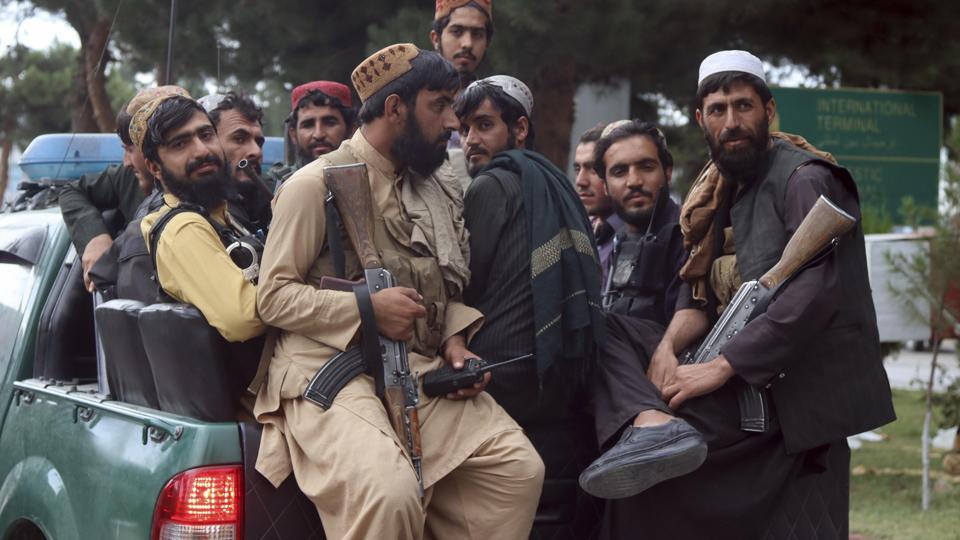
Both Stanekzai, the deputy head of Taliban’s political office in Qatar, and Haqqani, a member of the group’s negotiating team, have also been part of an outreach towards India in recent days. This has resulted in them being seen as the main contactpersons for any Taliban contacts with the Indian side in the coming days.
Haqqani, the youngest son of Haqqani Network founder Jalaluddin Haqqani and brother of Taliban deputy leader Sirajuddin Haqqani, has been in contact with intermediaries in Kabul and New Delhi to assess the latest thinking on the Indian side regarding the Taliban, people familiar with developments said on condition of anonymity.
During these contacts, Haqqani indicated a clearer picture regarding any sort of formal engagement by the Taliban side with India would emerge only by the end of September, the people said. This was because the immediate task of the Taliban is forming a government and consolidating its position across Afghanistan.
Haqqani also indicated during these contacts that if the Indian side had conditions for any engagement with the Taliban, his group too would have certain conditions, the people said.
The recent overtures from Stanekzai, who trained for several years at the Indian Military Academy (IMA) in Dehradun in the early 1980s, didn’t cause as much surprise in New Delhi as the outreach from Haqqani, whose family still heads the Haqqani Network that has been linked to some of the most brazen attacks on Indian interests in Afghanistan.
Also Read | ‘Your dominance over soil doesn’t mean stability’: Resistance leader to Taliban
The Haqqani Network was famously described in 2011 by Admiral Mike Mullen, then chairman of the US Joint Chiefs of Staff, as a “veritable arm of Pakistan’s Inter-Services Intelligence”.
Indian, Afghan and US officials have said over the years that there was strong evidence that the Haqqani Network was behind the July 2008 suicide car bombing at the gate of the Indian embassy in Kabul that resulted in the death of nearly 60 people, including defence attaché Brig Ravi Datt Mehta and diplomat V Venkateswara Rao.
There have also been reports of the Haqqani Netwrk working closely with Lashkar-e-Taiba (LeT) fighters in Afghanistan.
Both Stanekzai and Haqqani have in recent days made public remarks that appear to be aimed at assuaging Indian concerns regarding the Taliban and the group’s reported ties with Pakistan’s military and security establishment.
In a video statement issued last week, Stanekzai said the Taliban wants to continue Afghanistan’s political, economic and cultural ties with India. He also described India as a “very important” player in the subcontinent.
Haqqani, in an interview with India’s News18 channel, even went to the extent of saying that there is “nothing like the Haqqani Network, but only the emirate” of the Taliban, which wants good and positive relations with all countries, including India. He added that though the Indian government had supported the Taliban’s opponents in Afghanistan for 20 years, the group didn’t want to remember the past as it wants good relations with all nations.
The Taliban, Haqqani said, wouldn’t interfere in the Kashmir issue, even as he dismissed reports about the links between the Haqqani Network and the Pakistani security set-up as “propaganda”.
Former ambassador Amar Sinha, who served as India’s envoy to Afghanistan, said the Haqqani Network would have a special problem in living down its long-standing connections with Pakistan.
“We can listen to this charm offensive but we also have to put them to the test. There has been credible evidence linking the Haqqani Network to attacks on Indian interests,” he said.