
 E-Paper



View: Why US needs to distance itself from Trudeau’s wild allegation on Nijjar killing
India and US are finally working together on global issues after burying the ghost of USS Enterprise.

 Prefer HTon Google


Congress leader A K Antony was the longest-serving defence minister of India. Centre of left nationalist but an obedient servant of the Congress party, Antony was always most hesitant in dealing with the US and would often quote the US President Richard Nixon and his pro-China secretary of state Henry Kissinger sending USS Enterprise (Task Force 74) to Bay of Bengal during 1971 war for liberation of Bangladesh to signal that America could never be trusted.
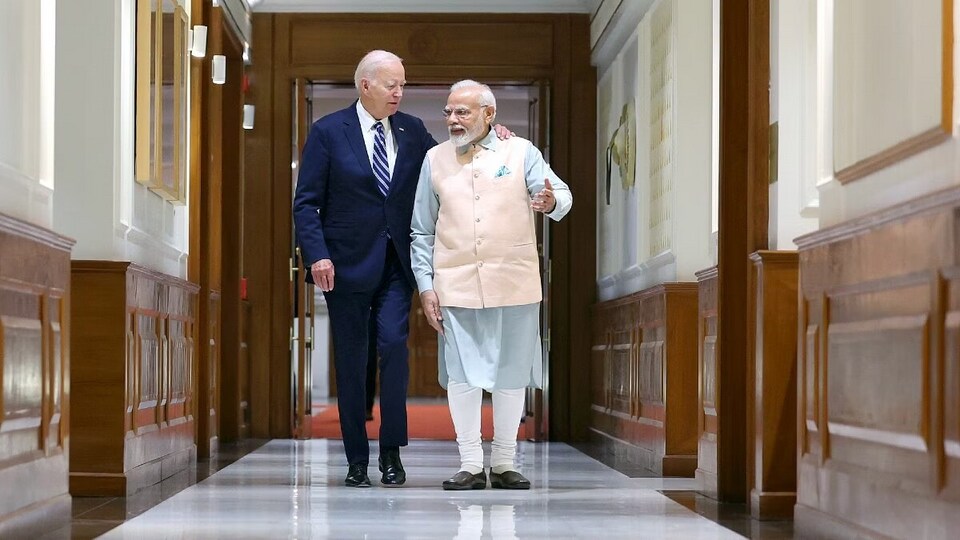
During a Q and A session at Hudson Institute this week in Washington, External Affairs Minister S Jaishankar made a significant statement that India and US after decades of dealing were finally working with each other on global issues. The statement signalled that finally, India had buried the ghost of the USS Enterprise with the US ditching the Kissinger China policy and deciding to work with India on mutually beneficial terms.
Jaishankar’s comment came at a time when America’s closest Anglo-Saxon ally Canada was trying to drive a wedge between India and US bilateral relations over the killing of designated terrorist Hardeep Singh Nijjar in British Columbia on June 18. Maverick Prime Minister of Canada Justin Trudeau made an allegation that India under Prime Minister Narendra Modi had ordered the extra-judicial killing of a man who has no less than 10 criminal cases registered against him and hinted that it was actually America, as part of Five Eyes alliance, which had provided the intelligence. After Trudeau's statement in Parliament on September 18, no evidence to back the allegation has been provided by the unscrupulous politician while sundry US officials are making statements that the matter should be investigated to the hilt. In the meantime, the US Ambassador to Pakistan made a trip to Pakistan-occupied Kashmir, which was legitimately objected to by India.
While India has totally rejected Trudeau's allegation and called Canada a safe haven of terrorists and extremists to support Trudeau’s vote bank politics, the American statements and cooked-up anti-India stories in US media are again trying to resurrect USS Enterprise in the minds of the Indian public. One must remember that it is not the Indian politicians but the public who will never allow a détente with either China or its client Pakistan with the 1962 war and cross-border terrorism in Kashmir imprinted in their minds.
Although India is trying its level best to ensure that bilateral relations with US do not get skewed during to antics of Trudeau under the protection of Five Eyes, it is also the responsibility of mature Biden administration to drill some sense into their next-door neighbour as there are much larger issues at stake than killing of a terrorist who posed clear and present threat to India. A mere look at the map of Asia will make the US realize that India is at the centre of the Indo-Pacific and the only power that does not hedge bets between US and China unlike the ASEAN or the Middle-East countries. It is time that the Four Eyes told the maverick Fifth Eye to cool down tempers with India as the Modi government has no intentions of backing down in its spat with Canada as its national interest not votes is involved. The US and Europe should also understand that secessionism against India cannot be fanned under the garb of freedom of speech or the right to dissent. India cannot be a bystander if individuals and organizations based in Five Eyes are involved in targeted killings, drug, weapon smuggling, extortion and human trafficking in Bharat particularly the border state of Punjab. Just as the US has the right to defend itself from external threats, so has India or for that matter Israel. This is not to say that Bharat got Nijjar, president of a small-time Gurudwara in a one-horse town of Surrey killed.
It is time that the US separated the chaff from the grain and focused on bigger challenges facing the globe rather than securing Khalistani vote banks for an unscrupulous leader purely because he happens to be part of an Anglo-Saxon alliance. Either Trudeau should submit the evidence to back his wild claims or apologize on the same platform. US must take its New York-based national G S Pannu, a designated terrorist of a proscribed organization. to task for spreading hatred against India and asking for the assassination of Indian diplomats posted in Canada. Or else the unsavory memory of USS Enterprise will never fade away.


