
 E-Paper



A destiny’s child

 Prefer HTon Google


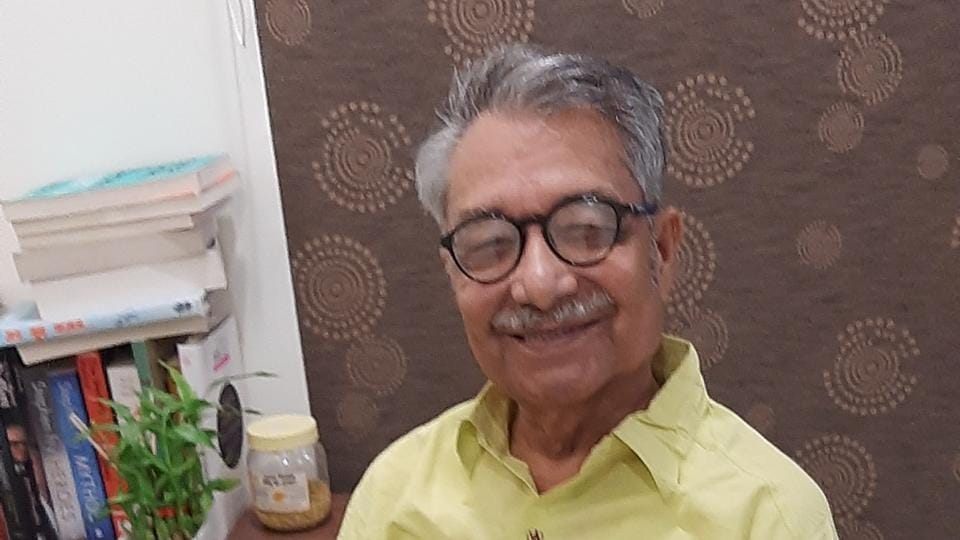
Eminent Gujarati playwright Madhu Rye reflects on his life, says nothing in his life has been planned
Regional writers, more often than not, do not receive the kind of recognition an English or Hindi writer gets. However, we do sometimes see popular playwrights adapting their stories on stage, films and other mediums. Madhu Rye, an eminent Gujarati playwright and novelist, who has adapted his novels into plays, and others too have adapted his works into several languages including Hindi, Marathi and English, is one such writer, whose short stories and plays became popular in the ‘60s.
Rye, who has been based in New Jersey, USA, for the last forty years, is now in Mumbai and will be in talks with actor and theatre director Vijay Kenkre in a session titled Inspired by Language: A Playwright’s Journey, curated by theatre personality Sanjna Kapoor.
Considered an experimental writer, Rye, writes for the Gujarati mainstream or commercial theatre, a space where commercial compulsions tend to keep content safe. He sees himself as a lover of language and not someone just writing for “a cause”. Yet, Kenkre says that his plays have consistently engaged with risky topics, rarely explored on the mainstream stage. Plays such as Santu Rangilee, Kumarni Agashi, Koi Pan Ek Phool nu Naam Bolo, Pankor Nake Jaake, Sura Ane Shatrujit, explore all kinds of relationships, communication and miscommunication, sexuality, and so on and so forth.
Popular playwright Mahesh Dattani has claimed a couple of times that it was Madhu Rye’s works that inspired him to venture into writing. Rye, however, had no intentions of writing to begin with. “I started writing out of necessity — as foraging for rent money — rather than drawn by concepts of self expression, or exploring the horizons of human suffering or whatever. Nothing in my life is what I planned to do. Things happen to me rather than I control my destiny,” says the 77-year-old. Recalling how his father, a school teacher in Kolkata, West Bengal, had to retire early due to illness, he says, he quit college to take his place to support his family of seven. “We lived in a single room. There were frequent quarrels among neighbours over rationed water, use of common facilities, and such. I literally slept on the streets in summer and used street lights to read books and magazines,” Rye shares. Soon, he left the teaching job and joined an engineering firm full time. Trapped in it for eight hours and “intimidated by my superiors I had no resources for fun”. “The only way I could have fun was to make up stories,” (laughs) he says.
Rye got his first writing job of translating Gujarati short stories by writers such as Shivkumar Joshi and Chandrakant Bakshi into Hindi. Then in a short story contest, he won Rs 250, which came in handy to “pay off our overdue rent”. Writing plays, for Rye, was inspired by another contest, of one act plays, which took care of his college fees. “I started writing short stories and soon had a collection of 22 stories. They were published and even well received. I also wrote as therapy, I believe if I didn’t have this outlet I would have gone mad. I would write the first line and the rest of the story wrote itself. This kind of freedom nurtured me and I even learned to make fun of everything including my own pain and misery,” he explains.
Post that, Rye wrote a farcical one act play, which went on to become his first full length play, a psychological thriller - Phool, directed by eminent dancer and playwright Mrinalini Sarabhai in 1969. After that, another play, a straight thriller, Club, directed by Arvind Vaidya was staged in the year 1970, which he says, fared a little better than Phool. Meanwhile, he got a scholarship to study playwriting at the University of Hawaii so he left for the USA in 1971. “I returned from in 1972, armed with improvisations as a playwriting technique. I started a playwriting workshop in Ahmedabad with renowned poets, fiction writers and drama critics and a few actors.”
After achieving little success in what Rye says is a “non-existent” theatre scene in Gujarat, Rye left for the USA for good. Rye, who says, he once went on record for brashly saying that unless all those who adapt plays in Gujarati for the commercial stage perish by cholera, original Gujarati playwriting cannot thrive. But when theatre director and actor Pravin Joshi asked him to adapt Pygmalion by George Bernard Shaw, he was intrigued by its diction.
What’s Your Raashee? (2009), a mainstream Bollywood film directed by Ashutosh Gowariker, was based on Rye’s novel, Kimball Ravenswood, which Rye candidly admits was a disaster of a film.
When asked how to bring more regional writing to fore, he quips, “my entire life has happened because of circumstances, tomorrow I may be somewhere I don’t know, so what can I say about the faith of regional writing and regional writers. It’s not in my hands.”


