
 E-Paper



Art for everyone
Sanjna Kapoor and Sameera Iyengar celebrate the second anniversary of their art and culture initiative, Junoon, they talk about why those chose a leap year and more


When Sameera Iyengar was working as Prithvi Theatre’s Project Director, it became clear to her that a large majority of people did not have access to the arts. She understood that it depended on where a person was based and where the spaces that engage with the arts were — that some people lived far away from cities like Mumbai to be able to take part in the field. “How could it be opened up to people, so they could partake in its richness? How could I invite people in and say ‘try this, and see how fabulous it is’? At Prithvi, I had already begun toying with this concept at our Summertime ‘melas’, through our carnivals and festival exhibitions. I had already been seeking ways to identify and open doors to the arts, to deepen engagement. Junoon was simply a step further, perhaps an inevitable move to make this desire to share the arts an overall point of focus rather than a partial one,” says Sameera.
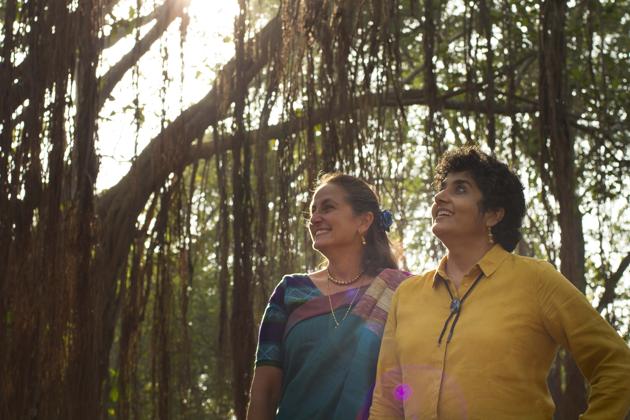
Thus began the journey of Junoon; an organisation dedicated to increasing the reach of theatre and arts to a wider audience through innovative initiatives. Along with Sameera was Sanjna Kapoor, daughter of late Shashi Kapoor and late Jennifer Kendal, who managed the Prithvi Theatre in Mumbai from 1993 to February 2012 before starting Junoon. Sanjna has also acted in films such as 36 Chowringhee Lane(1981) and Salaam Bombay! (1988).
Junoon started on February 29, 2012, a leap year. So, even though they celebrated eight years in February, it’s only their second anniversary. Being born on February 29 is “magical”, says Sanjna, because according to her it makes our birthdays even more special. “The day seems fitting given that Junoon itself, in its imagination, is quite unique. There is no other arts organisation that I know of in the country, which has a similar ambition of being the bridge between the audience and artistes through skillfully curated events. We believe that art is for everyone, and therefore, we aim to reach a broader base of people across our social spectrum,” Sanjna explains.
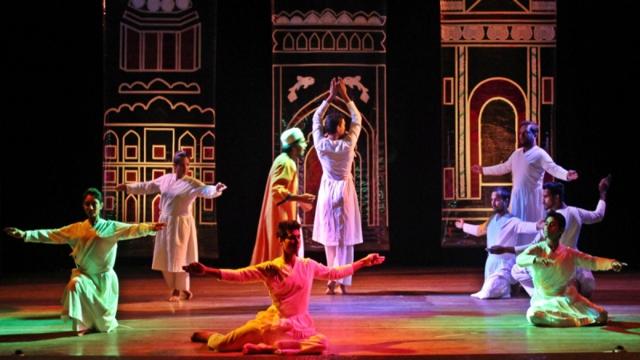
Over the years, Junoon has hosted theatre programmes in schools across cities, and organised cultural engagements between authors and theatre practitioners for city residents under the banner of Mumbai Local.
The journey
For both Sameera and Sanjna, the idea behind Junoon was to explore the connection between the arts and the worlds we live in. So, how has the journey been so far? “It has been complex,” says Sameera. “A time of enormous growth and immense discovery though. The journey has given me clarity about why I came into theatre and the arts.”
Asked what the journey has taught, Sanjna says, “My most important learning at Junoon has been the ability to ask people to contribute to our dream, if they believe that our work is of value. Earlier, there was awkwardness and the fear to ask. Today, that is gone because, we are clearer about our aims.”
If one has big dreams, Sameera says, they have to learn from the mundane and make it a reality. “It has also taught me to keep having faith even when the going gets tough. It has reminded me that children have the capacity to grasp the most complex thoughts, and adults when respected, are more open about ideas and concepts than you can imagine.”
The future
While Junoon has introduced many interesting programmes and discussions, Sameera believes that “we have not yet been able to reach out to as many people as we would like to. So the immediate future has to be about finding ways for them to reach their full potential.”
In an increasingly urban world, malls and restaurants cannot be the only ways for people to get together and talk about things. Sameera agrees and says the arts offer ways of “immersive getting together”. “We plan to develop our Theatre Inclusive programme that brings plays to underprivileged children. We wish to reach out to around 30,000 children this year,” says Sanjna.
So, what should be done to make the arts reach out to more people? “Infrastructure and Policy revamping!” signs off Sanjna.
Junoon’s initiatives
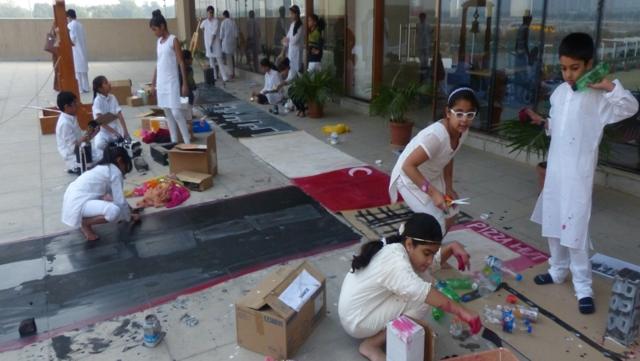
Apart from the metros, Junoon specifically targets two and three tier-cities. They do this through their two flagship programmes — Mumbai Local and Arts at Play with Schools. While Mumbai Local, organises discussions with artistes, the latter is their art sessions for schoolchildren across the country.
Besides, they also have a partnership with Chhatrapati Shivaji Maharaj Vastu Sangrahalaya (CSMVS) at Fort, where they perform live every month for young audiences.
The Junoon Salons seeks to build arts patronage among business leaders. They also have a college programme offering conversations on critical topics and a Theatre Inclusive, which takes the performing arts to children with lesser means.


