E-Paper



68% wells in MP show fall in groundwater level
A pre-monsoon report by the Central Ground Water Board on the groundwater scenario in the country has stated that 68% of the wells monitored in Madhya Pradesh have recorded a decline in groundwater levels, as compared to 2014


A pre-monsoon report by the Central Ground Water Board on the groundwater scenario in the country has stated that 68% of the wells monitored in Madhya Pradesh have recorded a decline in groundwater levels, as compared to 2014.
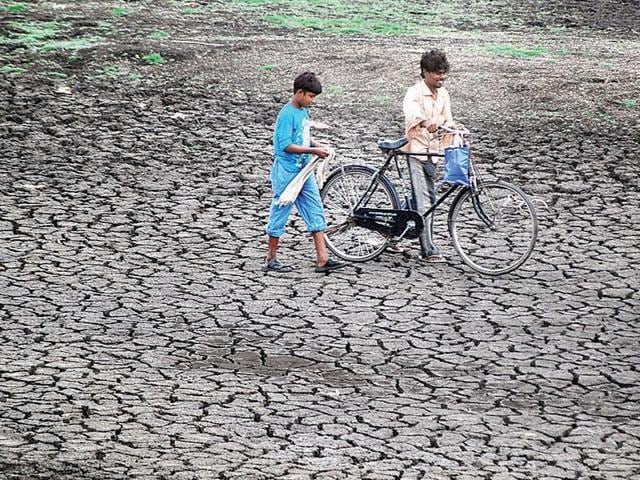
As the second largest state in the country and many geographical variations, there is a difference in the groundwater seepage in different parts of MP. The fall in the groundwater level has been reported primarily in the north and western parts of the state.
The rise in ground water level has been reported in only 29% of the wells monitored.
However, when the groundwater level of 2015 is compared to the decadal mean (2005 -2014) for the groundwater scenario in the state, 48% of the wells show a decline in water level.
Over 90% of water used for drinking and domestic purposes in MP sourced from groundwater
According to experts, an increasing demand of water for human consumption, agriculture and industry, coupled with erratic rainfall has led to the indiscriminate exploitation of groundwater.
Speaking to HT on the issue, Lokendra Thakkar, state coordinator of the Climate Change Knowledge Management Centre on Climate Change, said over 90% of the water used for drinking and domestic purposes in MP was being sourced from groundwater, according to the Action Plan on Climate Change prepared by the state government.
He said that MP’s climate change report had also expressed concern over the indiscriminate exploitation of groundwater and its depletion in some areas.
“Also, the rainfall data in the state shows an increasing trend of heavy rainfall over the past 50 years compared to normal, consistent rainfall. It is possible that due to increasing heavy rainfall, there is a higher run off, which leads to a decrease in groundwater recharge,” he said.
Decline in groundwater levels can also be linked to deficient rainfall
Rajiv Sukalikar, chief engineer of the water resources department, said that the decline can also be linked to deficient rainfall. “The decline in groundwater levels is primarily because of the usage of groundwater for irrigation, drinking water, construction purposes and industrial usage is increasing while the replenishing rainfall has not been increasing in the same proportion. We had deficient and erratic rainfall for the last few years, which has affected the replenishing of groundwater,” he said.
Madhya Pradesh is not alone — the report shows that there has been a fall in groundwater levels in almost the entire country, with a few states like Assam, Karnataka, Kerala, Rajasthan and Tamil Nadu the notable exceptions. Across India, 57% of the wells have shown a fall in groundwater levels.
All is not well
In general, the depth of water level in MP ranges from 5m to 20m below ground level (bgl)
1% monitoring wells show water level in 0-2m bgl range
15% of wells show water level in 2-5 m bgl range
Water levels of more than 20m bgl were observed at 5% wells in northernmost parts of the state