E-Paper



Bhopal: Water level drops in Kolar reservoir, Upper Lake as mercury soars
As the mercury soars in Bhopal, the water levels in the Kolar reservoir and the Upper Lake - the lifelines of Bhopal - have gone down by 26.7 feet and 4.6 feet respectively, compared to the water levels on the same day last year.


As the mercury soars in the city, the water levels in the Kolar reservoir and the Upper Lake - the lifelines of Bhopal - have gone down by 26.7 feet and 4.6 feet respectively, compared to the water levels on the same day last year.
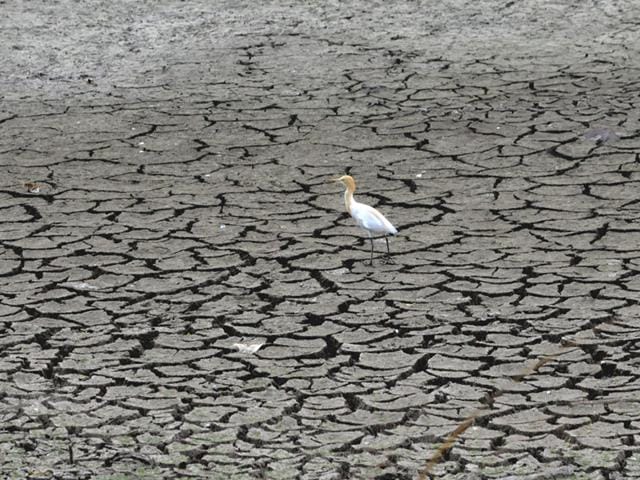
The Kolar reservoir holds around 265 million cubic metres of water at its full capacity, but it has come down to 26.3 million cubic metres this year.
In simple terms, the reservoir is holding a mere 10 percent of its full capacity at present.
Last year, at this time, the reservoir was full up to 33 percent of its full capacity.
The Kolar reservoir supplies drinking water to nearly 50 to 60 percent of the city's population, while the Upper Lake supplies water to around 40% of the residents in Bhopal.
Every day, around 25 million gallons (MGD) of water is drawn from Upper Lake, while the quantum of water drawn from Kolar is around 30 to 34 MGD.
SK Aggarwal, sub-divisional officer in the water resources department at Birpur in Hoshangabad, said the water level in the Kolar reservoir had gone down due to the searing heat this month.
"On May 19 last year, the level in Kolar reservoir was 449.75 metres above the sea level (1475.5 feet) which has come down to 441.60 metres (1448.81) on Tuesday," he said.
Bhopal Municipal Corporation assistant engineer (water) Rakesh Nigam said the heat wave over the last few weeks had increased the rate of evaporation in reservoirs.
The water level in the Upper Lake had plummeted from 1661.30 feet on May 19 last year to 1656.70 feet on Tuesday, he said.
However, officials claimed that this downslide in the water levels will not affect the water supply soon, and with monsoons expected to arrive in the first week of June, these water bodies will get replenished.