E-Paper



‘Divyang is an insult, not respect to persons with disability’
Enraged by the use of the term ‘divyang’ by Union minister Thawar Chand Gehlot to address persons with disability, an advisor in Jawaharlal Nehru University GN Karna said the term “is an insult to the community.”


Enraged by the use of the term ‘divyang’ by Union minister Thawar Chand Gehlot to address persons with disability, an advisor in Jawaharlal Nehru University GN Karna said the term “is an insult to the community.”
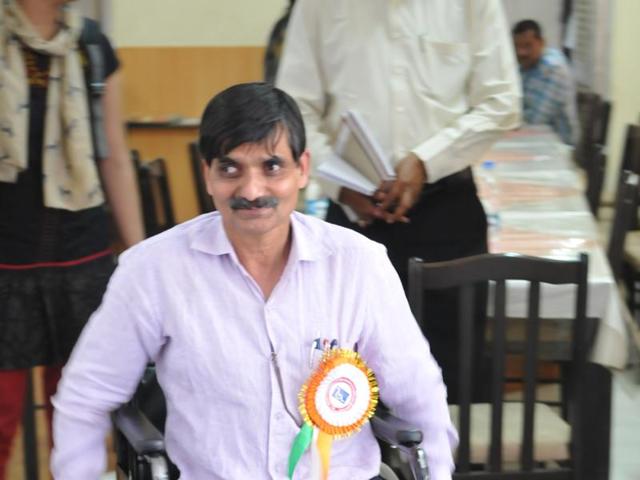
“Union minister of social justice and empowerment Thawar Chand Gehlot is making fun of India by publicising the word ‘Divyang’ in place of ‘Viklang’. The word Divyang in itself is an insult. Insensibility and inadequate knowledge of the minister hurts us,” said Karna, who is also disabled.
Addressing a public meeting in Varanasi in January, Gehlot announced that identity cards will be made available to all people with disability, whom he addressed as ‘divyangs’.
An expert on disability and ex-chairman of a working group of the 11th Five Year Plan on disability, Karna said, “Since the word was coined by Prime Minister Narendra Modi on his radio show ‘Mann ki Baat’, I will write a letter to PM Modi to refrain from using this word.”
“Divyang means a person having extraordinary power. It is laughable and sarcastic to call us ‘divyang’. We should use only one word – persons with disability- which is acceptable worldwide,” he said.
Emphasising on the discrimination and stigma associated with disability, Karna said, “We don’t want special treatment. We want only equal treatment.”
Karna also objected to the use of the word ‘Nishakt’ that has been used in the translation of The Right of Person with Disabilities Bill.
“The word Nishakt is also objectionable as even though I can’t stand on my feet, it doesn’t mean, I can’t do anything,” said Karna.