E-Paper



Efforts to get ‘quality’ accreditation for 26 district hospitals in MP
The MP health department has set a target of securing accreditation for 26 district hospitals under the Centre’s national quality assurance programme for public health facilities.

 Prefer HTon Google


The MP state health department has set a target of securing accreditation for 26 district hospitals under the Centre’s national quality assurance programme for public health facilities.
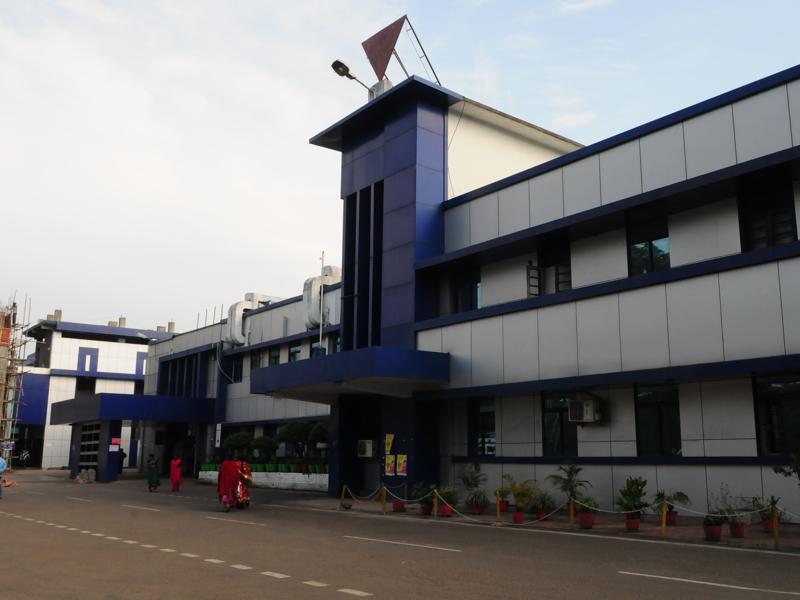
If a hospital gets this accreditation, it will get a bonus of Rs 5,000 per bed, said senior health officials.
Speaking to HT, deputy director urban health Pankaj Shukla said that for ensuring high quality healthcare services in public health facilities, the national quality assurance programme was launched by the Union health ministry last year.
Shukla said the main achievement of the “Kayakalp” scheme was that it encouraged hospital administrations to compete with each other and improve sanitation, cleanliness and other related aspects in hospitals.
Though only nine hospitals could score over 70 marks in the final assessment, he said, the health department was able to gauge the quality of services and infrastructure of hospitals in quantifiable terms.
“Now we are aiming at improving the conditions in 37 district hospitals, whose administrators in their self-assessment had given them 70 % marks. Of these 37, we are expecting that at least 26 hospitals would be ready by the year end to try getting the accreditation for national quality assurance standards (NQAS), which is provided by the National Health Systems Resource Centre (NHSRC),” he said.
Shukla said that apart from improving the parameters like hygiene, sanitation, infection-free processes, to get accreditation under NQAS they would have to work on additional parameters like full implementation of standard operating procedures of various departments in the hospitals, patient satisfaction, awareness regarding patient rights, infrastructure, social and support services to patients coming to hospitals and so on.
Shukla added that if hospitals are given accreditation after assessment by external assessors of the union health ministry, the facilities would get a bonus of Rs 5,000 per bed to further improve their infrastructure, processes and working.
According to the NHSRC website, it was set up under the National Rural Health Mission (NRHM) to serve as an apex body to assist in policy and strategy development in the provision and mobilisation of technical assistance to the states.
The goal of this institution is to improve health outcomes by facilitating governance reform, health systems innovations and improved information sharing among all stake holders at the national, state, district and sub-district levels through specific capacity development and convergence models.