E-Paper



Online mines auction fails to click in Madhya Pradesh
Online mines auction has failed to click in Madhya Pradesh, where miners have used online auction to block sanction of mines bringing the entire process to standstill.


It was one idea thrust upon states to make auction of mines transparent and corruption free. But it has failed to click in Madhya Pradesh, where miners have used online auction to block sanction of mines bringing the entire process to standstill.
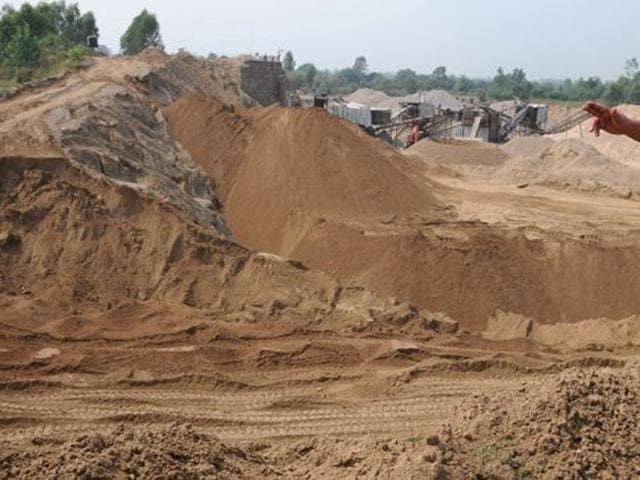
The state government started online auction of sand and flagstones mining leases in 2015, to make it more transparent, end monopoly and windfall gain in revenues. This has not happened due to lack of bidders, poor conversion ratio and flaws in the bidding method.
“Big miners using the process to inflate bid amount”
A senior official of the mineral resources department, who asked not to be named, said big miners are using the process to inflate the bid amount by blocking the mines and when the letter of intent is issued they do not come forward to take it.
“Woh jaan bhujkar bid bhigad rahe the (they were deliberately subverting the bidding process),” he said.
During the first round of online auction of 260 sand mines in July-August last year, 91 were sanctioned for which only 51 bidders came forward after letters of intent were issued.
“Many bidders engaged in illegal mining”
“When we analysed the data, we found that many bidders had sand mines allotted to them in a particular area or were engaged in illegally mining,” the official said.
“They didn’t want neighbouring sand mines to be allotted to anyone else. So they used these tactics.”
He further said that in some cases, the auction process could not be completed as bidders made mistakes while filling up the form as they did not understand the online procedure.
Collectors to auction sand mines in 33 districts
Learning lessons, the MP government will start online auction of a major mineral -- limestone – from four mines in March and before that it has come out with a new sand mining policy.
The new policy has done away with a provision that said no other sand mine will be sanctioned within a 10 km radius of mine will be sanctioned to the Madhya Pradesh State Mining Corporation (MPSMC).
According to the new policy, more areas have been brought under sand mining in the state.
As per the new policy, the Madhya Pradesh State Mining Corporation (MPSMC) will undertake sand mining in 18 districts, while in the remaining 33 districts, collectors will auction sand mines under the mineral resources department. The bidders are required to deposit 10 % of the government-fixed-value (upset value) of the mine as earnest money deposit.
The government will address concerns of miners before the next round of online auctions and improve the conversion ratio to make it economically viable, said JP Srivastava, under-secretary of the state mining corporation.
As the online mining auctions were held for the first time, there were adjustment problems on the part of the bidders, he told Hindustan Times.
“You know the kind of background they (the bidders) come from. They are not so net savvy. It will take them some time to get familiar with the new system,” he said.
Bidders will have to pay more to participate in the bidding process
VK Austin, director geology and mining, said the department has decided to increase the earnest money deposit–which bidders have to pay to participate in the bidding process–from 10% to 25 %.
Similar problem also existed in neighbouring Rajasthan and Gujarat.
In Rajasthan, the state government has received lukewarm response from miners who describe the rules as “impractical”. Of the 29 bids submitted in November 2015, only one was found eligible for bidding. But the auction did not take place as minimum three bidders needed were not available.
In Gujarat, tender process for Rs 500 crore mining lease involving 5 new limestone blocks in Kutch proved to be a total non-starter as no cement company came forward for online bidding for the mines in the last two decades. The new rules, including 30% of royalty to be submitted as deposit in advance are to be blamed, officials said.
But in MP, officials are hopeful of better response in the next round of online auction.
Mining, the new way
Old rule: Mines were allocated on the basis of first-cum-first-served basis since 1950s
This resulted in:
Arbitrary allocations
Allegations of corruption in allocation of mines
Higher judicial interference as allocations were challenged in courts
New rule: In May 2015, the Centre notified the new rules that made online auction of major and minor minerals mandatory
This resulted in:
Mineral to be used for specific purpose as specified by the states
States to rake in more money because of higher premium and royalty