E-Paper



Setback to BJP in Mahya Pradesh civic polls
In MP, the Congress has strengthened its hold over the civic bodies in the last one year with the party winning seven urban bodies from the BJP in Aug 2017 polls.

 Prefer HTon Google


In the run-up to assembly elections in Madhya Pradesh later this year, the Congress and the BJP bagged nine urban bodies each, with the Opposition party improving its tally by five as compared to the last civil polls. One was won by an Independent.
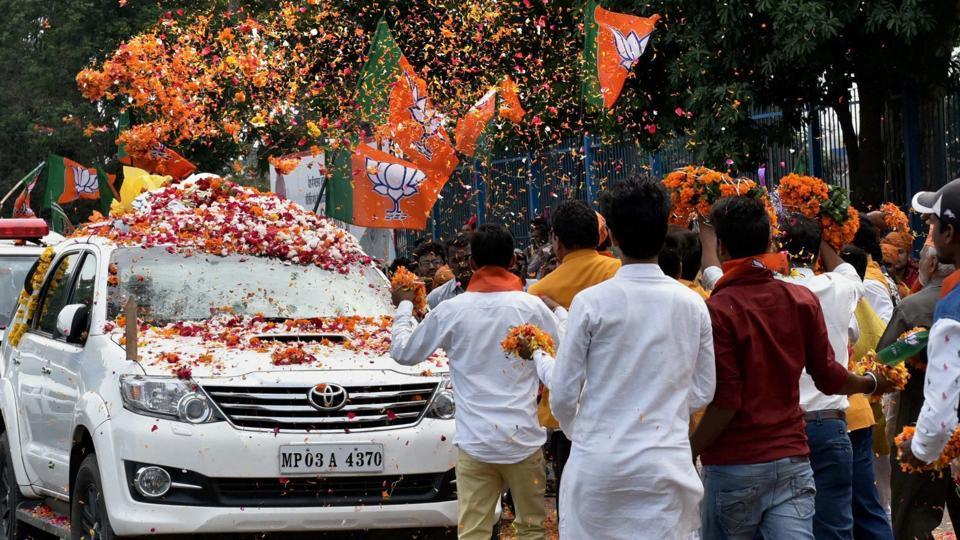
Polling to elect chairpersons and corporators of the 19 municipal councils — in Barwani, Khandwa, Dhar, Anuppur and Guna districts — was held earlier this week and the results were announced on Saturday.
Although assembly elections are slated for November-December this year, trends show that the local body elections may not have a bearing on the legislative polls.
Previously, the Congress had also won two assembly by-poll in Ater and Chitrakoot.
In Madhya Pradesh, the Congress has strengthened its hold over the civic bodies in the last one year with the party winning seven urban bodies from the BJP in August 2017 polls.
Over 70% of the civic bodies in the state had been under the BJP — the party in power for the last 15 years — control for a long time.
The Congress won four municipal councils while BJP won two.
In nagarpalika parishads, BJP won seven and Congress five. Of them, the voters had recalled BJP chairpersons in three urban bodies. The Congress won two of them including Dewas, while the BJP retained one — Bhind Akoda.
In voting percentage terms, also there was a tie with the
Congress and the BJP both getting 43% votes, as per the Madhya Pradesh State Election Commission.
“It is a clear trend of re-emergence of the Congress,” said party MP from Guna and former Union minister Jyotiraditya Scindia.
“The results are a strong signal to the BJP about what it had been doing in the state under the guise of its hallow promises.”
State BJP president Nandkumar Singh Chauhan said the party will review the factors that led to loss in the elections at some places.
“I feel we lost at some places because we erred in ticket distribution. And then there were rebel candidates,” he said.
Of 225 seats of corporators for which votes were counted, the BJP won 194, Congress 145 and independents 13.