
 E-Paper



No fights, no weddings, no crowd: Is VFX the way forward to shoot films in Covid times?
Experts and makers feel that VFX, or special effects, will be used heavily in the Covid-19 phase to complete films, and even put together new projects and scenes involving crowds, action or intimate scenes.


The female actor can’t marry the hero in an elaborate wedding sequence nor can he beat up 20 goons at once. And since these are the times of social distancing, the lead couple can’t romance either. The guidelines suggested by Maharashtra government to resume shoots has made this clear. So, what’s the way forward? One word: VFX. Or special effects.
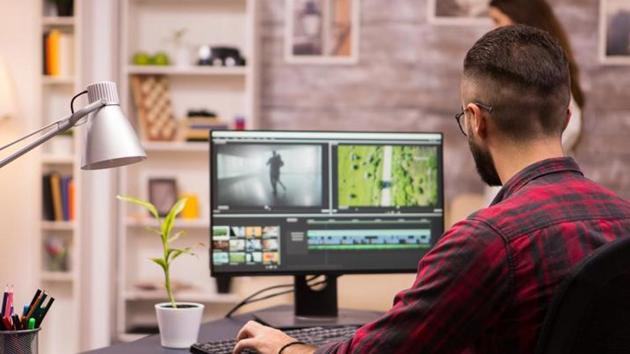
One might not have even realised, but in the past few years, this technology has come in handy for almost every small or big film, TV or web show. And now, with ‘new normal’ in place, it’ll be used more heavily.
Producer Anand Pandit, who has two films lined up — Chehre and The Big Bull — agrees and adds that the budgets allocated to VFX will shoot up.
“Of course, the use is going to increase and absolutely going to help. But I feel it’s a temporary phenomena. As soon as the vaccine comes up, or the intensity of the destruction of the virus goes down, we’ll get into normal mode. But for the next one year, VFX is going to be extremely important to complete films,” he says.
Trade analyst Joginder Tuteja concurs saying, “VFX was anyway used in films for crowd scenes. Now, all the more, because matter of fact is if there are 10 people standing in a frame, you can’t have them in close proximity. So, there’ll be three-four shots which will be merged together. Even for background dancers, VFX could come into the picture, as we’ve seen in regional films.”
VFX EXPERT TELLS US
Rohan Desai, Global Head, ReDefine, the company behind the VFX for upcoming films such as Brahmastra and 83, reveals that with the need to adhere to social distancing and maintain minimal human contact, visual effects will come to the fore. “For years, VFX companies have been of great help in keeping people safe. Some of the notable examples include the crowd being digitized. Doing so is practical in the current scenario as it eliminates the need for any additional costumes, make-up and props, all of which involve human contact,” he says.
Similarly, scenes like physical explosions, that require safety protocols and extra crew, “can now be shot separately” in a more controlled environment, he adds.
IT ALL HAS TO BE IN THE STORY
Filmmaker-choreographer Remo D’Souza, however, doesn’t feel that VFX will be the way forward. “I don’t feel that we can shoot, say a wedding sequence and create everything on VFX, or shoot a dance. You can’t create dancers. The way to shoot will be to shoot smartly, and only the stuff which won’t require this stuff. It would have to be incorporated into the story itself. Makers would have to concentrate on stuff which would not require a big crowd,” the 46-year-old says.
Pandit further points, “The budgets will increase, but all directors and writers would have to make projects in such a way that we have minimum scenes.”
Explaining the economics, Tuteja cites an example: “In a regular film, 5-10 percent of the budget is allocated to special effects. For films such as 2.0, 50-70 percent of it is VFX. For a regular film, the budget will go up by 10 percent. It depends from film to film. For a biggie, it would increase by another 15-20 percent of the budget.”
Interact with the author on Twitter/ @RishabhSuri02
Follow @htshowbiz on Twitter
Get more updates from Bollywood, Taylor Swift, Hollywood, Music and Web Series along with Latest Entertainment News at Hindustan Times.


