
 E-Paper



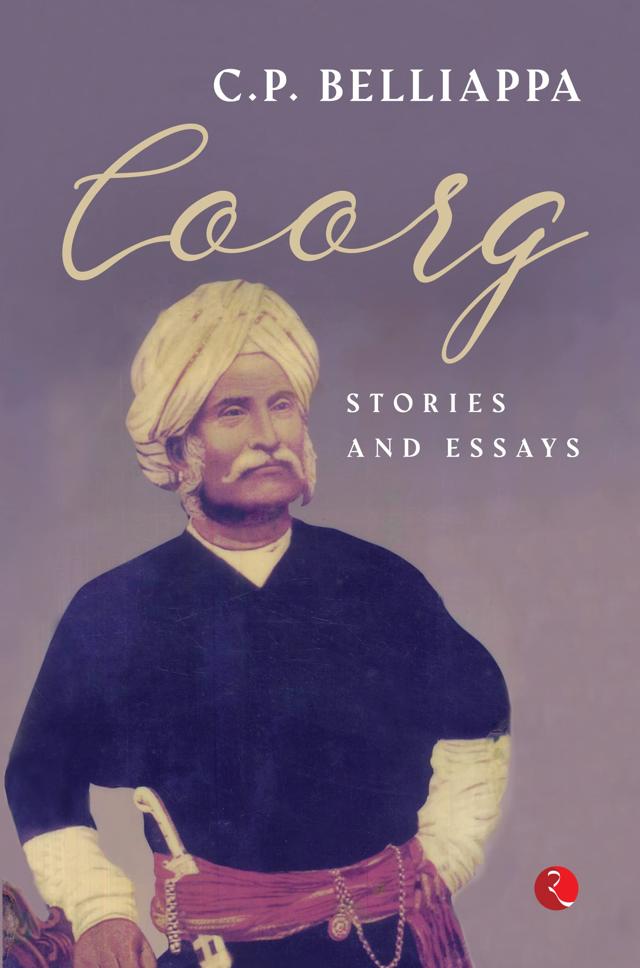
Excerpt: Coorg Stories and Essays by CP Belliappa
This extract from a new book on Coorg and its people, provides a fascinating picture of the drafting of the Constitution of India

 Prefer HTon Google


By 1945, the British declared their intent to quit India. Subsequently, senior Indian leaders put in motion the process of taking over the administration of the country. The Constituent Assembly elected Jawaharlal Nehru as the prime minister of the Provisional Government of India on 2 September 1946. Lord Louis Mountbatten was appointed as the viceroy. The primary task of the Provisional Government was to enable a smooth transfer of power from British India to independent India. In addition, the central government had the important task of drafting a constitution for the newly formed nation. As the president of Coorg District Board, CM Poonacha was nominated to represent Coorg in the Constituent Assembly.
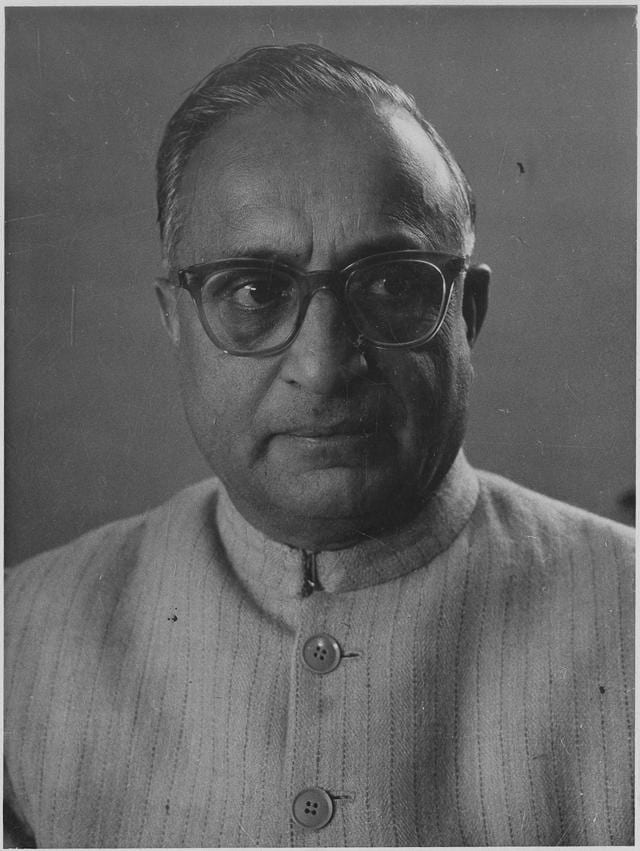
The first session of the Constituent Assembly was held on 9 December 1946. The august body took three years to draft the historic document enshrining the guiding principles of this country. Initially, there were 389 members in the Constituent Assembly, of which 292 were representatives of the states, 93 represented the princely states and four were from the chief commissioner provinces of Delhi, Ajmer-Merwara, Coorg and British Baluchistan. This number came down to 299 after Partition in 1947. Members who had been active in the freedom movement were inducted through indirect elections from the central and provincial assemblies to represent a broad cross section of the country. On 29 August 1947, the Constituent Assembly appointed a Drafting Committee with Dr BR Ambedkar as the chairman. My father, CM Poonacha, at 36 years of age, was one of the youngest members of the Constituent Assembly.
One of the earliest decisions taken by the members was to avoid the Constitution being written only by technical experts or the elite bureaucracy. (Pakistan took this route, and their Constitution has been rewritten three times). The Indian Constitution was drafted through a combination of “democratic consensual” and “elite-bureaucratic” approaches. This has resulted in a resilient and all-inclusive document that has withstood the test of time for seven decades. Subsequently, it has also undergone several amendments to suit the ever-dynamic needs of the people and the country.
Another unique feature of the process behind drafting the Constitution was that every resolution was unanimously passed after extensive consultations and debates. Thus, every clause in the Constitution was discussed until all the members of committees and sub-committees agreed without dissent. None of the resolutions were put to vote to avoid the ‘tyranny of the majority’.
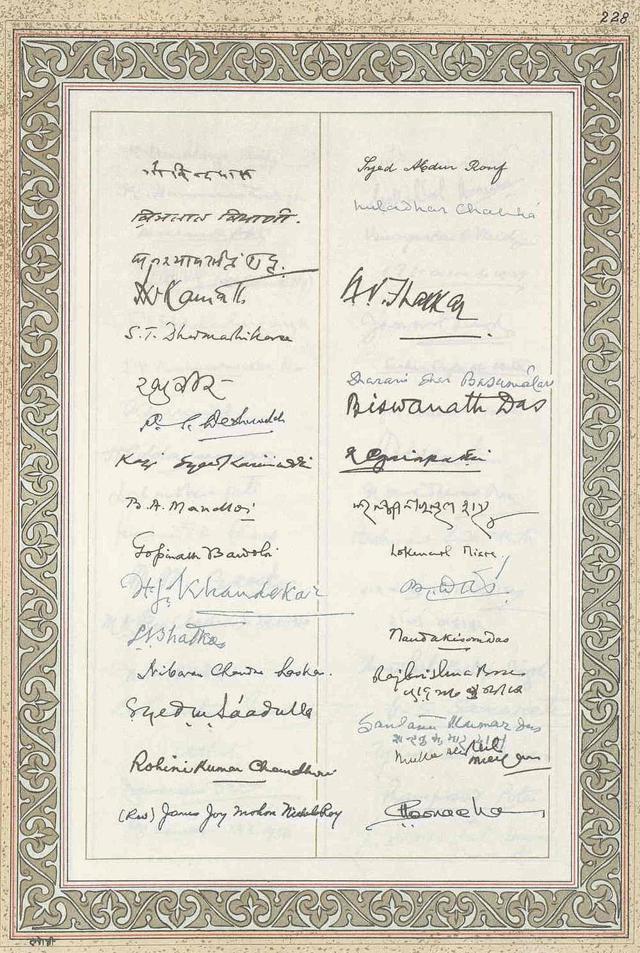
The final draft of the Constitution of India was signed and adopted on 26 November 1949. CM Poonacha was one of the 299 signatories on this esteemed document. The Constitution of India was brought into force on 26 January 1950, when India was declared a ‘sovereign republic’. This date was chosen to coincide with the “Poorna Swaraj”, declared on 26 January 1930. Affixing his signature on the Constitution of India was one of the defining moments in the life of Poonacha. He is the only signatory of the Constitution of India from Coorg.
On a lighter note, I have a personal memory from the time when the Constitution of India was being drafted. I was around four years old at the time and, on a couple of occasions during the process, my father had taken us to Delhi. One particular incident during our stay there is etched in my mind.
All the members from different parts of India had been accommodated in a complex named Constitution House on Janpath Road. Connaught Place was nearby and we used to take leisurely walks there in the evenings when in my father was free. We would stop to have an ice candy, and it used to be the highlight of the day. On one of these strolls, we passed by a toy shop. The brightly lit shop with all the wondrous toys attracted me like a moth to a flame. I forced my parents, who were trying to divert my attention, to enter the shop. Once inside, my eyes lingered on a tricycle. It was unique, since it had a horse head in front of the handle. I caressed it, turned to my father and gingerly asked if I could have it. He looked at the price tag, shook his head and tried to beat a hasty retreat. I resisted. Soon, I was howling and attracting the attention of other shoppers.
The owner of the toyshop, a massively built sardarji, sauntered across to ask my parents if they needed any help. By then, I was hysterical and kept bellowing, “Nakk ikka bond (I want it now).”
The kind sardarji offered to let me take the tricycle and told my father, who didn’t have the cash at that time that he could pay the following day. My father was put in a tight spot and finally relented. I happily rode the brand-new tricycle all the way back to the Constitution House. I used to be a brat on the tricycle, ringing the bell and riding it on the long verandahs of the Constitution House, much to the amusement of the authors of our Constitution.


