
 E-Paper



HT Picks; New Reads
The list of interesting reads this week includes a compelling account of India’s coming of age in world affairs through the prism of the 2017 election for a seat at the International Court of Justice, a book that encourages readers to abandon simplistic stereotypes about social inequality, misogyny, and religious conflict in ancient India, and a collection of the finest essays on Indian cricket

 Prefer HTon Google


A behind-the-scenes account
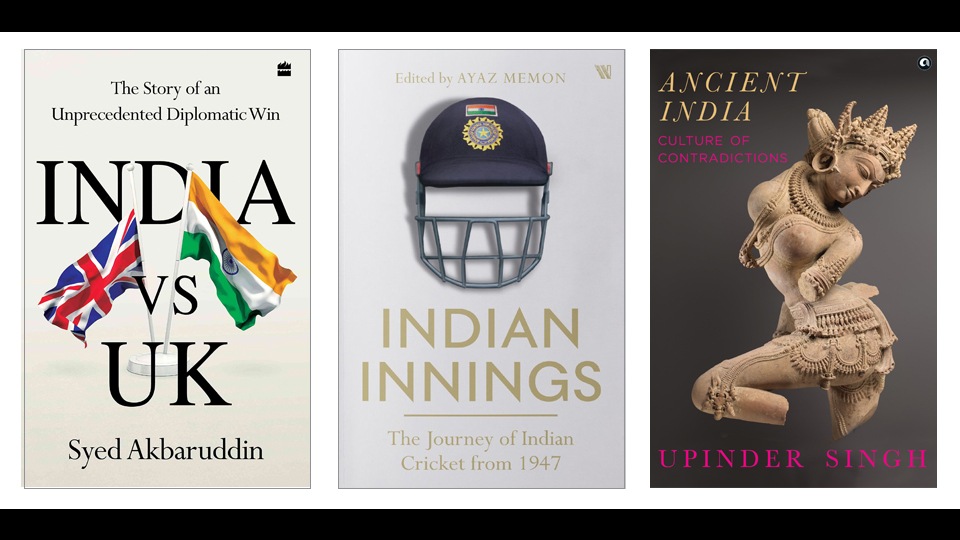
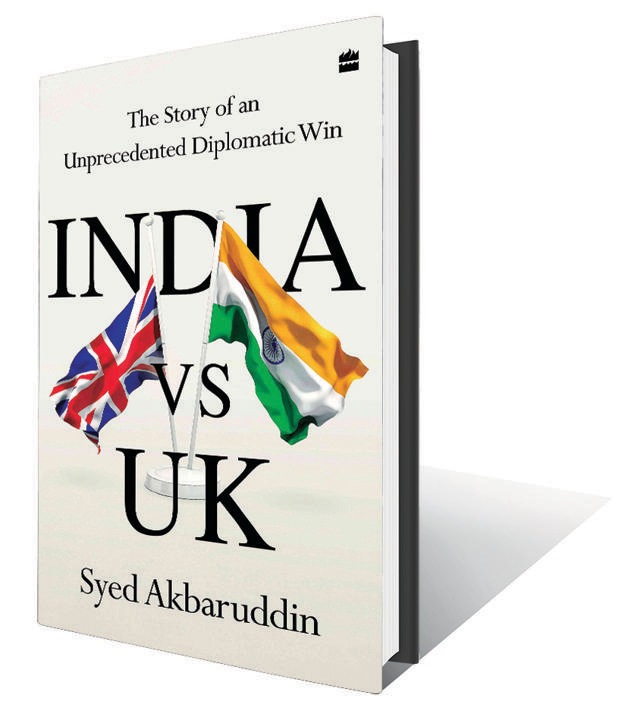
From the Uprising of 1857 and the freedom movement to duels on the cricket pitch, India and the United Kingdom have been on opposing sides on numerous occasions. A relatively unknown instance when this dynamic played out was the 2017 election for a seat at the International Court of Justice, one of the main organs of the United Nations.
Unwilling at first, India was prompted to enter the ring in the wake of the Kulbhushan Jadhav case, which proved the importance of having an Indian judge at the court. The contest that followed was like a ‘second war of Independence’, in the words of then External Affairs Minister Sushma Swaraj – and a David-and-Goliath fight against the permanent members of the Security Council, who all put their might behind the UK.
In India vs UK, Syed Akbaruddin, India’s Permanent Representative to the UN at the time, presents a compelling behind-the-scenes account of India’s coming of age in world affairs through the prism of this momentous election, and a fascinating view of the inner workings of the United Nations.*
Abandoning simplistic sterotypes.
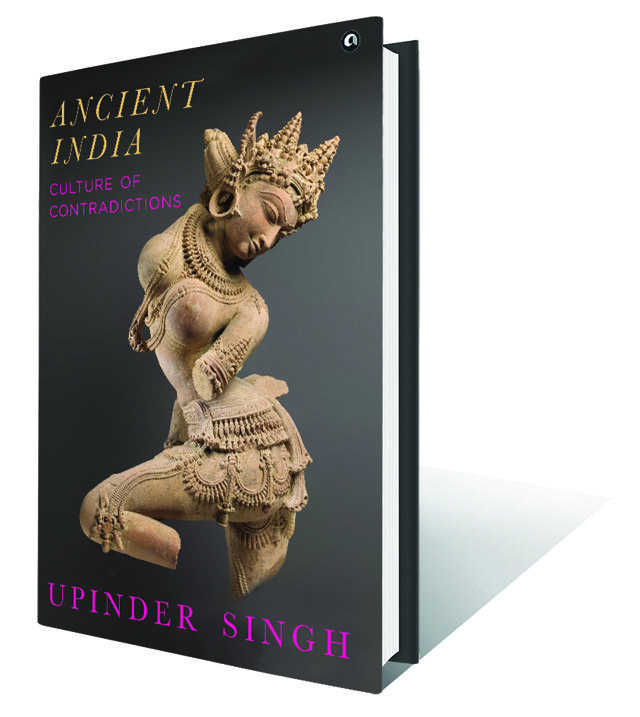
In Ancient India: Culture of Contradictions, one of India’s most distinguished historians takes readers on an exhilarating voyage of discovery into the distant past.
Upinder Singh urges us to abandon simplistic stereotypes and instead think of ancient India in terms of the coexistence of five powerful contradictions – between social inequality and promises of universal salvation, the valorization of desire and detachment, goddess worship and misogyny, violence and non violence, and religious debate and conflict. She does so using a vast array of sources including religious and philosophical texts, epics, poetry, plays, technical treatises, satire, biography and inscriptions as well as the material and aesthetic evidence of archaeology and art from sites across the subcontinent. Singh’s scholarly but highly accessible style, clear explanation and balanced interpretations offer an understanding of the historian’s craft and unravel the many threads of what we think of as ancient Indian culture. This is not a dead or forgotten past but one involved in different contexts even today. Further, in spite of enormous historical changes over the centuries, the contradictions discussed here still remain.
Beautiful written, deeply original and profusely illustrated with masterpieces of ancient, medieval and modern art, the book brings to life the rich complexity of ancient India and its connections with the present in a vivid and compelling manner.*
A cricketing history
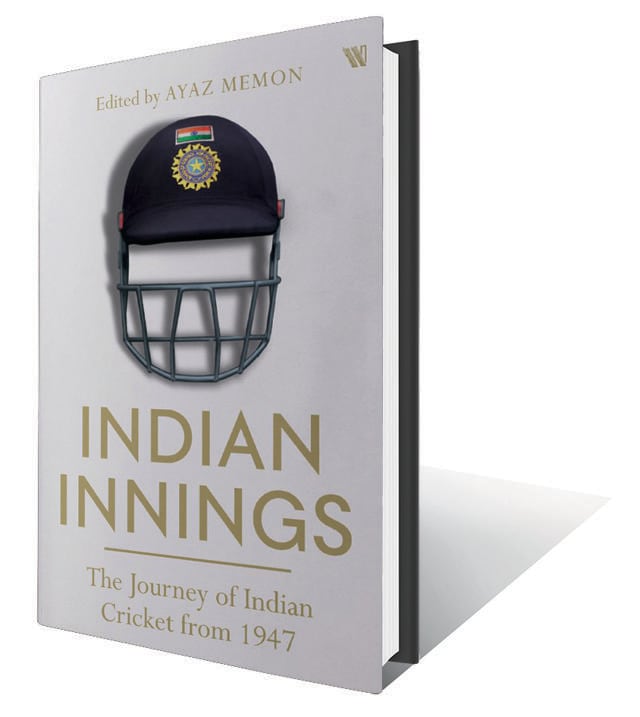
The story of Indian cricket is, in so many ways, the story of the nation itself. It is also a game that has inspired some of the most insightful writing across all genres. Indian Innings collects some of the finest samples of this writing, thoughtfully curated by Ayaz Mamon, one of India’s foremost sports journalists.
In his own magisterial introduction, Memon traces the development of the sport in a newly independent country, and right up to 1971. The ’70s was a decade of inflection points that dramatically altered Indian cricket. From KN Prabhu to PN Sundaresan and Dicky Rutnagar to Ramachandra Guha and Suresh Menon, those years of famous victories and of the Spin Quartet come alive. The Prudential Cup victory, the legends that were Sunil Gavaskar and Kapil Dev, the Tied Test of 1986, the influence of television – voices as diverse as Rajdeep Sardesai, Raj Singh Dungarpur, Shashi Tharoor and Anil Dharker capture the historic 1980s.
The post-1990s years have seen a profusion of cricketing riches for India. The Tendulkar era, the epic Eden Gardens win in 2001, the 2007 T20 World Cup win, the emergence of the IPL, the 2011 World Cup win, the Dhoni captaincy era, the victory in Australia in 2021 and much more – all feature here, in the essays by some of India’s finest sports writers including Rohit Birjnath, Sambit Bal and Sharda Ugra.
Equally, the book wrestles with the game’s difficult history. The ‘Summer of 42’, the match-fixing issue, the Greg Chappell saga, the Lalit Modi affair and more are addressed in pieces by Bishan Sigh Bedi, Aniruddha Bahal, Pradeep Magazine and Sriram Veera, among others. To round off these fine offerings is Clayton Murzello’s carefully prepared ‘Milestones’ section – a superb snapshot view of the last 75 years.
As complete a picture of post-Independence cricketing history as one could hope for, this riveting volume promises hours of reading pleasure for every cricket fan.*
*All copy from book flap.


