On being mixed race, the connection between vampires and colonialism, and her protagonist’s imagined sisterhood with Amrita Sher-Gil
Updated on: Jul 10, 2023, 18:50:28 IST
By Saudamini Jain
Prefer HTon Google
Share via
Copy link
Woman, Eating is about a starving vampire, Lydia, who is unable to find pigs’ blood, which is what she usually subsists on, and cannot bring herself to feed on humans. But it is not a vampire novel — it’s about the loneliness and hunger of a young artist in London. The Guardian called it an “original take on millennial angst.” What made you start writing it?
It was in lockdown. I’m a musician as well — a violinist — and there had been no music industry for a year and there was no work. It also meant not seeing people.
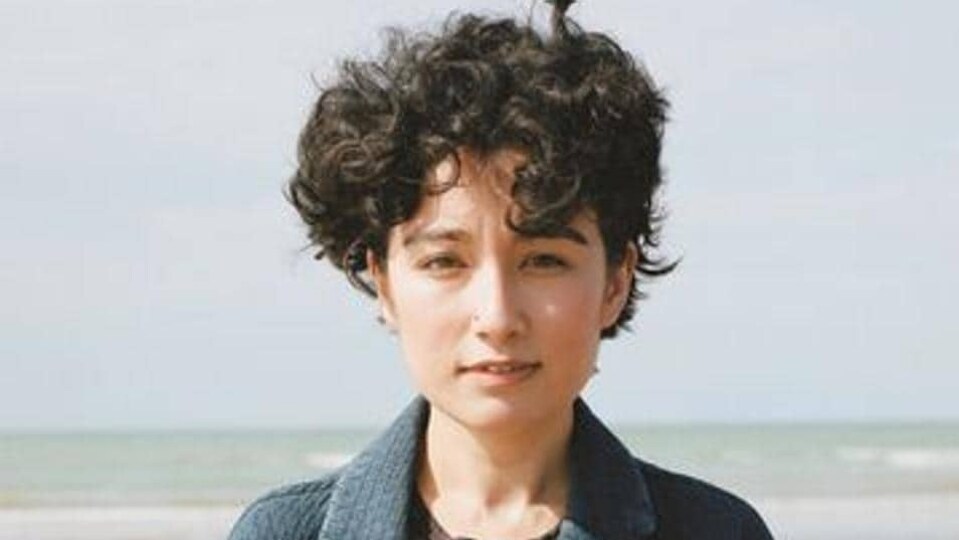
Claire Kohda, author, Woman, Eating. (M Gafarova)
I think the book came out of the loneliness of that time. I feel like I was writing myself a friend with Lydia. I wrote a lot every day for a very short period of time. The novel was written over just one month. I really feel like she wrote herself. Or, that she was there. She was just there.
But how did Lydia appear?
It was just this woman appeared in my head one day.
I’ve wanted to write a novel for a very long time and I’m mixed race. I think I really struggled to know where I belonged and where I would fit in as a writer. For years, I tried writing novels with 40-year-old white male protagonists, thinking that I wanted to write an “English book”. And then I started to read more writing by Japanese women. And I thought, I found it, this is who I am, this is who I’m meant to be. I tried to write a novel about a 60-year-old Japanese woman who’s an immigrant in the UK and she goes back to Japan and the whole novel was about her trying to decide what food to send back to her daughter in England. I wrote this and something still didn’t feel right. It didn’t feel like I had located myself in my writing.
And then Lydia just landed on my lap into my life.
Everything about her is defined by duality. Not only is she mixed race, but also she’s a vampire. And I wouldn’t say that I really was a fan of vampire anything before I wrote this book. There was never anything that interested me about that. I never expected to write anything that was speculative. I loved Buffy when I grew up. And of course I knew what a vampire was from when I was a child.
But I’d never really seen its identity as this thing that was split between two types of being. And suddenly, it felt like a gift. It was like, this is a creature through which you can explore a lot of how you felt throughout your life as someone who’s been between different cultures.
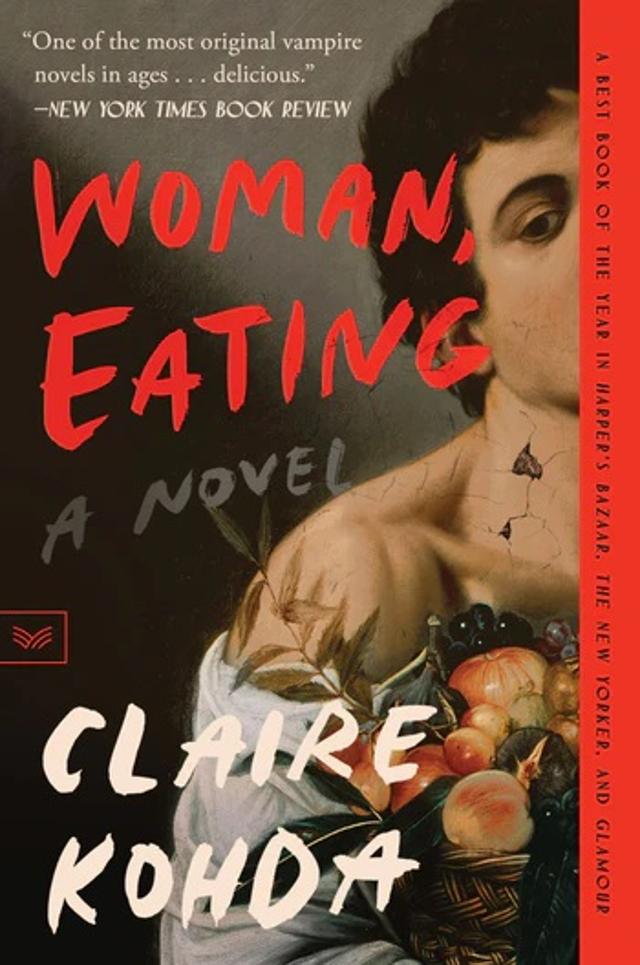
240pp, HarperCollins (Amazon)
And yet, there’s so little about vampires in the novel. Her mother is the only other vampire Lydia knows and she knows nothing about their world really. This absence of information made me anxious for them, actually. I understand that the unease is kind of the point — but did you consider building a vampire universe at all?
I don’t think I did, actually. This was a question that came up when the book was being edited and I just knew that I didn’t want that.
This story is about loneliness. It’s a very claustrophobic story as well. They feel trapped in their lives. I think it is how a lot of people feel when they feel like they’re different — whether that difference is coming from their ethnicity or their sexuality or being an immigrant or being undocumented… I think that when you feel different, it feels like you’re alone.
That’s partly why there aren’t more vampires in the book. But I did want to hint at the fact that there are, out there somewhere, people like them, that they’re kind of unreachable, and she has a sense that there are others. But there’s no way to connect with them at the moment.
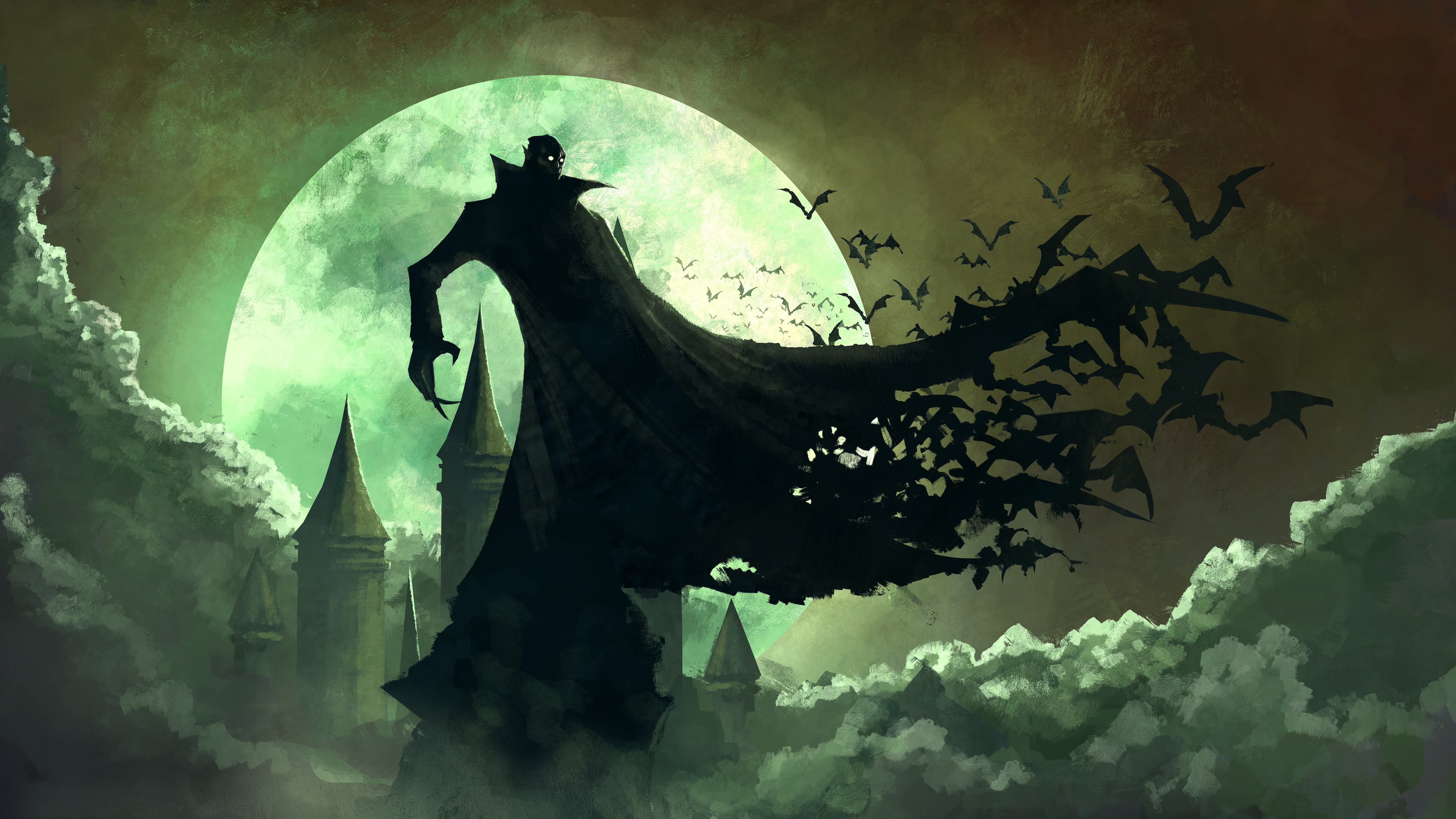
“There’s a link between vampires and immigration. Dracula was meant to represent the fear of actual Asians, so people immigrating over from India, China… into the country and ‘sucking the life of the culture.’” (Shutterstock)
Lydia remembers her mother telling her “that she believed the origin of our kind was a disease, born of power and colonialism.” Did you research the imperialist roots of vampire literature?
I knew that there was a history of vampires being linked to colonialism. There’s a link between vampires and immigration. Dracula was meant to represent the fear of actual Asians, so people immigrating over from India, and China… into the country and “sucking the life of the culture.”
I was writing a character who was in the same space as these huge representations of otherness, immigration and colonialism. And I knew that had to be in this novel, even though this novel was very contemporary. It’s about a woman just living as an artist in London. But I wanted the roots of vampirism to be in colonialism. I wanted it to be… not anything to do with the threat of the other. But that humans had done something so wrong and so extreme, which is colonialism, that it had created some sort of imbalance in the world and created a monster.
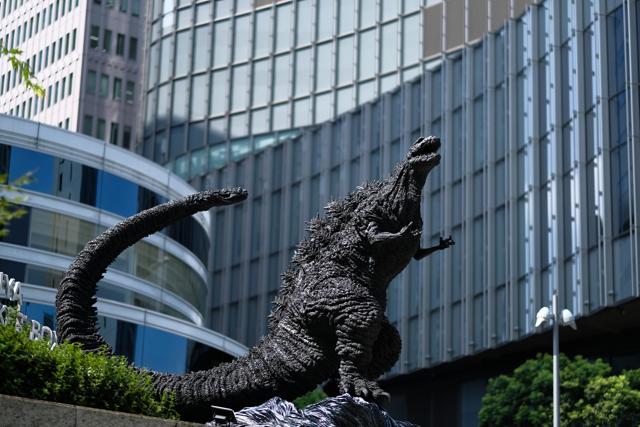
I remember I was reading about Godzilla. On the surface, it’s a fun invention, but its history is really interesting. It was created just after the Second World War, and it was a response to the nuclear bombs. So it was like humans have created such an awful weapon that was incomprehensibly evil, it created this monster. It created something completely unnatural, un-human and kind of unstoppable.
I wanted the vampire to be similar and so the only research was the colonial aspect and also, I suppose, the art in the book.
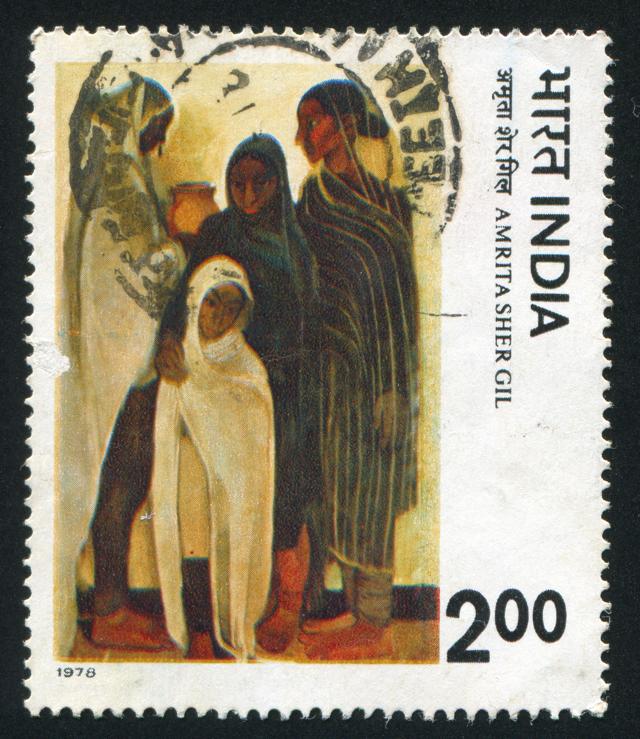
A stamp circa 1978 featuring Hill Women by Amrita Sher-Gil. (rook76 / Shutterstock)
How did you pick the art featured in the book? I’m especially interested in the connection Lydia feels with Amrita Sher-Gil.
When I was writing Lydia as an artist, it was really important that she had a journey in the book as a mixed race female artist living in the West.
My dad’s an artist and he’s white, English, and I’ve recognized throughout my life that he is able to look back over history and see himself represented. He can look back at someone like Turner or Van Gogh and it’s almost like looking in a mirror. I felt it was important for Lydia to look back in history and put together her own art canon.
And I love Sher-Gil. Her work is so beautiful. Even when there are say, four people, or maybe even eight people in one painting, it feels that they’re all alone somehow. And I feel like her subjects just know so much. Especially in the painting of the three girls. They’re so young and yet they look like they’ve seen so much.
I felt like Lydia would feel a camaraderie and sisterhood looking at paintings. And Sher-Gil was mixed race as well. She did the same thing as Lydia. She was creating a lot of self-portraits and looking for her own identity through painting. Oh and she travelled with her mom. I loved that they travelled through life together. I really think that if Lydia had met her, they would have gone really well.
You’re seeped in the arts. Your father is an artist, you’re also a violinist… Do these other art forms inform your work as a writer?
There’s an element of writing a novel that feels quite similar to writing a piece of music — recognising where there needs to be a breath or a pause or some silence or space.
Growing up with my dad, I always thought that I would just be an artist. It was the language of the house. There were sculptures and wood dust everywhere. I remember using old paint pots as drums and making tiny little sculptures next to my dad.
And yet, I didn’t become an artist in part because I saw my dad struggling. I saw my dad becoming, actually on paper, really successful. He was being exhibited in a lot of places — and this is something that is in the book, actually — but he wasn’t actually getting much money. A collector would buy his work and would just own it so he could then exhibit it, loan out to a gallery, it could go on tour all around the world, but my dad wouldn’t see any money from that. And I think that made me quite bitter about the art industry. I just saw it as so toxic and vampiric.
There are some people with so much power. Colonialism still exists in the art world. You know people actually do collect countries. These, often white, men have these huge houses and they have, I think there are people that call it world art, collected in the house. They have the entire world just on their walls. There’s a real kind of ickiness to that. It really does feel like they’re trying to take over everything, own it all, and no one else can see it. It’s just for them. So I wanted that to be in the book.
But I still really love creating art and I found that when I was writing this novel, I could make art in the novel without actually having to make it. I was writing artists so I could actually make their work in words.
So I think that’s how art influences my writing.
The Godzilla statute in Hibiya, Tokyo. (image_vulture/Shutterstock)
The novel has been optioned by Heyday Films, the studio that produced the Harry Potter films. I believe you’re writing the screenplay — are you retaining the mood of the novel or making it more vampire-y for a larger audience?
I think there will be a co-writer as well. But I have been working on the screenplay. It’s eight episodes — so the structure of the book is changing and we’re looking for smaller stories to tell.
When the book was optioned, there was an auction between a few production studios, and a few of them were talking about making it a little bit more horror. And obviously the book I wouldn’t say is a horror…
It’s almost anti-horror.
Exactly. The only real kind of horror element in it comes from the human characters.
So it was really important to me that we picked someone who really understood that the book was ultimately a human story about a woman and that she was a woman and an artist before she was a vampire.
Heyday just really understood the book, sometimes I feel like they understand the book more than I do. They just really understand Lydia. So the TV series is, I think, going to be fairly faithful to the book.
Saudamini Jain is an independent journalist. She lives in New Delhi.

 E-Paper