
 E-Paper



Interview: SB Divya, author, Machinehood – ‘We might see new types of gender and sexuality emerge’
The first South Asian to be nominated for the Nebula award for best novel talks about her fictional worlds

 Prefer HTon Google


What was the immediate inspiration for Machinehood?
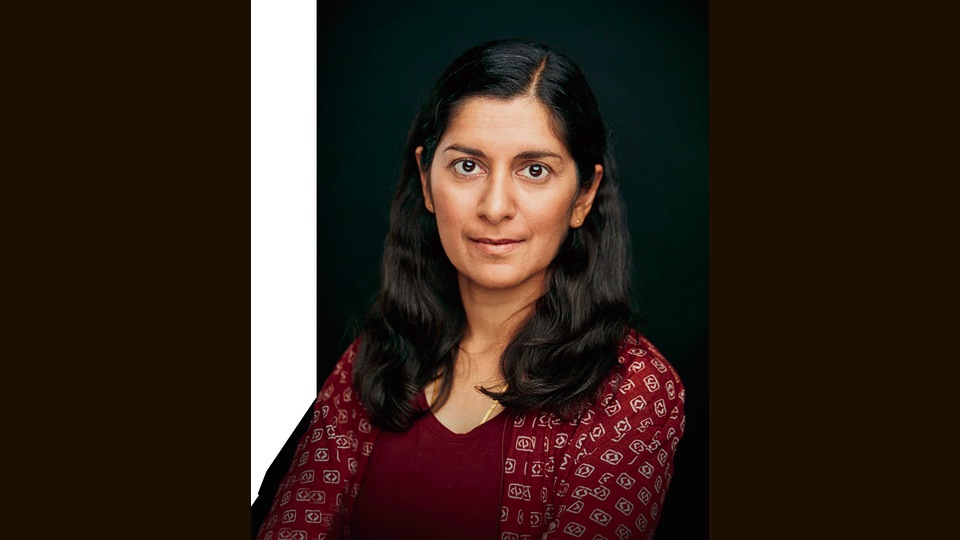
I wrote this novel in 2017 and 2018, based on an (unpublished) short story about human body enhancement. It grew thematically into a story about artificial intelligence, automation, and labour because those topics were coming up increasingly often in my engineering and technology circles. The two main characters, Welga Ramirez in the USA and Nithya Balachandran in India, were inspired by my personal experiences, especially with culturally blended families.
Do you feel that speculative fiction has increasingly concerned itself with the repercussions of the choices we as a civilization are making or have consciously made with respect to the environment, rapid technological developments and unchecked capitalism in an unequal globalised world?
I think these themes have been resonant in speculative fiction, especially science fiction, for several decades now. The “new wave” stories of the 1960s and ’70s also concerned themselves with the social and environmental consequences of technology and capitalism, for example, Le Guin’s Left Hand of Darkness or Herbert’s Dune. The cyberpunk movement in the 1980s and ’90s was a critique of profit-seeking and the corporatisation of life. It’s ironic and a bit tragic that these imagined worlds are now being taken as inspiration for new tech applications.
In the recent decade, I think we’re seeing more stories that examine decolonisation, gender diversity, disability, and neurodivergence. While some of these topics have certainly cropped up in older speculative fiction, they are a lot more popular today.
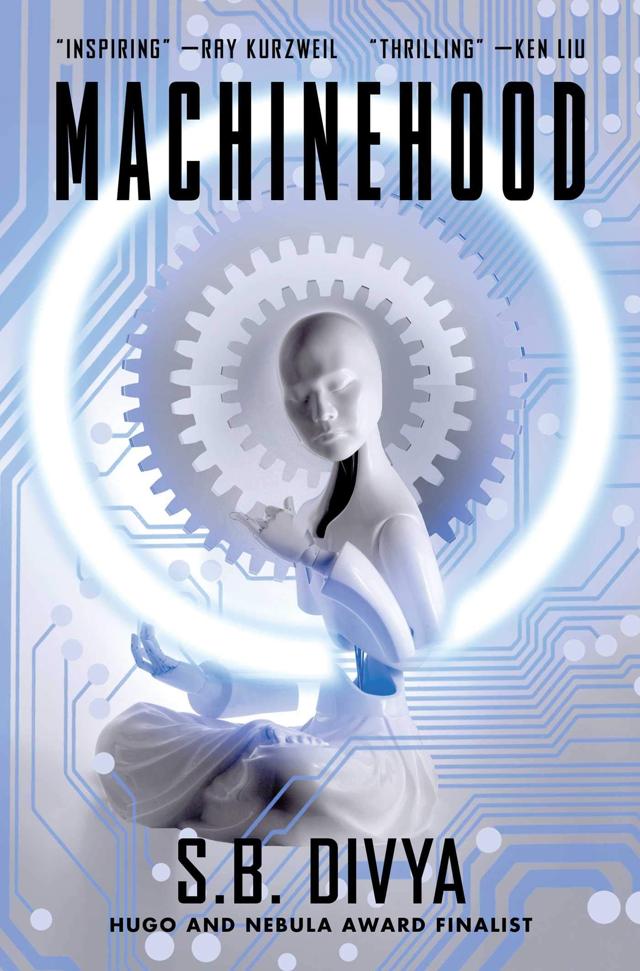
You also look at the future of bioethics and the implications for this field where artificial intelligence is concerned. What drew you to this field and what kind of research did you have to do?
I’ve worked with medical devices and artificial intelligence since I finished college, so I’ve always been interested in biotech. Ethics are always in play when you’re building something that will affect a person’s health, especially if you’re doing it as a profitable endeavour. For Machinehood, I posited that biotech and genetic engineering will be the primary economic drivers of innovation in the upcoming century, and that they would coexist alongside development in AI, which would put ethics at the forefront in any personal stories. Between the opioid crisis in the USA and the problems with social media and big tech companies, it was a natural progression to think about what kind of regulations might come into play and then to think about how people would try to get around those for personal gain.
For research, I drew on my own professional knowledge as well as news articles. I read up on whistle blowers in the pharmaceutical industry. I also regularly read up on the latest developments in science and tech, and I try to extrapolate from the lab to commercialised applications, especially those that might impact everyday life.
With the pandemic, access to medical facilities has become a central global concern and your narrative focuses on the privatisation of health care with a handful of ‘funders’ who are shown to control research and vital information. Did you wish to highlight the dangers of unchecked medical privatisation?
Yes, definitely, especially as regards pharmaceuticals and medical devices. Socialised medicine mostly focuses on access to physicians and less so on who’s developing treatments. As we’ve seen with the Covid-19 pandemic, when private companies hold the rights to develop and distribute essential therapies, like vaccines or ventilators, we end up having equity problems that affect everyone. It gets even more complicated when the companies doing the research and development are publicly traded and incentivised to maximise their profits.
Machinehood also talks about the complete absence of any notion of a right to privacy following extreme digitisation of human lives and how “machine rights” need to be clearly defined. How do you envision the transformation in the political rhetoric of rights and citizenship in the future given rapid technological progress and a rise of transnational organisations in a hyper mobilised world?
This is a very tricky problem, especially regarding artificial intelligence and robotics, because we have nebulous definitions of sentience, and we’re constantly moving the goal posts for when an AI might be considered self-aware. I think we’ll first see the legalities worked out in the context of responsibility, especially for damage or negligence by a robot, and subsequently for damage or right to repair of a robot (and I’m including self-driving cars in the umbrella of robots).
Humans have a tendency to value objects (including other people) with whom they have strong relationships. Once they form emotional attachments to devices, especially as those devices start looking and acting more human, it’s going to be hard for them to sever those relationships. At that point, I think we’ll start to see more of a movement to give greater autonomy and rights to intelligent machines.
Your fictional worlds are replete with non binary and gender non conforming characters. Do you feel that gender as a social construct will be rendered redundant particularly in a scenario where machines will coexist with human life as is proposed in the novel?
The space that gender occupies is undergoing a lot of change right now. I think biotech as well as AI will intersect with this space in really interesting ways in the coming decades. I don’t expect gender to become redundant anytime soon, though, given how deeply ingrained it is with human society. I suspect that the varieties of gender will continue to proliferate, and that we might even see new types of gender and sexuality emerge in relation to self-aware machines as well as humans who gain more biotech in their bodies. I prefer to think of gender as a spectrum rather than a collection of discrete categories, and technology is as likely to add new dimensions as it is to take them away.
As a short story writer and now a novelist, how different is your writing process for each form? Which one do you find more challenging?
My process is quite different for each, though both have evolved as I’ve gained experience. With short stories, I can hold most of the core idea and character development in my head. That doesn’t work with novels, and since I prefer drafting to revising, I’ve learned how to outline my novels ahead of time. That said, with Machinehood, I didn’t do nearly enough plotting up front, so I ended up doing several significant rewrites of the book.
At this point, for me, novels are still harder than short stories. That might be because I got my start in short form, so I feel more comfortable with that length than I do with novels. Also, with several years of editing short fiction at Escape Pod, I really learned what makes a short story work and what doesn’t. That said, I know plenty of writers who feel exactly the opposite and find novel writing much easier.
As the first South Asian writer to be nominated for the Nebula Award for best novel, why do you think there is a lack of South Asian representation when it comes to international recognition?
South Asian writers have a rich history and are well regarded in the world of literature. Unfortunately, many people still don’t consider speculative fiction as being literary, so if you’re aiming for a recognition in that space, you aren’t going to write science fiction and fantasy. For those of us who do want to tell these kinds of stories, we are further hampered by the old-fashioned visions of Asimov and Clarke, who never featured people of colour as their heroes.
Thankfully, all of this is changing. While the US still has the largest market for speculative fiction, other parts of the world are starting to consume more of it. The internet and the rise of comics and video games in pop culture have definitely helped. Within India, genre fiction still isn’t hugely popular, but I think this will continue to change as the upcoming generations become consumers. We definitely have a lot more writers from the subcontinent who are publishing with major magazines and imprints.
Who are the speculative fiction writers from the Global South who, according to you, are yet to receive their due?
Oh, there are so many, I’m not even sure where to start! Many are, like myself, part of the diaspora and are therefore finding it easier to get into the English markets. I’m really excited for Samit Basu’s upcoming novel, The City Inside, which was first published in India as Chosen Spirits. I’m also looking forward to the debuts of Vajra Chandrasekara and Vaishnavi Patel. From Nigeria, Suyi Davies Okungbowa and Tade Thompson are writing great books, and Isabel Cañas is debuting with a supernatural suspense novel in the vein of Rebecca but set in Mexico that sounds great. I also love stories by Neon Yang, from Singapore, and RSA Garcia from Trinidad.
What are you working on next?
My next novel, Meru, will be out in January. It’s an epic space opera set about 1000 years into the future, featuring a young woman with sickle cell disease and a post-human pilot as the main characters. In terms of themes, the book explores what it means to be intelligent and alive, our obligations to our environment, and the consequences of directed evolution. I’ve just started working on a follow-up novel that will continue the story, but set a few years later.
Simar Bhasin is an independent journalist. She lives in New Delhi.


