
 E-Paper



Of Ravana in Reni Pani, Joker Face in Madhai, and other Satpura stories
Journeying into the lushly forested mountain range in Madhya Pradesh with Aly Rashid, author, ‘Tales from the Bush; A Peek Into The World of Satpura’, the writer discovers wild landscapes, great biodiversity and ancient forest wisdom

 Prefer HTon Google


The preface to Aly Rashid’s Tales From The Bush, that also includes writing from a range of eminent contributors, begins with the author’s memories of Satpura and of exploring the Churna range of the Bori Wildlife Sanctuary as a child in the early 1990s. “Much of my childhood was spent exploring wild places with my family, but Satpura always held a special place in my heart,” says Rashid, who belongs to Bhopal’s erstwhile royal family.
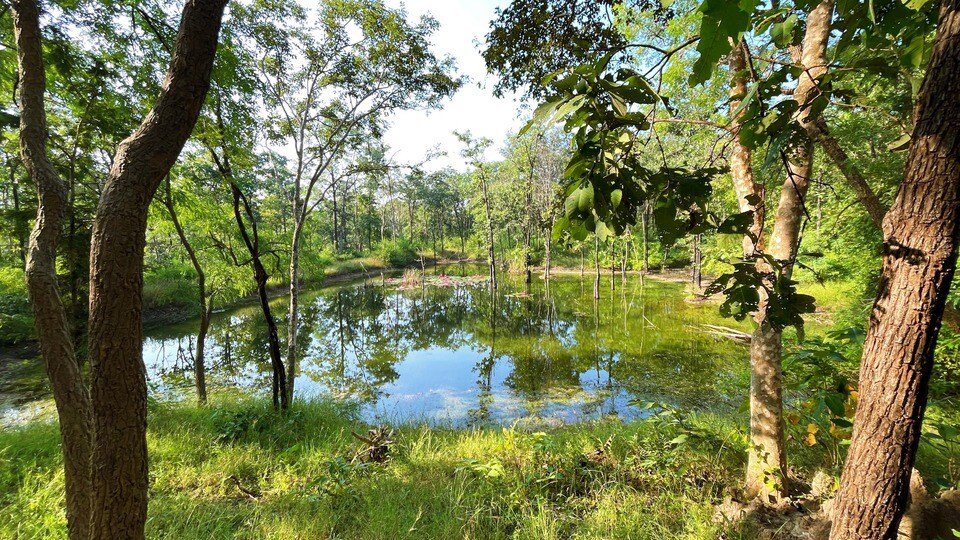
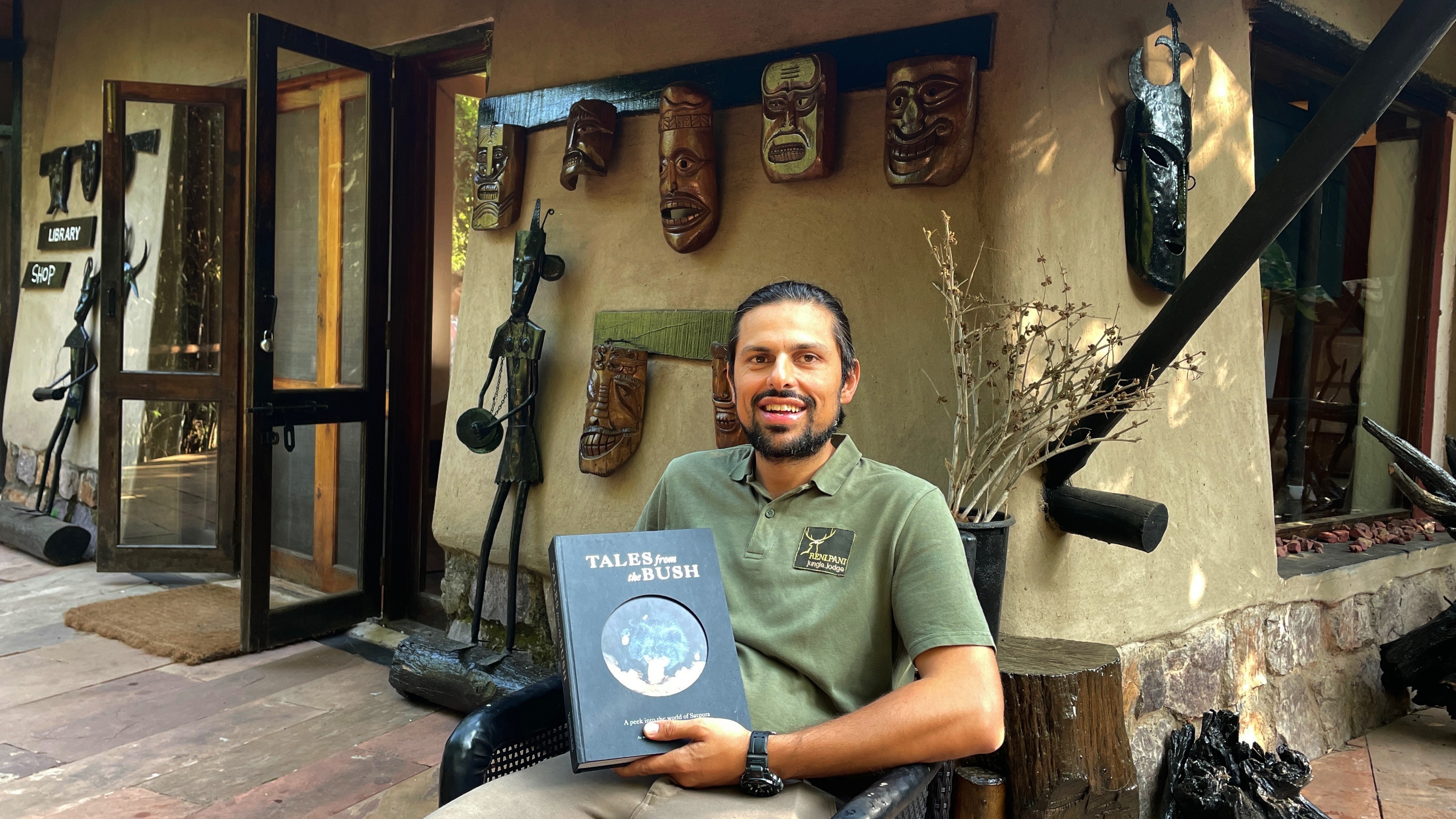
When we travelled into the Satpura Tiger Reserve last October, long-billed vultures soared above the lush foliage of banyan, teak, anjan, jamun, kusum, and mahua trees. White-rumped shama, kingfishers, and blue-plumed Asian paradise flycatchers abound in this verdant landscape that is a haven for over 300 resident and migratory bird species. Towering sal trees serve as the ecosystem’s backbone, while tiny carnivorous plants like sundew and bladderworts capture insects in sticky traps. “They’re the hidden predators of Satpura,” Rashid laughs, marvelling at the secrets even the smallest plants hold.
“India is the sixth most biodiverse country in the world yet it is not seen as a prime wildlife location,” he says highlighting the country’s untapped potential as a global wildlife destination. Drawing a parallel to Africa’s “Big Five”, he mentions India’s own “Big Seven”: the tiger, the leopard, the lion, the gaur, the Asiatic wild buffalo, the one-horned rhino, and the elephant. With 16 cat and four bear species, India stands as a biodiversity powerhouse. Incidentally, Nanhi, the Indian giant squirrel, serves as the official mascot of the Satpura National Park, the only park in Madhya Pradesh that is home to this elusive species.
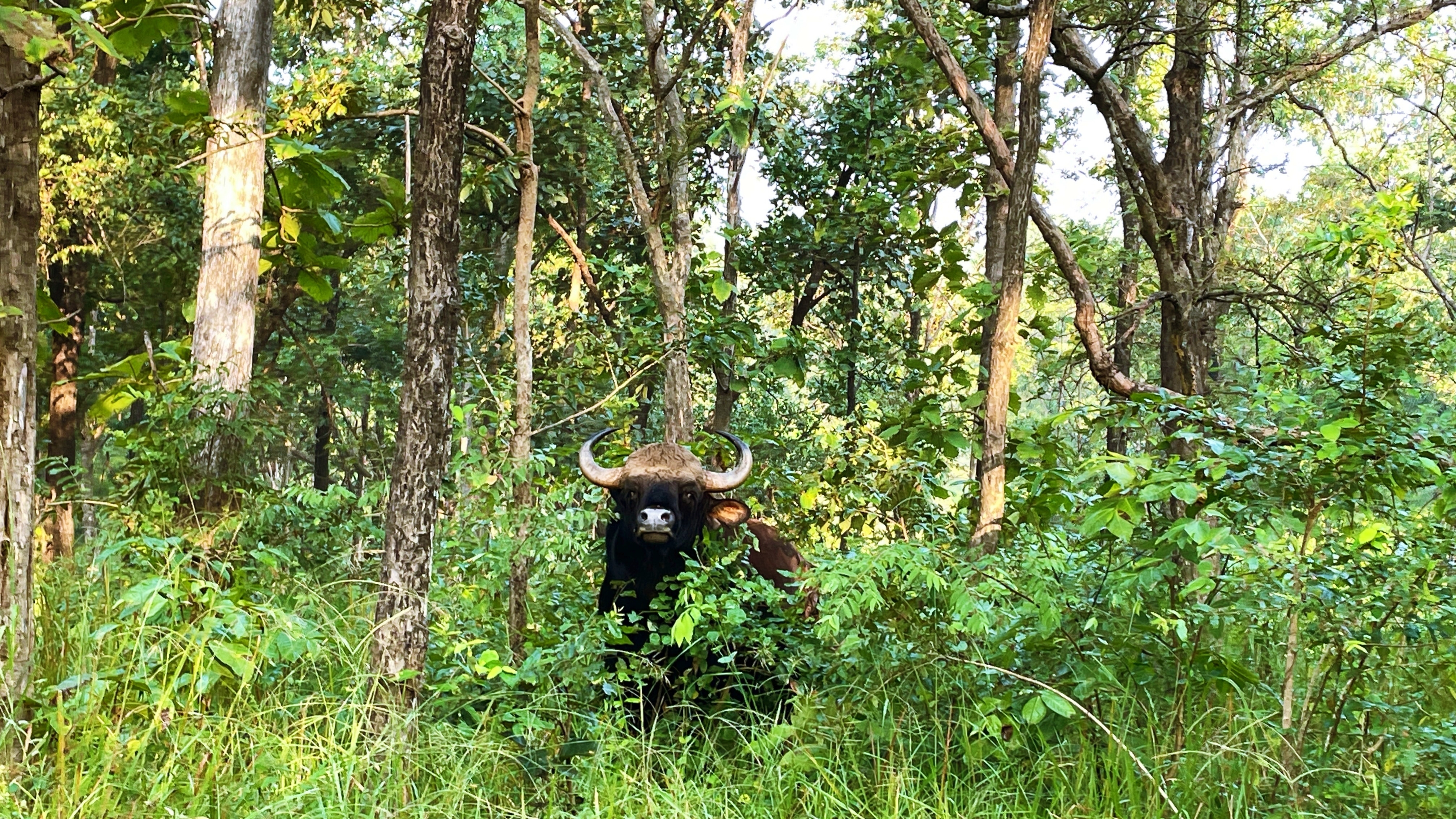
On four different safaris through Satpura’s Mallupura, Churna, Tawa Reservoir and Madhai zones, we spotted specimens of Satpura’s own “Super Six”, one after another. First was the Indian wild dog, or dhole, known locally as son kutta for its pale coat and social hunting skills. Next came gaur, flying squirrels, a tiger, a leopard, and a sloth bear — the last one was often mistaken for a sloth by early explorers. “But the sloth bear is neither a sloth nor slothful. It is very much a normal bear from one of four bear species in India,” says Rashid. Indian gaur, the world’s largest wild bovine, gathers in herds along Satpura’s northern and western edges in the dry season. Over 250 leopards remain elusive, often detected only through tell-tale paw prints or the alarm calls of monkeys and deer.
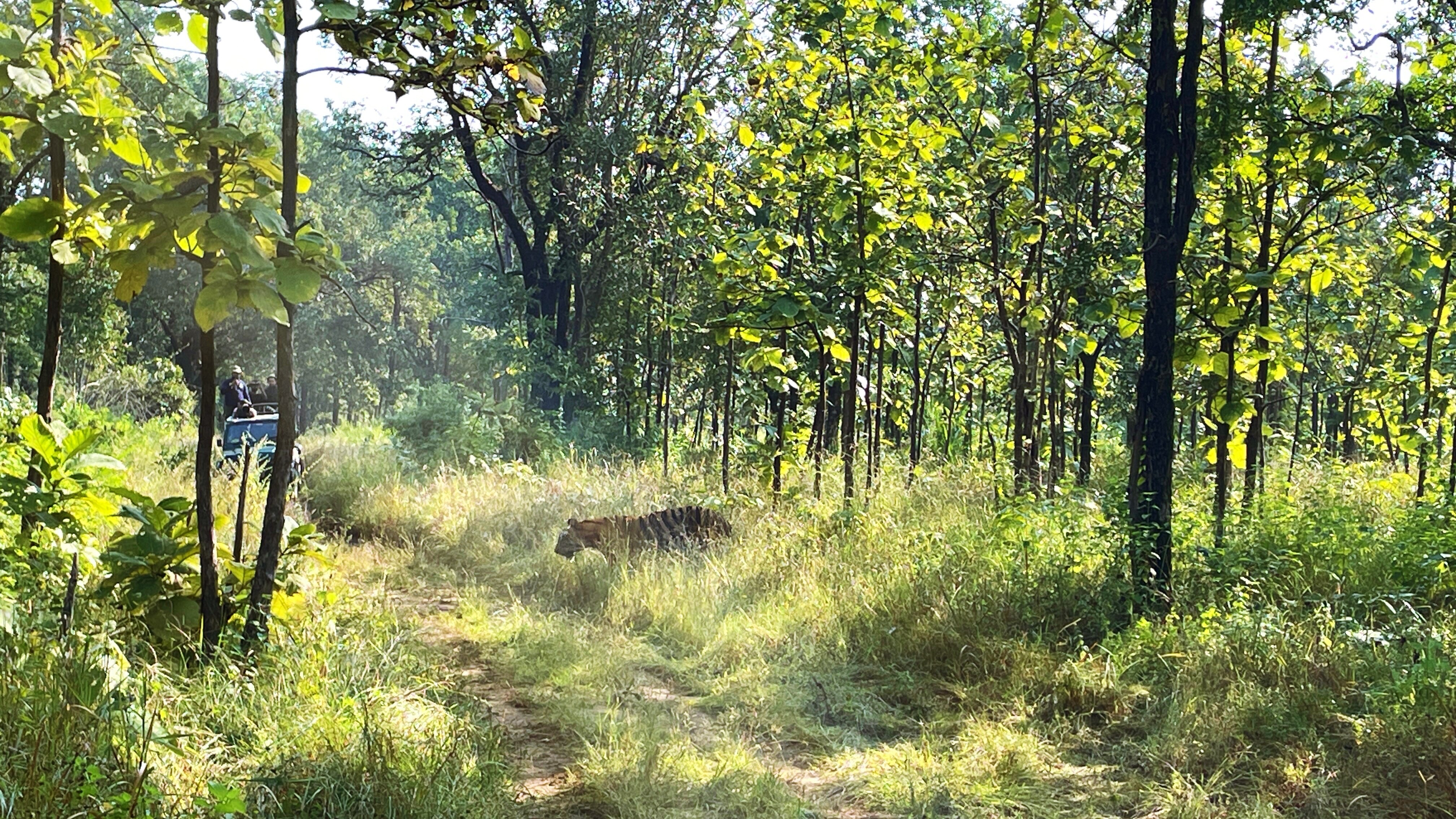
The Madhai zone is ideal for leopards and bears, while Churna, which is home to five breeding females and two males, offers prime tiger sightings. With low tourist activity, these big cats remain cautious, and young tigers occasionally mock-charge vehicles. Rashid’s book includes a whole ‘Tiger Directory’, underscoring the vital role of this apex predator in the ecosystem. Each of the tigers here has a personality: Sudiya, who was orphaned in Bandhavgarh and relocated to Satpura in 2014, is a conservation success story. She is now a bold, photogenic tigress while her daughter, KT, is often seen snarling at vehicles.
“Joker Face, a key breeding tigress since 2010, carries the original genes of the reserve, earning her name from the white markings on her cheeks that resemble a clown’s makeup,” says Rashid, adding that “She is a shy female in the Madhai area, who lives up to her name; we mostly see her footprints.” Joker Face’s daughter, Heartface, is named for the heart-shaped marking on her cheek. Her sibling, Machli, currently thrives in Jeherghat. One tigress, who was translocated, attracted wild males to her enclosure, thus earning her the name “Laila” after the lovers in the folk legend of Laila and Majnu. Among the males, Ravana, who was once known for preying on sloth bears in Madhai, is one of Satpura’s dominant tigers. Apparently, he now lives a more solitary life in the mountains. R2, another dominant male, lives in the Churna zone while Tarzan, Ravana’s son, roams the south-west corner of the park in the Mallupura and Churna zones.
In a reflective conversation about tigers, Aly Rashid recalls: “My grandfather, Rashid-o-Zafar Khan, shot a tiger less than 10km from where Jehan Numa Palace stands today. Back then, Bhopal had many tigers.” He explains that hunting was once regulated by royal families to conserve wildlife, allowing limited hunts to maintain sustainable prey and predator levels — an early form of conservation. He notes that exclusive access to forests by royals protected ecosystems, unlike in some countries where regulated hunting manages populations. Historically, hunters respected wildlife, often tracking on foot, which fostered a conservation ethos that endures today. Rashid also acknowledges the difficult choices conservation requires, citing the case of Avani, the tigress turned man-eater.
“The forest department had to make the tough call to shoot her for public safety. Conservation is about ensuring safety and balance as much as it is about protecting wildlife,” he says. Reflecting on problematic tigers during the era of the Nawabs, he notes: “Back then, it wasn’t about targeting man-eaters. Unlike Jim Corbett, who hunted tigers threatening villages, most royal families hunted primarily for sport.” He credits his father, Yawar Rashid, for sparking the family’s passion for the outdoors. “My father was an avid outdoorsman who loved wildlife. The Reni Pani Jungle Lodge, where we sit today, was his brainchild. While he participated in hunting when it was allowed, he later focused on camping, angling, and nature exploration.”
He adds, “At Reni Pani, we’ve worked on restoring native species and removing invasive lantana to revive the forest, which now thrives with wildlife — deer, wild boar, and occasionally tigers, leopards, wild dogs, and bears. Their presence shows the regenerative impact of our work.” He emphasises that conservation is rooted in practical strategies that turn wildlife into an economic asset.
“When livestock losses occur due to tiger attacks, the forest department offers compensation, typically between ₹15,000 and ₹20,000. The challenge is proving the cause of death, as tigers leave distinctive canine marks by puncturing the throat of their prey. Villagers can photograph these marks as evidence for a database, and once verified, they receive compensation. This system supports local livelihoods and fosters a protective attitude toward tigers,” he says.
Now based in Bhopal, Rashid who visits Satpura often, lived in Reni Pani from 2010 to 2018 and has plenty of wild tales to tell. He wistfully recalls how his daughter, Alizeh, then nine years old, had her first sighting of sloth bears and leopards from their home. “I remember holding her in my arms, showing her animals most people only see on safaris. By the time she was two, she had already seen many magnificent creatures,” he reminisces. “Once, while walking in the forest, we turned down a seasonal stream and found ourselves just a few feet away from a mother sloth bear and her cub,” he says. “We quickly dispersed, and fortunately, the sloth bear ran away instead of confronting us.”
Rashid advises staying still when encountering a sloth bear, as movement may seem threatening. This is also vital with predators like tigers and leopards where holding your ground prevents triggering their chase instinct. He recalls how, in Satpura’s early tourism days, young male tigers were unfamiliar with vehicles. “They weren’t used to anything standing its ground, so they would perform mock charges,” he said. An incident with Ravana was particularly memorable. One morning, while tracking the beast, Rashid went down to a stream where he spotted the tiger crouched beside the road. As he moved in for a better view, it leapt out right in front of him — a breathtaking sight.
Satpura National Park is often overshadowed by MP’s more famous parks like Bandhavgarh and Kanha. Five nearby villages — Jhalai, Khamda, Mallupura, Suplai, and Podar — impact the park’s ecosystem. Khamda and Suplai were relocated in 2017 to reduce human pressures, allowing grasslands to regenerate and attract herbivores and predators. Wildlife quickly reclaimed the landscape with sambar, gaur, barking deer, and other prey species returning and in turn, attracting predators like leopards, wild dogs, sloth bears, and eventually, tigers. Over the past five years, there has been a significant transformation of the area from farmland to a wildlife zone. Paraspani, a buffer zone on the northwestern edge of Satpura Tiger Reserve, is another conservation success story. By 2022, the Paraspani male tiger, accompanied by his queen of unknown lineage, became a major tourist attraction.
“This area is a prime example of effective conservation,” notes Rashid in his book, which touches on everything from the nocturnal life of the jungle to diverse birdlife and mindful tourism. Especially interesting is the chapter Going Back in Time by filmmaker and naturalist Pradip Krishen that explores the history of the Mahadeo Hills, once ruled by Gond and Korku tribes, who paid tribute to the British with chironji nuts and honey. Conquered by the Bhonsle Marathas in the late 17th century, the area came under British rule in 1816, when Captain James Forsyth surveyed forests near Pachmarhi and built Bison Lodge, now Satpura’s Wildlife Museum. Rashid details how Bori teak forest, one of India’s oldest reserves, narrowly escaped devastation in the mid-19th century.
All of which leads the reader to understand that the wild, like urban settlements, has its own vibrant history. Something that’s underlined by Aly Rashid’s tome.
My own visit has left me with a sense of wonder at the incredible beauty of this forested mountain range and at how successful conservation strategies can enrich the lives of humans and animals alike.
Veidehi Gite is an independent journalist.


