
 E-Paper



Padma Viswanathan: “Slavery is one of Brazil’s original sins”
The Tamil-Canadian playwright, novelist, and translator of the International Booker shortlisted On Earth as It Is Beneath on translating Ana Paula Maia’s surrealist fiction from the Brazilian Portuguese


What drew you to translate Ana Paula Maia’s novel?
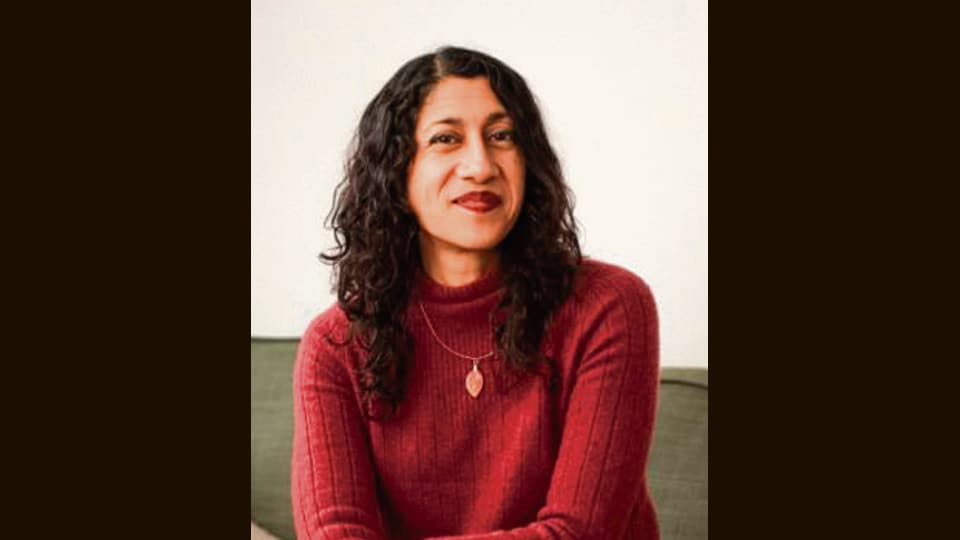
I was brought to Ana Paula’s fiction by Charco, an Edinburgh-based press quickly becoming the premier publisher of Latin American fiction. They were looking for a translator for both On Earth as It Is Beneath and the forthcoming Bury Your Dead.
Ana Paula’s style and materials could not be more different from my own, but part of the attraction of translating, for me, is entering another writer’s rhythms, forms and preoccupations. Her protagonists are laconic but deeply sympathetic men working, without fanfare, to preserve their own and others’ dignity in violent, dehumanising situations. Her scenarios verge on the absurd at times, but find their parallel in remote or abandoned places in our own world where brutality reigns. I was attracted to the ways her novels walk the line between social fiction, horror, and the surreal.
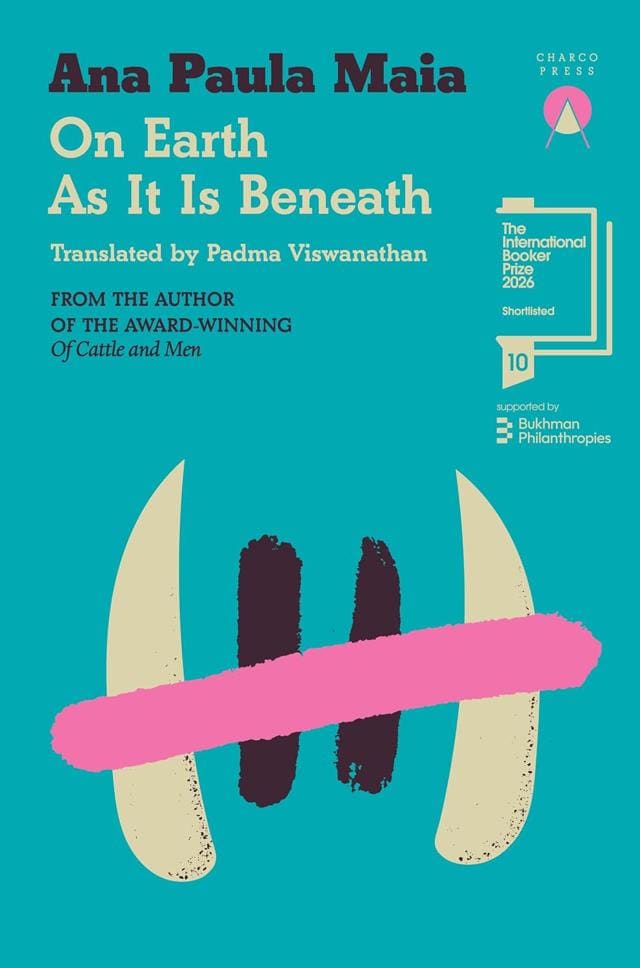
The English version of the book is brief. Did you render the words exactly as they are in the source language in terms of the tautness, rhythm, and haunting details?
The Portuguese version is very lean, and yes, I always try to render a source text with as much precision as I am able, though what that means and how I achieve precision varies from one book, story, or essay to another. In this case, I was trying to render exactly the qualities you name. I hope I achieved this in ways inspired by the original, which employs repetition, a restricted lexicon, and terse, cinematic dialogue.
I was drawn to this sentence: The colony is much like a corral. Especially the word ‘corral’ which was adapted from the Spanish/Portuguese noun meaning ‘pen’ into a verb to do with the confinement of livestock. It is what Penal Colony’s founding principles are — to convert the noun ‘violence’ into its verb form. Would you agree?
In English, many nouns also function as verbs, or have verb forms, though you’re employing the notion more metaphorically, and yes, you’re correct. Although the Penal Colony’s founding principles are a little vague, that passage goes on to describe the way it has been functioning for some time: “The Colony is much like a corral. Cattle are slaughtered for food; men, in turn, are slaughtered for eradication. This is not a place for rehabilitation, nothing of the sort. It’s a corral where undesirables are tossed onto a pile, much like a landfill, a place no one wants to see, smell or think about.”
Ana Paula has a great interest in those who are discarded, whose intrinsic, individual value is not seen or recognised by those who make the world’s rules. From the first in this series of three books, Of Cattle and Men, she asks what distinguishes humans from animals, especially in cases where humans’ physical labour is exploited, when they live and die anonymously and invisibly, and when they are deprived of control over the course of their lives.
You are a novelist yourself. So, as a translator, you would read a work more closely than other readers. How does the violence described in the book appear different from the way it is in books written by men? Those, in my view, often hinge on the pleasure of detail and not inception. This is unlike Ana’s work which shares back stories and after effects.
I once irritated the great American writer Joyce Carol Oates by asking her about violence in her own work. I was thinking about it because I was writing about violence myself, specifically about the Air India bombing of 1985, and thinking about what Amitav Ghosh said in his essay The Ghosts of Mrs Gandhi, about how difficult it is to write about violence without making it the climax and centrepiece. Oates snapped that I wouldn’t ask a man that question, a reaction that I assume stemmed from her being asked this question many times: Why is your writing so violent? That wasn’t my question and I know it’s not yours, but I’m not positive Ana Paula’s handling of the violence in her fiction stems from her gender so much as her aesthetics, which are quite specific to her, and to the worlds she is building and evoking. A writer’s gender and other aspects of their identity are important to their writing, but rarely determinative in a way that is easily discerned. Having said that, the distinction you are drawing — details and description versus sources and consequences — sounds like the distinction between how violence is often handled in commercial films or books, where it is a draw, versus literary or artistic ones, in which violence is part of the ground situation, or unavoidable, but not sensationalised. This was part of the question Ghosh was circling in that essay.
READ MORE: Ana Paula Maia: “The world is degenerate and violent”
Did you feel similarities between the institutional facility noted in the novel and the superstructures of society, like patriarchy, and the way each manages to impact men in ways unknown to them?
Yes. Particularly in the ways the rules of the Penal Colony are oppressive but undeclared and ever-changing, and in the way the men are controlled by what they think of as a physical constraint, but which turns out not to work the way they thought, the facility functions as an allegory to an oppressive society whose perpetuation depends on the complicity of each person within its hierarchy. Gradually, however, the men become aware of this and start testing the nature of their participation.
The book’s epigraph is something that one of its characters, Bronco Gil, notes. What is its significance?
Yes, that’s a notion unfamiliar to English readers, the epigraph as a statement by one of the book’s characters! It’s not very common in Brazilian novels, but I have seen it before. The epigraph reads, “In the end, we’re all free because, in the end, we’ll be dead.” I see it as a simultaneously nihilistic and spiritual commentary on the events in the book — from the biblical allusion of this book’s title to other aspects, Ana’s books also obliquely comment on both the real and false comforts of religious faith, community and ritual.
Does the novel also inadvertently critique how the powerful often propose things to do with crime and punishment, and justifications of punishment without spelling out why someone is criminal in the first place?
I haven’t asked Ana, but I doubt that commentary is inadvertent. The Penal Colony’s unhinged director is shown committing terrible crimes against humanity and not being called to account because his position gives him impunity, and I don’t think there is any reading of the book that endorses that. But otherwise, I do think the book is concerned with the questions not only of crimes of power but also with original sin. The Penal Colony was formerly a place where the enslaved were either worked to death or simply killed, and slavery is one of Brazil’s original sins, as it is for the US, central to the identities of these nations. Much as William Faulkner’s work treated slavery as a stain his characters were trying to scrub from their souls, Ana is examining those legacies through a Judeo-Christian lens.
Saurabh Sharma (they) is a nonbinary, queer writer, essayist, and culture critic. On X: @writerly_life; Instagram: @writerlylife.


