
 E-Paper



Reema Kagti: “When you’re writing, it’s very hard for you to disguise yourself”
The screenwriter and filmmaker talks about developing well rounded characters, working on films and OTT, and being part of a successful long term writing partnership

 Prefer HTon Google


What was your childhood like and at what point did you think of taking writing up as a profession?
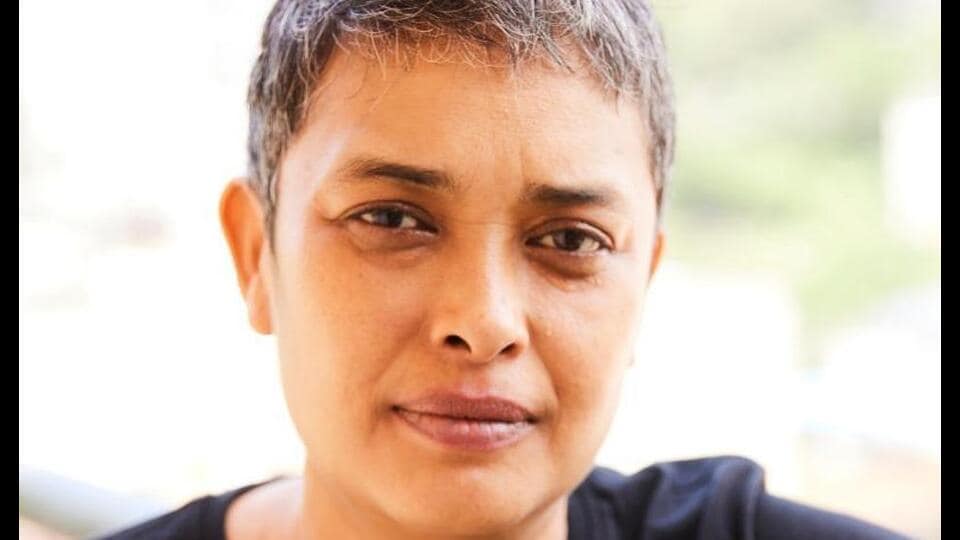
My connection to writing developed way before my connection to direction ever did. I think I enjoyed reading a lot as a kid. You know, they make you do these essays in school? ‘If I were a one-rupee coin’ or ‘If I were a plastic bag’ and those things. You know, those were the first fiction pieces, so to say, that I ever wrote. I think that kind of set it off for me. I do remember enjoying the process of writing a lot. So, I would keep writing. I started writing a few little stories. Then I would write a few plays that I would enact with siblings and neighbourhood kids. Then there was a magazine called Tinkle when we were growing up to which you could send stories. So, I started sending some stories to them, one of which they published, and I got 15 rupees for it. I think, in that sense, it validated me. Somewhere, I always grew up wanting to be a writer. The filmmaking part came in much later; writing for film came in later as well. All of this was happening while I was in school. Initially, I was in Carmel School in Digboi. Then I moved to Loreto Convent School in Shillong and after that, I shifted to Delhi Public School in RK Puram.
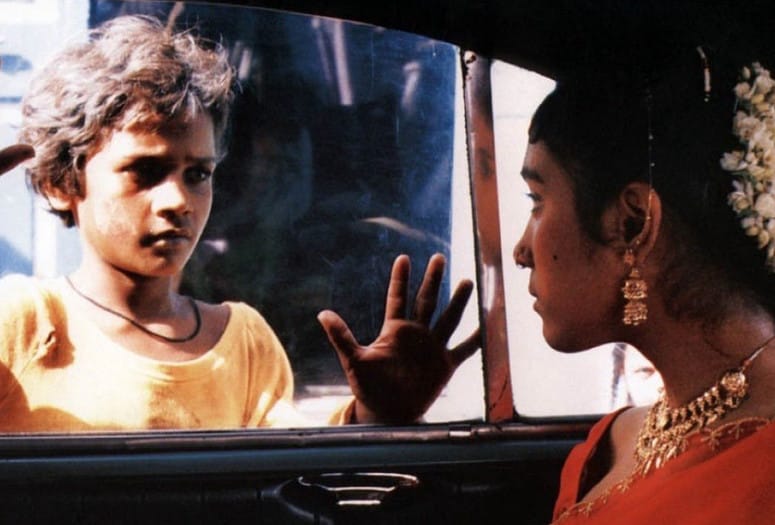
All through this, I kept writing. My father had a farm in Assam, and he wanted me to study business management and work with him on the farm business. I was always a film buff. I loved watching films and could never have enough of them. I would watch a lot of Bollywood and some Hollywood as well. I am a full product of piracy. Back in Assam, in those days, there was a huge VCD culture. You could get a crack version of anything. That gave me access to Hollywood. Then, my parents were fans of Bengali cinema and that exposed me to some art films at the time. But somehow, I never thought of making films. When I was in the ninth standard, I remember, one day, I bunked school and watched Mira Nair’s Salaam Bombay. At the end of Salaam Bombay’s credits, I thought, “I need to be doing this. This is what I should be doing.” It was very sudden, the realisation. It was like a flash. I went in as a school kid to watch a movie, and I literally came out, in my head, as a director. In that sense, Mira Nair’s film changed my life.
After school, I took up literature at Sophia College in Mumbai. I was always interested in literature. To be a writer, you have to be interested in reading just like to make films, you have to be interested in watching films. One feeds the other. Even at college, my writing continued. There were short stories. Then there were novels that ended up as short stories and stuff like that. I joined a film club. One of my subjects was advertising so I wrote ads, which turned out to be the first scripts I attempted. After college, I applied to FTII and got rejected three times. By that time, after my graduation, I had started working in Mumbai. My father wanted me to have some formal education in media if I wanted to pursue a career in it. So, after getting rejected at FTII, he suggested I try SCM Sophia. It was a media course – they still have it. I did that for a year. When you finish the course, you’re supposed to intern for a month. That’s how I met Rajat Kapoor, who was working on a film called Private Detective at the time. So, I just started working. I did a film with Rajat Kapoor then met a few more people along the way with whom I worked on other films. Then, I just started AD-ing (being an Assistant Director). In a while, I moved to First AD. I was working on Kaizad Gustad’s Bombay Boys, where I met Zoya (Akhtar). We became friends. On the side, Zoya and I started having conversations about making something of our own. We were both compulsive writers. We wrote stuff. We wrote a short film together. We would encourage each other to write. And from there, our first film together just happened. Though we have not officially credited each other, both Luck by Chance, which was her first film, and Honeymoon Travels, which was mine – both of us had a role in writing both those films. On Honeymoon Travels, the bulk of the writing, say, I did, but there are scenes that I clearly remember which Zoya wrote and vice-versa on Luck by Chance. But since those were our first films, we just decided not to credit each other. Then, since we had begun writing together, we just kept doing it. We didn’t have a plan. We were just sort of two compulsive writers who had started compulsively writing together. We did it once, we did it another time, and then we just kept doing it.
How did being an AD help you as a screenwriter and a filmmaker?
I think being an AD was a very conscious move and a stepping stone. I did not have any formal training in film, and I didn’t have the luxury of going abroad to a film school. Things have really opened up now. A lot of Indian kids have access to global education, which is great, but back in my day, it wasn’t really that easy to go to a film school abroad unless you were a really, really rich kid. So, for me, being an AD was a great way to learn the technicalities of filmmaking. I was always very conscious of a mental burnout that could happen if you keep AD-ing, and I knew I was never going to be AD-ing beyond a point in my career.
It’s well-established that you and Zoya write great women characters. But I think you also write some of the best male characters that I have seen in Bollywood. Is it a conscious effort to develop well-rounded characters?
See, obviously, we’re conscious about rounding characters. And it does happen that sometimes, when you are writing, your characters get sacrificed to the plot. But yes, I think instinctively, both of us look at the world in a certain way. One, it’s about how you look at the world and two, it is about how you write characters. It’s interesting what you said that some people write women badly or some people write men badly, but honestly, as a writer, you can’t choose to write a character well or not depending on their gender. It is your capability. I think if you write women badly, chances are that you write men badly as well. Having said that, it is possible that as a writer, you might have a slightly lopsided view, or a sexist view, or a patriarchal view, or a sympathetic view. But within that, it’s still your capability of writing good, rounded characters that shines through. Your world view is what matters at the end of the day. When you are writing, it’s very hard for you to disguise yourself. I think writers who have an interest in psychology or people-watching get a slight advantage, you know. Like, I have a huge interest in people-watching. If you leave me alone in a restaurant, chances are that I will just people-watch. It’s something that I have been doing for years. At some point, of course, you become conscious that a particular person you’re watching could become a character or could form shades of a particular character of yours. I’ll tell you there have been times when I have literally taken notes watching random people at a café or a restaurant or anywhere outside. But now since I have been people-watching and writing for so long, it’s sort of become a natural process for me. I sometimes meet an interesting person and think about how he or she could become a delicious character. It’s not that I am stalking people or judging them, but it’s what they are telling me about human life and experience that matters. Similarly, newspapers inform my characters a lot. So, it’s the people you surround yourself with, what you are reading, what you are watching – all of that comes into shaping your world view and characters.
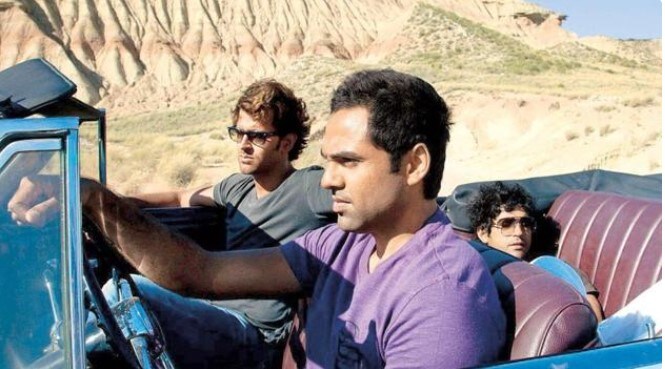
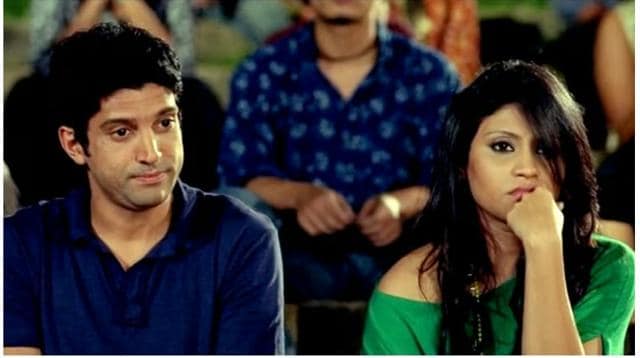
Now, about making well-rounded characters: I think, Zoya and I have become like a well-oiled machine so if we don’t have a character rounded, it sticks out sorely. You don’t want your characters to be a trope or a very half-baked and hollow version of something you see or hear. I think that’s where the craft comes in. There are certain things that we talk about every character. We set a universe for a person – what they want, what they are running from, what they are trying to achieve, what their problem is, and what the solution to their problem could be. All of that is putting it simply, but honestly, a lot of it is just common sense. For instance, Farhan’s character in Zindagi Na Milegi Dobara. We were very conscious that we were trying to make a very commercial, theatrical film so we had to set up three friends. We wanted each of them to be different, and we wanted each of them to have complete character arcs of their own. I think Farhan’s character had some flaws, some negative things like he slept with his best friend’s girlfriend. Meeting the absent father kind of makes him understand himself better and accept his flaws. The flaws of that character were that he is a little selfish, a little insensitive. You know, that’s how people are. Nobody is without a flaw, and that’s something we look at while creating characters. Creating flaws in your characters is endearing, and it also gives you a sense of a real person.
You and Zoya have formed a long and formidable writing partnership which has lasted for so many years. That’s rare. How does it work and are there any creative differences?
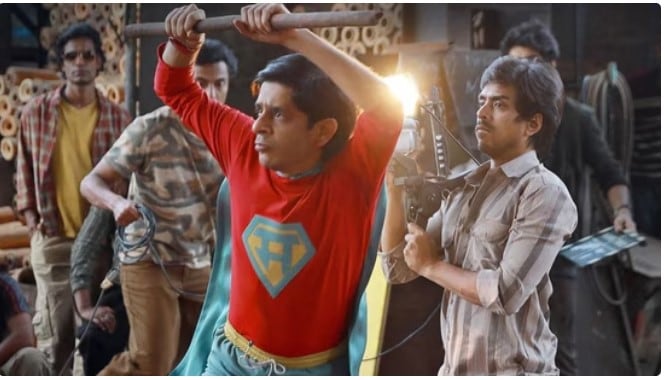
As I said earlier, we just met, became friends and started writing together. The writing partnership started organically, and maybe that’s why it’s worked. Had we planned it too much, it may not have. Even today, when we are not just writing partners but also run Tiger Baby together, I don’t think either of us has told the other person, “I’ll always write with you.” It has all just happened. Somewhere, we did feel that we have a strong writing partnership, and we took it to the next level by starting Tiger Baby, which is our own production house. And yes, along the way, we have collaborated with other writers as well. Especially when we did our shows Dahaad and Made in Heaven, we collaborated with tons of writers. Even on feature film scripts like Kho Gaye Hum Kahan, we collaborated with Arjun Singh. On Superboys of Malegaon, our upcoming film, Zoya and I have kind of just acted as mentors, but we were there with Varun (Grover) every step of the way. We didn’t write the film therefore he has the sole writing credit but we were very involved in the process.
About creative differences between Zoya and I, they happen all the time. When we were writing Zindagi Na Milegi Dobara, we were fighting so much and so loudly in Zoya’s house that the neighbours called her mother to ask her if everything was all right. It was obviously not a personal fight, but we had different points of view on something about the script. Also, I think before Zindagi Na Milegi Dobara, we had only written Talaash and one short film together, so it was still the early days of our working together. Now, I think, we’ve also matured from that point; we’ve become wiser. Back then, we used to think everything needed to be sorted out at that very moment. Now, I think because we’ve done it so many times, there is no point arguing. We’ve realised that a good idea lives and two or three days after the disagreement, it becomes apparent what the right way to go is. The not-so-good ideas die a natural death. I think an important part of the writing process is also having the patience to allow things like this to happen. Zoya and I have similar values, we have similar world views, but we are also very different people. We have had very different experiences in life. I went to boarding school at all those three places I told you about and my parents lived on a farm in Assam whereas Zoya’s parents lived in Mumba, and she is very much a city kid. But I don’t think we would have had the level of writing ability that we bring to the table had we been very similar people. If you have two minds, they better be two minds and not one mind. There is no point in just being a yea-sayer. And the fact that we operate this way creates the synergy between us.
Many writer-directors in Bollywood, after they taste success, don’t write much themselves. However, I have heard that both you and Zoya are very involved with all the writing that goes out of your company even today. Is that true?
Yes, it is true. We do spend a lot of our time writing even today. And we also spend a lot of our time sitting on some Tiger Baby projects that neither of us is directing. I think that is because the script is your blueprint. And if your blueprint goes wrong, everything else is going to go wrong. I do believe that writing is the most important part of the process of filmmaking because if a good idea is written badly and gets lost in that, nothing else can revive it. But I have seen many well-written ideas that are not done justice to because of the budget or whatever else still making an impact because there is something charming about them. I am not saying that writing is the only thing. Of course, the director and all the technicians who work on a film have their expertise, and I’m not putting down any of that. But I do think that the script is number one. The best director, the best DOP, the best technical crew can’t fix a bad script.
We do many, many rounds of iterations of our scripts. I think that’s the real secret of good screenplay writing. You are not some robotic machine that you are going to blurt out a brilliant script in one go and in the first draft itself. I mean, of course, I have heard stories like that from Zoya’s father (Javed Akhtar). He sometimes tells us, “What are you girls writing for so long? Draft number 25, really?” Because he and Salim (Khan) sahab, once they spoke about a story, would just write a dialogue draft and maybe on the set, they would make some changes if need be. Most of their work happened that way. But I think beyond those two people, I have not seen anybody else who has the potential to write like that. To me, the secret of what you said about rounded characters and stuff like that is layering. Zoya and I do a minimum of 10 drafts on every script. A lot of times, the number is way higher. After writing a few drafts, we also give it out to some friends and writers for an opinion or feedback. At this point, I would mostly give it to writers because they have the best feedback. They know how to approach the problem. Other people sense the problem but are usually not able to articulate it or offer a solution. Till we get a reaction that we are happy with, we keep doing more and more iterations of the script.
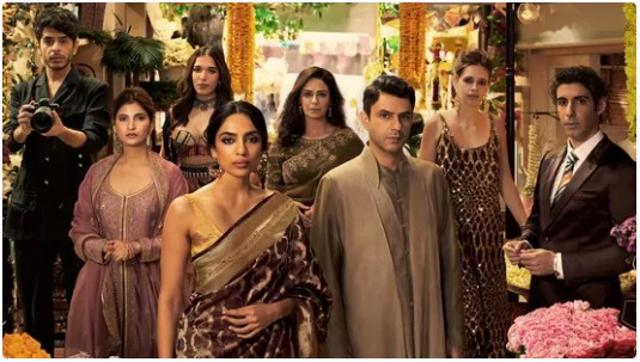
Made in Heaven has some of the most layered characters on Indian OTT. Can you run me through the journey of writing and creating the show?
Well, we kind of started it when Netflix and Amazon were coming to India. For a lot of people at the time, it was an extension of TV. But for us, it was a very exciting new platform. The first thing that Netflix commissioned in India was Anurag’s (Kashyap) Scared Games. And similarly, for Amazon, we were one of the first partnerships in India. So, for us, it was very exciting to do something which was long format. And the good thing is that it is a limited long format. It’s not like we are talking of a hundred episodes or something like that. We are talking of eight or 10 episodes. Zoya was very keen to do something around Indian weddings. It started with her talking about doing something that shows the opulence of India with the backdrop of weddings, but then we get into the cracks. That’s how we zeroed down on wedding planners as central characters. Then we talked about a lot of characters followed by a lot of arguments but then eventually these two – the two protagonists you see in the show – sat well because we thought it was interesting to have one character who has a divorce going on and the other can’t even get married, and these two are in the business of organising grand weddings. You know, the main characters had their own graphs but then we also had the opportunity to get into Indian families and into the other issues that marriage throws up in a patriarchal society like ours. So, it was just a lot of talking between Zoya and I. We do a lot of talking before we write anything. Most of this show, in a way, is just a product of our talking a lot about the idea.
How did you conceive Dahaad and how much of show writing, in your opinion, is about creating the world?
Creating that world is honestly something you have to do even if you are creating a five-minute film, a two-hour-long film or an eight-episode show. But I think the advantage of long-form writing is the amount of time you have to create and play with your characters, your plot. Then, you have to create the right hooks at the end of each episode. Just because they love episode one, may not mean that they love episode three, for instance. Each form comes with its own challenges.
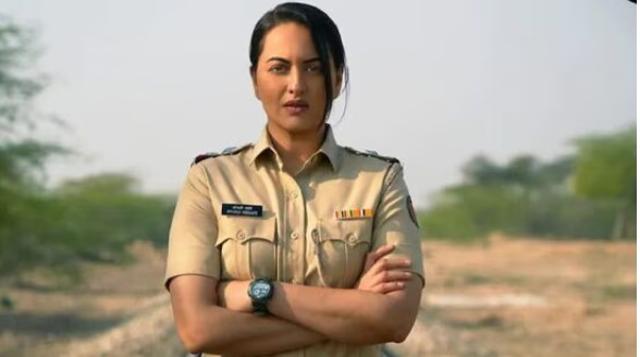
As viewers, Zoya and I consume things across the spectrum. Our work doesn’t stick to one genre as such. In terms of how I came up with Dahaad, well, I’m obsessed with crime. I watch all crime shows and even those YouTube channels with crime documentaries. That’s how obsessed I am. While we were making Made in Heaven, Dahaad was the other idea that we were trying to develop. It’s based on many serial killers and there was also a case very similar to it that happened in India. Initially, we toyed with the idea of getting rights for the story of that case but then we realised that it wasn’t what we wanted to do. Everybody knows about the famous serial killers and their stories. Dahaad, was more about going a little deeper. We saw this as a way of looking at Indian society in a very different way than Made in Heaven. In Dahaad, you are looking at issues like caste and patriarchy from a serial killer’s standpoint and looking at our world that is enabling certain things.
Can you tell me how Zindagi Na Milegi Dobara was developed?
Zoya’s first film, Luck by Chance, was an ensemble piece, and when it finished, she said, “I am done with these ensemble pieces with so many people and now I am just gonna go, put three guys in a car and go on a holiday and I am going to shoot it.” I think at that point, she said it as a joke, but eventually, the idea stuck with her and then she really decided to do that film. We talked about the idea and the layers of characters, and the plot points just fell in place. Spain happened to be the country that seemed to have all the things the script needed, and that’s how we chose it.
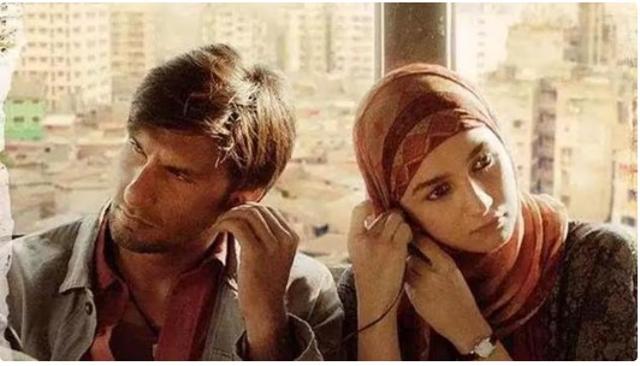
How did Gully Boy happen? What attracted you to this world of underground rap?
While Zoya was editing Dil Dhadakne Do, a common friend and editor, Anand Subaya, showed Zoya a video of Naezy and Divine. She sent it to me and said that it was a very exciting world and we should talk about it. Then we contacted a whole lot of guys like Naezy, Divine and a bunch of other as well and heard their stories. So, Gully Boy kind of came from there.
Honeymoon Travels and Talaash did not do as well as some of your other work. If given a chance, would you go back and change something about them?
Honeymoon Travels, for what it’s worth, considering the times it was made in, did do well. It was an alternative film, made on a very low budget, and it not only recovered its cost but also made a little something for everybody involved. So, I think, it did do well. There are people who watch it today and still tell me that they love the film. That, to me, is a success. It’s very hard to put down if I could have done a better job in retrospect because I feel that about all my films. You want to change something every time. Talaash, again, was made on a low budget, and it made much more than what we spent on it. Commercially, you have to look at what was spent on the film to analyse what it made. It’s always budget vs the profit. I know that there is a hundred crore club going on but just because a film made 100 crores, doesn’t mean it was a hit because you might have spent 120 crores making it. This is what people don’t understand about the commerce of films.
Tell me some of the films and filmmakers that have influenced you in different phases of life.
Well, that’s an exhausting list. But just to name a few, as a kid, there was a lot of Salim-Javed that was an influence. All of Mr Bachchan’s work as well – I am obsessed with him. Then, Spielberg;.ET was a big influence. Then, when I discovered world cinema, Pedro Almodovar, Wong Kar Wai and all the classics, basically, have been huge influences. To be honest, the list of influences changes almost every year. There is so much amazing stuff happening around the world. You see that, and you love some of it. The only time in my life when I have felt jealous of a film, thinking I wish I had come up with this idea, was after watching The Sixth Sense. I love Mad Men as well along with many other shows. When I watch a film or a show, I watch it as a member of the audience and not as a creator. I think that’s what allows me to absorb the pieces better.
When you turn 80 and look back at your career, what would you like to feel?
I’d like to feel that I made more good films than bad films. That’s what I want to feel.
Mihir Chitre is the author of two books of poetry, ‘School of Age’ and ‘Hyphenated’. He is the brain behind the advertising campaigns ‘#LaughAtDeath’ and ‘#HarBhashaEqual’ and has made the short film ‘Hello Brick Road’


