
 E-Paper



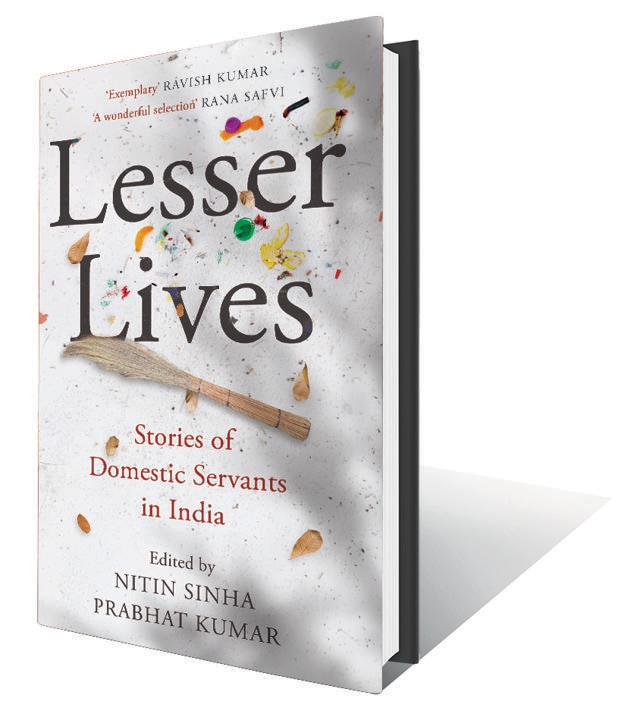
Review: Lesser Lives; Stories of Domestic Servants in India edited by Nitin Sinha and Prabhat Kumar
This collection of 11 short stories, some of which have never been published in translation before, by the subcontinent’s greatest Hindi and Urdu writers such as Saadat Hasan Manto, Premchand, and Mahadevi Varma elevate the often invisible domestic worker to the status of the protagonist

 Prefer HTon Google


With their meticulous selection of stories, academics Nitin Sinha and Prabhat Kumar have turned the spotlight on the plight of domestic servants, baring their complex lives in old and new India. Lesser Lives is a collection of 11 short stories, some of which have never been published in translation before, by the subcontinent’s greatest Hindi and Urdu writers such as Saadat Hasan Manto, Premchand, and Mahadevi Varma. What threads these classics tales together is that they see these invisible, “lesser” beings as heroes.
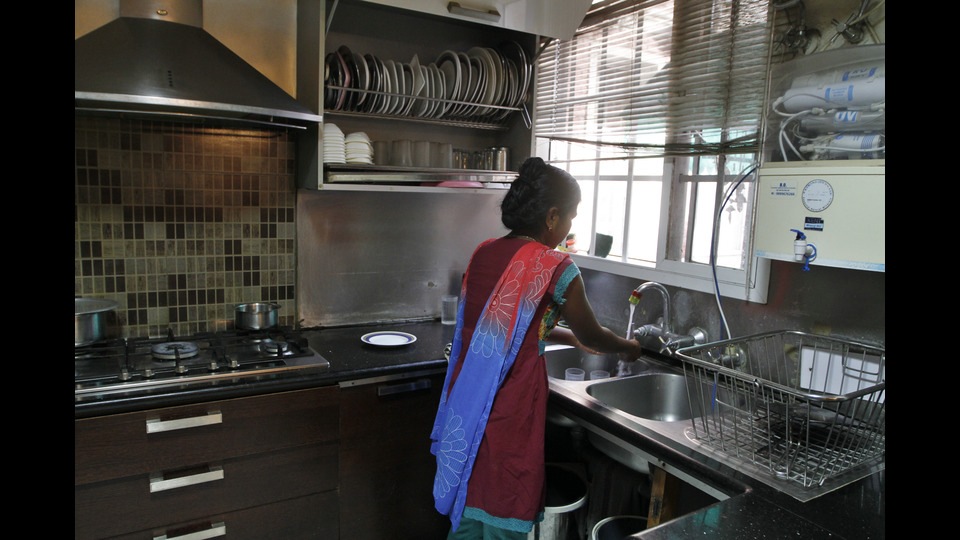
The book opens with Premchand’s Maidservant, a rather comic, offbeat, and futuristic story. Laluji’s Ma, the lady of the house, refuses to hire a domestic servant even though she is buckling under the increasing workload. Her argument - that she was not an educated woman who would keep lying in her bed all day - is ignored by her husband as it is “fashionable” to hire a maid. Laluji’s Ma finds fault with all maids who are hired, getting them fired on some pretext or another, till the family decides to perform the household chores themselves and regain their lost peace.
There are gut-wrenching stories of minor boys being exploited and demeaned for being lower caste. Premchand’s second story in the book, The Whip of Fortune is of one such boy. Nathua is beaten black and blue for crossing the line, for lying down on his master’s daughter’s bed. “You have become so ungrateful that you sleep on Ratna’s bed? You ungrateful idiot! Someone bring my hantar!”
Mahadevi Varma’s autobiographical story Rama is the most heartening in this collection, of a kind man servant who was like family in the author’s growing up years. The most intriguing is Ratnaprabha by Jainendra Kumar – a tale of a young beggar-turned-male servant and his rich, lonely, young mistress who cannot deal with the servant’s unflinching gaze or his dispassionate ways.
Saadat Hasan Manto’s Blouse is about a boy who is enamoured by the young daughter of his master. Momin accidentally catches a glimpse of her as she trying out a blouse, and is bewildered by the chemical reactions triggered in his body. On similar lines is On the Boil by Upendra Nath ‘Ashk’. Chandan loves to eavesdrop on his newly married master and his mistress: “The milk began boiling in Chandan’s veins. His body began to heat up.”
Sinha and Kumar, the editors, write in the introduction: “The fact that these litterateurs decided to draw their stories around the figure of the servant and make them heroic deeply points to the existence of an exactly opposite condition. In their quotidian lives, servants usually remain marginal, invisible and unnoticed. In these short stories they have been intentionally made visible.”
The heroes of these all-too-familiar stories meet similar fates across rural, urban, middle-class, Hindu, and Muslim households.
The dependence of the privileged on servants remains unchanged to this day, never mind the technological innovations which should have made them redundant by now. The changes, if at all, have only been cosmetic, such as in nomenclature. Domestic servants are now called domestic help or domestic aids by polite society, ironically diminishing their work and denying them personhood.
Sinha and Kumar look at statistics - 17 bills have been introduced in Parliament since Independence to improve the conditions of workers - whose numbers range between four and 90 million, according to a 2011 ILO report. They point out that the gap between the rich and poor has not decreased even 75 years after independence, and that “the dignity of work and personhood cannot be left at the choice of benevolence by others”.
The editors draw attention to a 2016 advertisement on bookmybai.com that encouraged a husband to gift his wife a maid, and not diamonds. “The cracks due to the burden of housework, which disproportionately falls on the woman, needed to be cemented not by conjugal sharing of work but by hiring a maid,” they write.
This reality was bought to the fore during the COVID-19 crisis, when doors had to be grudgingly shut on domestic servants. Reams were written on the new male chefs who inundated social media with their food pictures, there were plenty of WhatsApp jokes on men excelling at housework, and how domestic help would finally become redundant!
This sentiment comes through in an unusual story by Rambriksha Benipuri. He Was a Thief is a tragic-comic tale of a zamindar, Lakshmi Babu, who rescues a thief from prison and tries to rehabilitate him, looking beyond the master-servant relationship. But the zamindar’s fancy egalitarian ideas were short lived.
Translations are fraught with difficulties, and the readers may notice something amiss in some stories such as On the Boil. For such readers, the editors have stated upfront, “We have worked more with the burden of a historian’s sensibility than with the pleasure of literary scholars or translators.”
Sinha is a senior research fellow in Berlin and was the principal investigator of a project on Domestic Servants in Colonial South Asia. Kumar, an assistant professor at the Centre for the Study of Developing Societies, has translated these 11 stories. Both get full marks for this beautiful selection of stories set in 20th century India, and which compel us to cast a second look at our homes.
Lamat R Hasan is an independent journalist. She lives in New Delhi.


